
Share this post
To serve an eviction notice in California, landlords must: (1) use the correct notice type for the specific situation, (2) serve it by one of the three methods in CCP §1162 — personal service, substituted service only if the tenant is absent from home and work, and post-and-mail only if no suitable person can be found — and (3) ensure every required detail is exact: the rent amount, who and how to pay, the tenant’s name, and any required local language. A mistake in any one of these steps can get your case thrown out in Alameda County Superior Court — not corrected, not a second chance. You start over.
Part of the May 2026 Series: Legal Notices, Evictions & Owner Protections May 4 — California Eviction Law 101 · May 11 — Serving the Right Notice the Right Way (this post) · May 18 — The Alameda County Unlawful Detainer Timeline Explained · May 28 — Self-Help Eviction Penalties in California & Owner Protections
Key Facts for East Bay Landlords
- Notice type is determined by the reason for termination — not the length of tenancy. Nonpayment requires a 3-Day Notice to Pay or Quit. A lease violation requires a 3-Day Notice to Cure or Quit. Using the wrong one voids the entire case.
- Three legally recognized service methods exist, and they must be attempted in order: personal service first; substituted service only if the tenant is absent from both residence and usual place of business; post-and-mail only if the residence and business can’t be ascertained or no person of suitable age and discretion can be found.
- CCP §1162 doesn’t add extra days for substituted or post-and-mail service, but because courts and attorneys differ on whether mailing extends the period, many eviction attorneys wait an extra five days before filing as a precaution — treating a posted-and-mailed “3-Day Notice” as roughly an 8-day wait.
- Record the actual date of service — not the date the notice was written or printed. CCP §§1161–1162 don’t require the notice to be dated on the service date, but a mismatch invites a dispute over when the three days started, so dating the notice when you serve it is good record-keeping.
- Accepting any rent payment after serving a 3-Day Notice to Pay or Quit can void the notice entirely — even a partial payment. Once the notice is served, do not accept money without consulting a property manager or attorney.
- In Oakland and Berkeley, local ordinances may impose additional notice language requirements. A notice that complies with state law may still be defective under local rules.
- Every service attempt must be documented — date, time, method, and who was present or what was posted. That documentation is what holds up in an Alameda County courtroom.
Prefer video? Watch the 4-minute video version, with chapter links and a full transcript.
2V_LMfjNFkI”,”type”:”rich”,”providerNameSlug”:”embed-handler”,”responsive”:true,”className”:”wp-embed-aspect-16-9 wp-has-aspect-ratio”} –>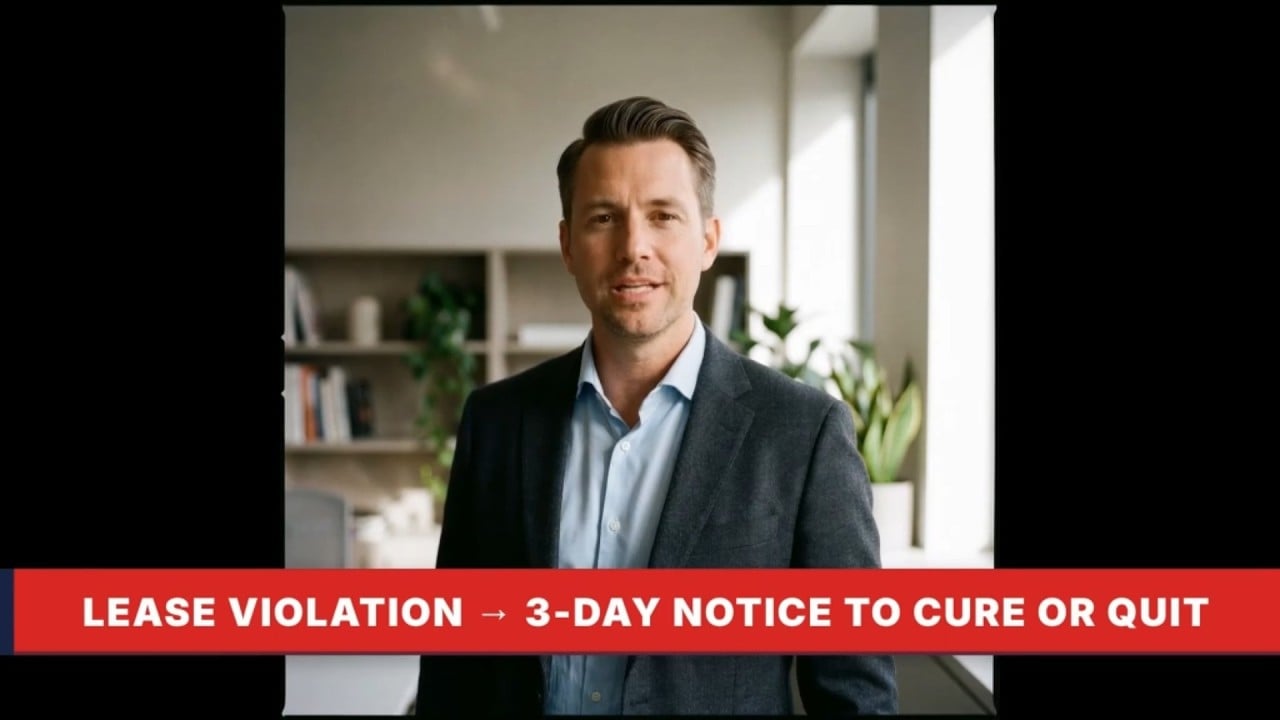
Video Transcript
Note (September 2026): Since this video was recorded, we checked it against CCP §§1161, 1162 and 1167. The 3 days exclude Saturdays, Sundays and judicial holidays. CCP §1162 does not add five days for post-and-mail service — many attorneys wait an extra five days before filing as a precaution, not because the statute requires it. Same-day mailing and dating the notice on the service date are best practices, not statutory requirements. Substituted service is available only if the tenant is absent from both home and work. The written guide below reflects these points.
Most landlords who lose an eviction case in Alameda County didn’t lose because they lacked a valid reason. They lost because the notice was wrong. Maybe the wrong form. Maybe a missing mailing step. Maybe the date on the document didn’t match the day it was actually served.
The judge doesn’t fix those errors. The case gets dismissed — and you start the whole process over.
Today I’m going to walk you through exactly how to serve a California eviction notice so that doesn’t happen to you.
There are three main notice types, and which one you use is determined by why you’re ending the tenancy — not how long the tenant has been there.
If the tenant hasn’t paid rent, you serve a 3-Day Notice to Pay or Quit. This gives them three business days to pay in full or vacate. The notice must state the exact amount owed — not an estimate, not a rounded number. Exact.
If the tenant is violating the lease — an unauthorized pet, an unauthorized roommate — you serve a 3-Day Notice to Cure or Quit. Three business days to fix the problem or leave. The notice must describe the specific violation. Vague language like ‘you’re in violation of your lease’ is not enough.
And if the conduct can’t be fixed — criminal activity, serious nuisance — you serve a 3-Day Notice to Quit with no cure option. No second chance. Document the conduct thoroughly before you serve this one.
One wrong choice here and the case is dismissed before it’s even heard.California law gives you three ways to serve a notice. And they must be tried in order.
First: personal service. Hand it directly to the tenant. If they refuse to take it, leaving it in their presence is enough. The notice period starts the same day.
If the tenant isn’t home, you can give the notice to an adult household member. But — and this is where most landlords make a mistake — you also have to mail a copy to the tenant on the same day. Both steps. Same day. If you skip the mailing, the service is defective.
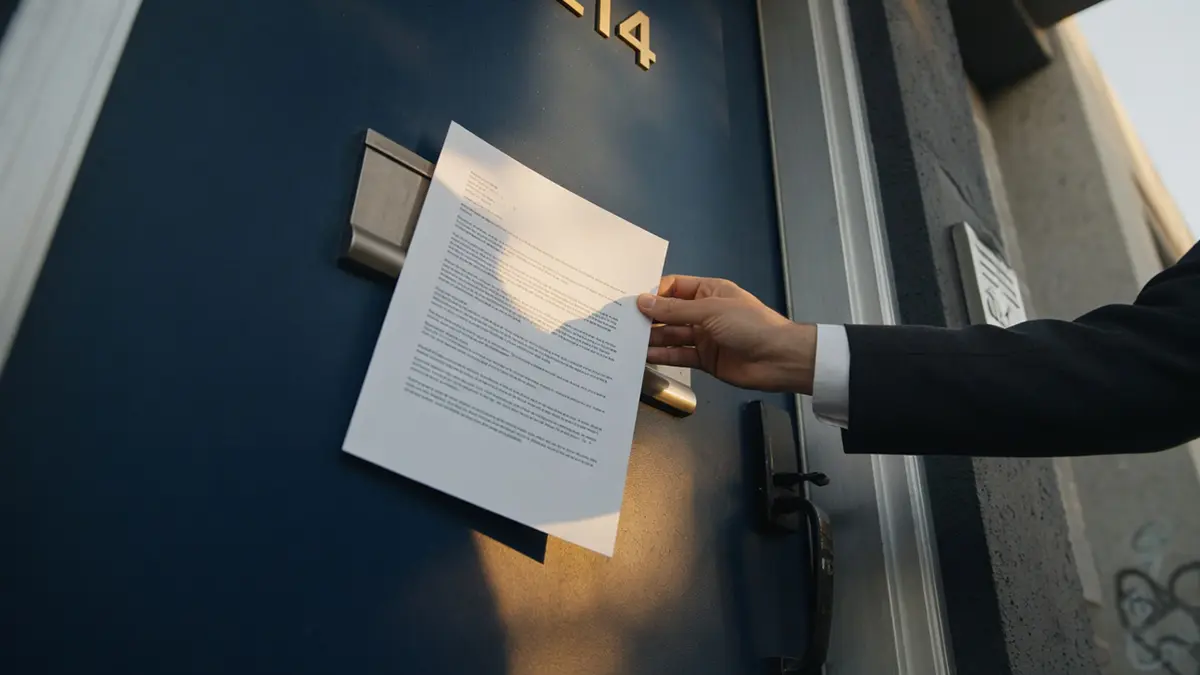
If no one’s home after reasonable attempts, you can tape the notice to the front door and mail a copy the same day.
But here’s the critical part — and this trips up a lot of experienced landlords. Post-and-mail service adds five calendar days to the notice period. Your three-day notice is now effectively an eight-day notice. File your unlawful detainer before those eight days are up — even by one day — and the case is automatically dismissed.
Here’s the third most common cause of dismissal — and it’s completely avoidable. The date on the notice must match the date you actually served it. Not the day you wrote it. Not the day you printed it. The day you served it.
We see this all the time with self-managing landlords. They prepare the notice at their desk on a Tuesday, track the tenant down on Thursday, hand it over — and the notice is dated Tuesday. Dismissed.
The fix is simple: leave the date blank when you prepare the notice. Fill it in by hand the moment you serve it.At All East Bay Properties, we treat notice preparation as a legal document review — not paperwork. Every notice is checked against current California law and the applicable local ordinance — Oakland and Berkeley both have additional requirements on top of state law — before anything goes out the door.
If you’ve got a tenant situation right now and you’re not sure which notice applies, or you want to make sure your service method will hold up in Alameda County Superior Court — don’t guess. A ten-minute review before you serve is worth more than weeks of restarting.
Visit all eastbayproperties.com or click the link below to schedule a free consultation.
The full written guide — with notice type tables, a pre-service checklist, and Oakland and Berkeley-specific requirements — is linked in the description. Thanks for watching.
Who This Guide Is For
→ East Bay landlords who have a problem tenant and are preparing to serve a notice for the first time
→ Self-managing owners in Oakland or Berkeley who want to confirm their notice will hold up before they serve it
→ Any landlord in Alameda County who has had a UD dismissed and wants to understand what went wrong
→ Property owners who’ve heard “wrong notice type” or “defective service” and want a plain-English explanation of what those terms mean in practice
Introduction
At All East Bay Properties, most dismissed eviction cases we see are not because the landlord lacked a valid reason — they’re because the notice was served incorrectly. The landlord had a legitimate nonpayment situation, or a genuine lease violation, or a documented nuisance. The underlying grounds were solid. And then one detail — the wrong date, a missing mailing step, the wrong notice type — handed the tenant’s attorney a dismissal before the case was ever heard on its merits.
California’s notice and service rules under Code of Civil Procedure §§1161–1162 are precise by design. The legislature wrote them that way to ensure tenants receive meaningful notice before losing their homes. For landlords, that precision means there is almost no margin for approximation. A notice prepared Tuesday and served Thursday — but dated Tuesday — invites a fight over when the three days started. A 3-Day Notice posted on the door without the required mailing is a defective notice. A notice that demands the wrong dollar amount is a defective notice.
None of these errors are corrected by a judge. They result in dismissal, and you begin again from zero. In a contested Alameda County situation, a single notice defect typically adds 4 to 8 weeks to the process — before you’ve even reached a hearing on the merits.
This guide covers every notice type, every service method, and the specific details that separate a notice that holds up in Alameda County Superior Court from one that gets thrown out at the door.
How to Serve an Eviction Notice in California (Step-by-Step)
Before diving into the details of each step, here is the complete process at a glance. Every California eviction — in Alameda County, Oakland, Berkeley, or anywhere in the state — must follow this sequence:
- Identify the correct notice type for the specific situation (nonpayment → Pay or Quit; lease violation → Cure or Quit; no-fault → 30/60-Day Terminate)
- Prepare the notice with exact information — correct rent amount, tenant name as it appears on the lease, and the payment details §1161 requires (who to pay, with phone and address, or an eligible bank account or established electronic payment method); leaving the date blank until you serve is good record-keeping
- Attempt personal service first — deliver directly to the tenant in person
- If the tenant is absent from both home and usual place of business → substituted service — leave a copy with a person of suitable age and discretion at either place AND mail a copy to the tenant’s residence (same-day mailing is best practice)
- If the residence and business can’t be ascertained or no suitable person can be found → post-and-mail — affix a copy in a conspicuous place on the property, hand a copy to a person residing there if one can be found, AND mail a copy to the tenant at the property (same-day mailing is best practice); many attorneys wait an extra 5 days before filing a UD as a precaution
- Record the service date — the actual day of service, not the day the notice was written (dating the notice when you serve it isn’t required by CCP §1161 or §1162, but it’s good record-keeping)
- Document everything — date, time, method, who was present, what was said or observed
- Wait out the full notice period before filing an unlawful detainer with Alameda County Superior Court
The notice-type, notice-content and service steps are potential dismissal points if skipped or done incorrectly; the record-keeping steps are what let you prove you got them right. The sections below cover each in detail.
Part 1: Matching the Notice to the Situation
The single most common eviction error — and the one with the most expensive consequences — is serving the wrong notice type for the situation. Each notice type has a different legal purpose, a different cure period, and different statutory requirements for what the document must say. An incorrectly chosen notice is void on its face. The tenant doesn’t need to prove anything happened — just that the wrong form was used.
3-Day Notice to Pay Rent or Quit
Use when: The tenant has not paid rent (or any portion of rent) when it was due.
This notice gives the tenant three days — excluding Saturdays, Sundays and judicial holidays — to pay the full amount owed or vacate the unit. If the tenant pays in full within the three-day period, the tenancy continues and the notice is extinguished — you cannot proceed to file a UD on that notice.
What the notice must include (C.C.P. §1161):
- The exact amount of rent due — not an estimate, not a rounded figure, not “approximately” (and never a charge for serving the notice: §1161(6) bars landlords from charging a fee for serving, posting or delivering a notice)
- The rental period the unpaid rent covers (not listed in §1161, but standard practice — it makes the amount easy to verify)
- How rent can be paid — the name, telephone number, and address of the person to pay (plus usual days and hours if paid in person), or a bank account within five miles, or a previously established electronic payment method
- The tenant’s name exactly as it appears on the lease (best practice; §1161 requires serving the tenant and any subtenant in actual occupation)
The detail that catches landlords off guard: Accepting a partial rent payment after a 3-Day Notice to Pay or Quit has been served may void the notice entirely in California — even if you immediately regret accepting it. Once a notice is served, do not accept any payment without first consulting a property manager or attorney.
3-Day Notice to Cure or Quit
Use when: The tenant has violated a specific, curable lease term — unauthorized pet, unauthorized occupant, failure to maintain the unit, unauthorized subletting, smoking in a non-smoking unit.
This notice gives the tenant three days — excluding Saturdays, Sundays and judicial holidays — to correct the violation or vacate. The notice must describe the specific lease provision violated and the specific conduct or condition that constitutes the violation. Vague language like “you are in violation of your lease” is not legally sufficient and creates an immediate basis for challenge.
If the tenant cures the violation within three days, the tenancy continues. The notice cannot be used as a stepping stone toward eviction if the tenant genuinely fixes the problem.
3-Day Notice to Quit (No Cure Option)
Use when: The lease violation is not curable by nature — criminal activity on the premises, significant intentional damage to the property, or conduct creating a nuisance that cannot be remedied retroactively.
This notice gives the tenant three days to vacate with no option to cure. Because it provides no opportunity to remedy the situation, courts apply heightened scrutiny to these notices. The underlying conduct must be well-documented before serving — photos, police reports, written complaints from other tenants, or documented damage assessments.
30-Day and 60-Day Notice to Terminate Tenancy
Use when: You have a qualifying no-fault just cause reason to end the tenancy — owner move-in, substantial rehabilitation, or Ellis Act withdrawal.
- 30-Day Notice: Tenants who have occupied the unit for less than one year
- 60-Day Notice: Tenants who have occupied the unit for one year or more
In Oakland and Berkeley, no-fault terminations are limited to the specific grounds in each city’s just cause ordinance. You cannot issue a 60-Day Notice as a general lease termination for covered tenancies — you must have a qualifying reason. Under AB 1482 statewide, the notice must include specific statutory language and relocation assistance must accompany the termination.
Which Notice Applies to Your Situation?
| Situation | Correct Notice | Cure Period |
|---|---|---|
| Tenant hasn’t paid rent | 3-Day Notice to Pay or Quit | 3 court days (excl. weekends & judicial holidays) to pay in full |
| Unauthorized pet or occupant | 3-Day Notice to Cure or Quit | 3 court days to correct |
| Drug activity or serious nuisance | 3-Day Notice to Quit (no cure) | None — vacate only |
| Owner moving into the unit | 60-Day Notice to Terminate | None (relocation assistance required) |
| No-fault termination, tenant < 1 year | 30-Day Notice to Terminate | None (just cause required) |
Part 2: The Three Service Methods — In Order
Choosing the right notice type gets you halfway there. The second half is serving it correctly. California Code of Civil Procedure §1162 specifies three legally recognized methods of service in California (including Alameda County), and they must be attempted in order: substituted service is available only if the tenant is absent from both their residence and usual place of business, and post-and-mail only if the residence and business can’t be ascertained or no person of suitable age and discretion can be found. Skipping straight to post-and-mail without a genuine attempt at personal or substituted service is itself a basis for dismissal.
Method 1: Personal Service (Always Try This First)
Deliver the notice directly to the tenant in person. This is the most legally straightforward method and the one California courts prefer. If the tenant refuses to take the notice from your hand, leaving it in their presence — dropping it at their feet, for example — is legally sufficient. The notice period begins the day of service.
Document the attempt immediately: date, time, location, what you observed, and what the tenant said or did. If the tenant refused the notice, note that specifically.
Method 2: Substituted Service (If Tenant Is Not Home)
If the tenant is absent from both their residence and their usual place of business, the notice can be left with a person of suitable age and discretion at either place — at the rental unit, typically an adult household member or roommate. And — this is the step most landlords miss — a copy must also be mailed to the tenant at their residence.
Both steps are required. Leaving the notice with someone at the door without mailing a copy renders the service defective. §1162 doesn’t set a same-day deadline for the mailing, but mailing the same day is best practice — it keeps your service record clean.
Method 3: Post-and-Mail (Last Resort Only)
If the tenant’s residence and place of business can’t be ascertained, or no person of suitable age and discretion can be found there, the notice can be affixed to a conspicuous place on the property — typically the front door — and a copy delivered to a person residing there, if one can be found. And a copy must be mailed to the tenant at the property address. Posting and mailing are both required; doing them on the same day is best practice, though §1162 doesn’t require it.
The timing question that most landlords miscalculate: CCP §1162 doesn’t add extra days for substituted or post-and-mail service. But because courts and attorneys differ on whether mailing extends the period (CCP §1013 adds five calendar days for papers mailed in a lawsuit), many eviction attorneys wait an extra five days before filing as a precaution. In practice, that treats a 3-Day Notice served by post-and-mail as roughly an 8-day wait before you file a UD.
Filing early saves a few days at most — and if the tenant’s attorney argues the notice period hadn’t run, you end up litigating service instead of possession. The cautious wait costs far less than a restart.
Service Methods at a Glance
| Service Method | Mailing Required? | When Does Clock Start? | Effective Notice Period (3-Day) |
|---|---|---|---|
| Personal service | No | Day of service | 3 court days |
| Substituted service | Yes (same day is best practice) | Day of service + mailing | 3 court days (many attorneys add a 5-day buffer) |
| Post-and-mail | Yes (same day is best practice) | Day of posting + mailing | 3 court days (many attorneys wait ~8 days as a precaution) |
Part 3: The Date That Trips Landlords Up

After notice type and service method, the next detail that causes trouble is deceptively simple: the date on the notice does not match the date of actual service.
This happens most often when a landlord prepares the notice in advance — on a Tuesday, say, when they’re at their desk — then serves it Thursday when they finally reach the tenant. The notice is dated Tuesday. Service happened Thursday. Now the tenant’s attorney has an opening to argue about when the three days actually started.
CCP §§1161 and 1162 don’t actually require the notice to be dated on the day of service — the three days run from service, not from the date printed on the page. But a notice dated when it was written, prepared, or printed rather than served invites a dispute, so this is a record-keeping discipline worth keeping. The fix is simple: leave the date blank when you prepare the notice, and fill it in by hand on the day you actually serve it.
In our experience managing properties across Alameda County, this single detail — the wrong date — is the most common purely avoidable cause of UD dismissal we see among self-managing landlords. It costs nothing to get right and costs 4 to 8 weeks when you get it wrong.
Part 4: Oakland and Berkeley — Additional Requirements
For properties in Oakland and Berkeley, state notice law is the floor — not the ceiling. Both cities impose additional requirements that a notice must satisfy to be legally effective under local ordinances.
Oakland: Under the Just Cause for Eviction Ordinance (O.M.C. Chapter 8.22), every notice terminating a tenancy must state the just cause ground and that advice is available from the Rent Adjustment Program (with its phone number and email), and a copy must be filed with the Rent Board within 10 days of service. Oakland also has language access requirements — if the landlord negotiated the tenancy in a language other than English, notice documents may need to be provided in that language as well.
Berkeley: The Berkeley Rent Stabilization Board requires that rental units be registered before a landlord can pursue eviction. An unregistered unit — or one with delinquent registration fees — can create additional hurdles in a UD proceeding. Berkeley notices must also comply with the city’s Good Cause Ordinance, which parallels but is not identical to Oakland’s requirements.
The practical implication for East Bay landlords: if your property is in Oakland or Berkeley, review your notice against both state requirements and the applicable local ordinance before serving. A notice that is technically correct under California state law may still be defective under local rules — and in both cities, tenant legal aid organizations are well-resourced and actively look for exactly these defects.

The Most Common California Eviction Notice Mistakes
These are the errors that restart timelines, invite automatic dismissal, and turn straightforward situations into months-long disputes. Each one is entirely preventable.
1. Using the wrong notice type. Serving a 3-Day Notice to Quit for nonpayment — instead of a 3-Day Notice to Pay or Quit — is void on its face. The court does not ask whether the tenant actually owes the rent. If the notice type is wrong, the case is dismissed and the clock resets. One detail. Four to eight weeks lost.
2. Posting without mailing. Both substituted service and post-and-mail require a mailing step. Skipping it makes the service defective — and defective service gets the case dismissed in Alameda County. §1162 doesn’t set a same-day deadline, but mail the same day anyway: a delayed mailing invites a dispute over when service was complete.
3. Accepting partial rent after serving a 3-Day Notice. Once a 3-Day Notice to Pay or Quit has been served, accepting any payment from the tenant can constitute waiver and void the notice. The instinct to take what the tenant offers is understandable. The legal consequence is that you’ve signaled the tenancy continues and must start the process over.
4. Getting the rent amount wrong. The 3-Day Notice to Pay or Quit must state the exact amount owed. Rounded figures, estimates, or amounts that include late fees not specified in the lease can all be grounds for challenge — and a fee for serving the notice can’t be charged at all (§1161(6)). Verify against the lease and payment records before the notice is prepared.
5. Dating the notice the day it was written, not the day it was served. This is the most common avoidable mistake we see in self-managed East Bay properties. The statute doesn’t require the notice to be dated on the service date, but a mismatch invites a dispute over when the period started. Prepare the notice without a date. Fill in the date by hand the moment you serve it. No exceptions.
Pre-Service Checklist
Run through every item before the notice leaves your hands. Most are potential bases for dismissal if wrong; the rest protect your record.
- Correct notice type selected for the specific grounds (nonpayment → Pay or Quit; lease violation → Cure or Quit; non-curable → Quit only; no-fault → 30/60-Day Terminate)
- Exact rent amount verified against lease records — not estimated, not rounded
- Tenant name matches the lease exactly — including all co-tenants named on the lease
- Payment details stated as §1161 requires: name, phone number and address of the person to pay (plus usual days and hours if paid in person), or a bank account at an institution within five miles, or a previously established electronic payment method (3-Day Pay or Quit notices only)
- Date left blank — to be filled in by hand on the actual day of service (record-keeping best practice)
- Personal service will be attempted first
- If substituted service is needed (tenant absent from home and work): copy left with a person of suitable age and discretion, and mailing to the tenant’s residence planned — same day is best practice
- If post-and-mail: copy posted, handed to any resident who can be found, and mailing planned (same day is best practice); decide with your attorney whether to wait the precautionary extra 5 days before filing a UD
- Oakland/Berkeley additional requirements reviewed if property is in either city
- Open maintenance requests reviewed — any unresolved habitability issue is a potential affirmative defense in a UD proceeding; address or document status before serving
- Service attempt will be documented: date, time, method, outcome, witness if available
What Happens If the Notice Is Defective?
The short answer: the case is dismissed and you restart from zero.
California courts in Alameda County — and throughout the state — do not have discretion to overlook notice defects or allow amendments mid-proceeding. A defective notice results in the UD being dismissed. The tenant walks out having lost no time. You walk out having lost whatever weeks elapsed, plus the additional time required to re-serve a corrected notice and wait out the notice period again.
A single notice defect in a contested East Bay situation typically adds 4 to 8 weeks to the process — before you’ve reached a hearing on the merits.
This is why, at All East Bay Properties, we treat notice preparation as a legal document review process — not an administrative task. Every notice is checked against the current version of state law and the applicable local ordinance before it is served. The 20 minutes that review takes is worth more than the weeks it prevents losing.
Not sure which notice applies — or how to serve it correctly? We review notices for East Bay landlords before they’re served. A 10-minute review can save 4 to 8 weeks.
Summary: Notice Types and Service Methods at a Glance
| Notice Type | Use For | Cure Period |
|---|---|---|
| 3-Day Pay or Quit | Nonpayment of rent | 3 court days |
| 3-Day Cure or Quit | Curable lease violation | 3 court days |
| 3-Day Quit (no cure) | Non-curable violation | None |
| 30-Day Terminate | No-fault, < 1 yr tenancy | None |
| 60-Day Terminate | No-fault, 1+ yr tenancy | None |
| Service Method | Mailing Required? | Effective Notice Period (3-Day) |
|---|---|---|
| Personal service | No | 3 court days |
| Substituted service | Yes (same day is best practice) | 3 court days (many attorneys add a 5-day buffer) |
| Post-and-mail | Yes (same day is best practice) | 3 court days (many attorneys wait ~8 days: 3 + 5 buffer) |
Still to Come in This Series
- May 18 — The Alameda County Unlawful Detainer Timeline Explained — what happens after you file, the tenant’s response options, and realistic timelines from notice to lockout
- May 28 — Self-Help Eviction Penalties in California & Owner Protections — what the law gives landlords, and the lines you cannot cross
Current rule at a glance
Frequently Asked Questions
What is the fastest way to serve a 3-Day Notice in California?
Personal service is the fastest and most legally straightforward method. Deliver the notice directly to the tenant in person — the notice period begins the same day. If the tenant refuses to accept it, leaving it in their presence is sufficient. Substituted service and post-and-mail both require a mailing step (same-day mailing is best practice), and because many attorneys wait an extra five days before filing after post-and-mail service as a precaution, it is usually the slowest of the three options in practice.
Can a landlord text or email a notice in California?
No. California law does not recognize email or text message as a legally sufficient method of serving an eviction notice under C.C.P. §1162. Email or text may be useful for confirming that a notice has been served via a valid method — or for your own documentation — but it does not substitute for personal, substituted, or post-and-mail service.
What happens if a tenant ignores a 3-Day Notice in California?
If a tenant does not pay, cure the violation, or vacate within the notice period, the landlord’s next step is filing an unlawful detainer (UD) with the Alameda County Superior Court (or the applicable court for the jurisdiction). The UD is the only legal mechanism in California for recovering possession of a rental unit. Once the UD summons and complaint are served, the tenant has 10 days — excluding Saturdays, Sundays and judicial holidays — to file a written response (C.C.P. §1167), plus five more court days if service was completed by mail. If the tenant does not respond, the landlord can request a default judgment.
What happens if I use the wrong notice type in California?
The notice is void on its face. A 3-Day Notice to Quit served where a 3-Day Notice to Pay or Quit was required gives the tenant an automatic basis for dismissal, regardless of whether the underlying grounds for eviction are legitimate. The court does not correct the error — it dismisses the case. You must re-serve with the correct notice type and wait out the full notice period again before refiling.
Does California require personal service before post-and-mail?
Yes. The three service methods under C.C.P. §1162 must be attempted in order. Substituted service is available only if the tenant is absent from both their residence and usual place of business. Post-and-mail is a last resort — only appropriate when the residence and business can’t be ascertained or no person of suitable age and discretion can be found. Jumping directly to post-and-mail without a genuine effort at personal service is a basis for challenging the validity of service in a UD proceeding.
How do I count the days for a 3-Day Notice?
The three-day period excludes Saturdays, Sundays and judicial holidays (C.C.P. §1161), so only court days are counted. Day one is the day after service — not the day of service itself. If the last day of the period falls on a weekend or court holiday, it extends to the next court day. For substituted or post-and-mail service, §1162 doesn’t add extra days, but many eviction attorneys wait an extra five days before filing as a precaution. When in doubt, wait one additional day before filing.
Can I email a California eviction notice to the tenant?
No — see the answer above. Email is not a recognized service method under California law, regardless of whether the tenant acknowledges receipt.
If I have to re-serve a notice, do I have to wait before serving again?
No. You can re-serve a corrected notice as soon as it is ready — there is no mandatory waiting period between a dismissed UD and re-serving. However, if you accepted partial rent between the first notice and the dismissal, that acceptance may affect the new notice. Review the situation with a property manager or attorney before re-serving.
Related Reading
More In This Series
Articles and videos in this series
More Posts You May Find Useful
Sorry, no results found.
More Videos You May Find Useful
Sorry, no results found.