Short, practical insights to help East Bay property owners navigate rental laws, reduce risk, and manage smarter — one week at a time.
New tips added weekly • Oakland • Berkeley • Emeryville • East Bay
Managing rental property in the Bay Area isn’t just about rent collection and maintenance — it’s about navigating constantly evolving laws, local ordinances, and operational details that can quietly create risk.
Each week, our Thursday Tips share short, actionable guidance based on real issues we see affecting landlords across Oakland, Berkeley, Emeryville, and the greater East Bay.
No fluff. No legal jargon. Just practical insight you can actually use.
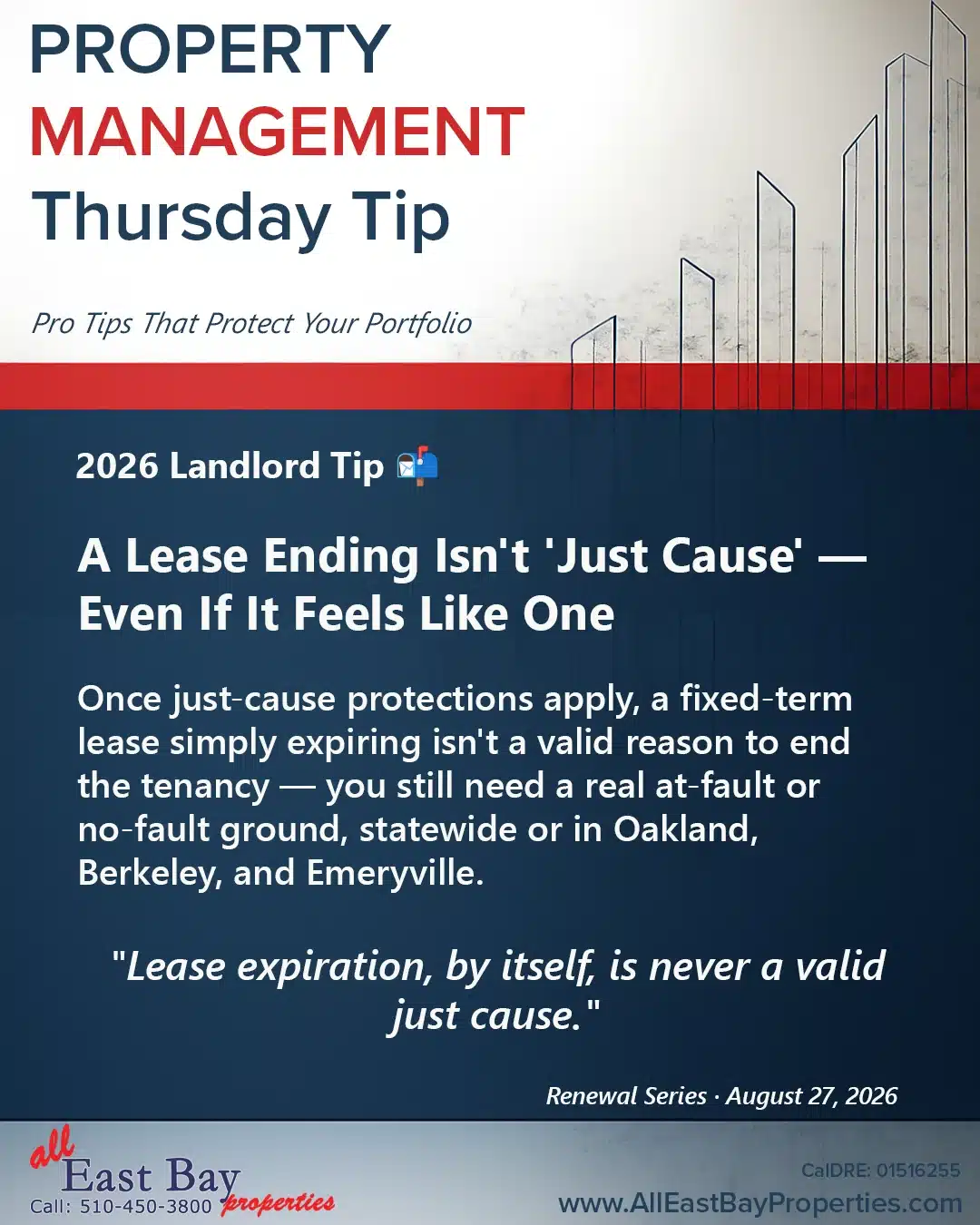
The rules governing how — and whether — you can end a tenancy in Oakland, Berkeley, or anywhere in California are more layered than most owners realize. State law sets a floor. AB 1482 adds a statewide just cause requirement on top of that. Oakland and Berkeley both have local ordinances that go further still. And the procedural rules for serving notices are precise enough that a single error in date, delivery method, or notice type can void the entire process and send you back to square one.
Want these insights delivered directly to your inbox each week?
We send one concise Thursday Tip — no spam, no sales pitches — focused on helping Bay Area landlords stay informed, compliant, and protected.
👉 Join the Thursday Tip email list and get our FREE “2026 Rental Rules Cheat Sheet”
💡Recent Thursday Tips
Each tip is tied to a broader monthly theme and links to deeper resources when needed — so you can read just the tip, or dive deeper when something applies to your property.
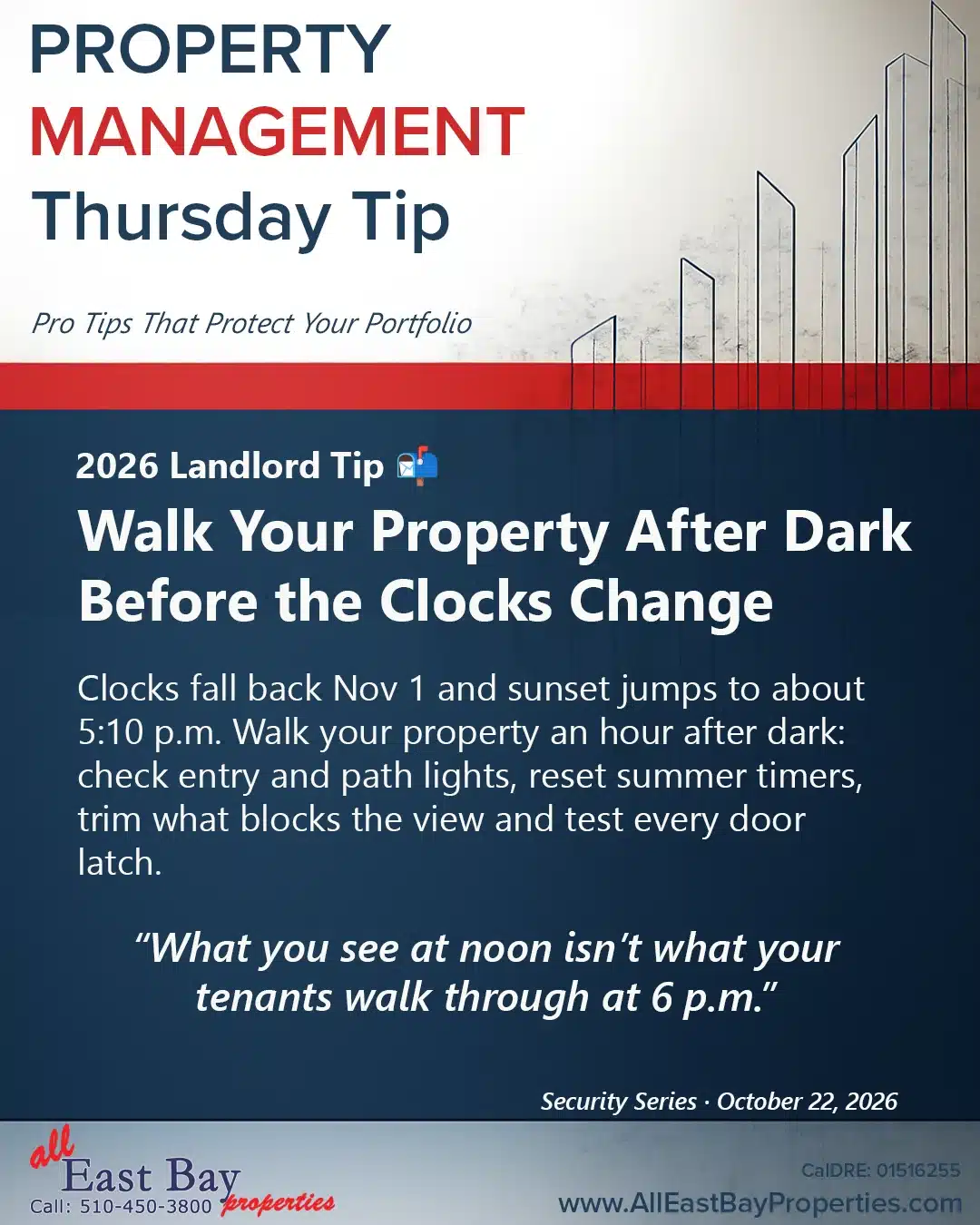
💡 Clocks fall back November 1, and what you see at noon isn’t what your tenants walk through after dark. A six-step evening walk for East Bay landlords: lights, timers, sightlines and doors that latch.
💡 Cameras can document package theft, but they don’t change who can reach the box. Before the holiday shipping rush, walk your delivery route, find where packages actually sit, and put a second locked door between them and the street.
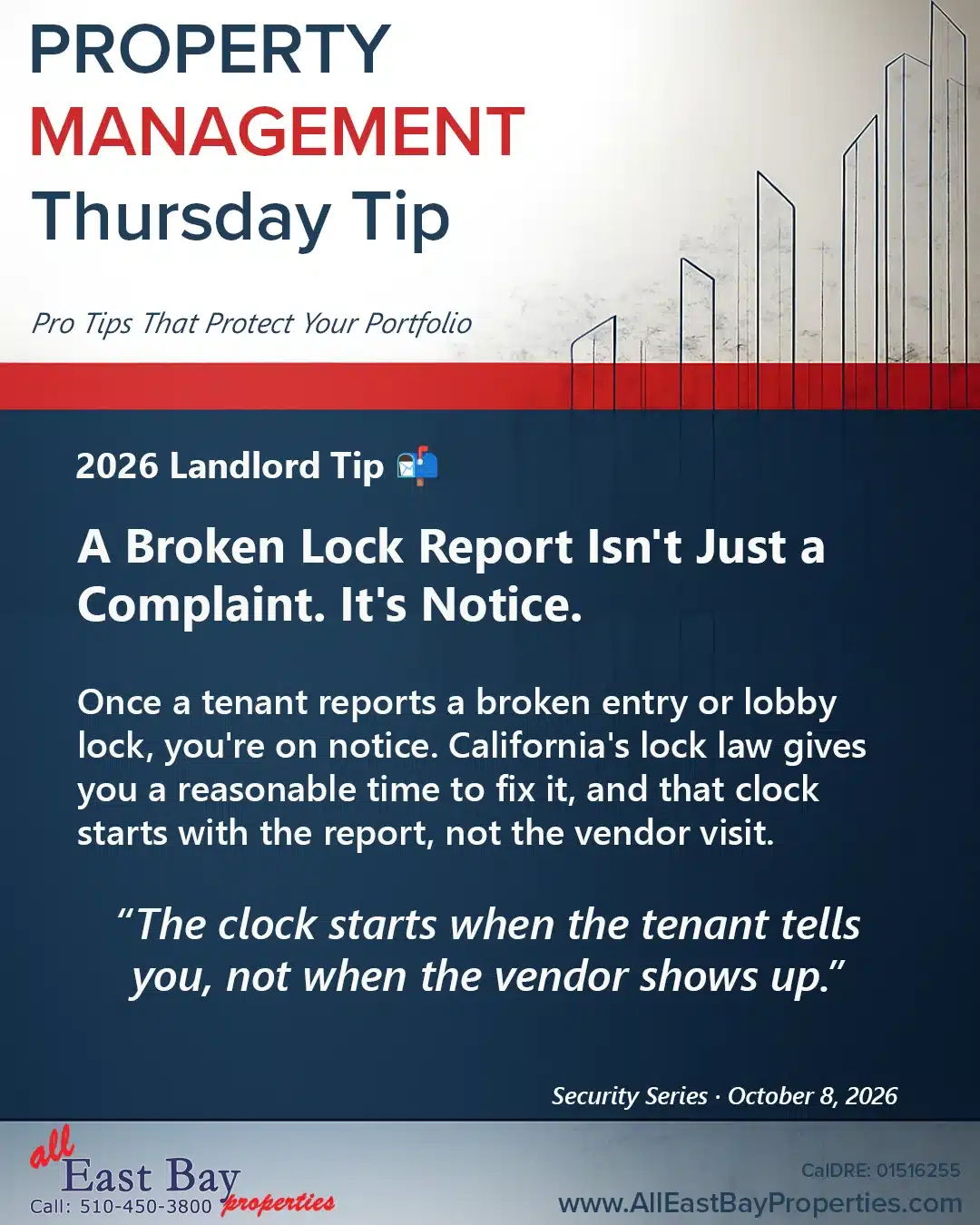
💡 When a tenant reports a broken entry or lobby lock, California’s lock law starts the clock: you’re expected to fix it within a reasonable time after notice. Here’s how we handle those reports, and five steps to make sure your record shows you acted.
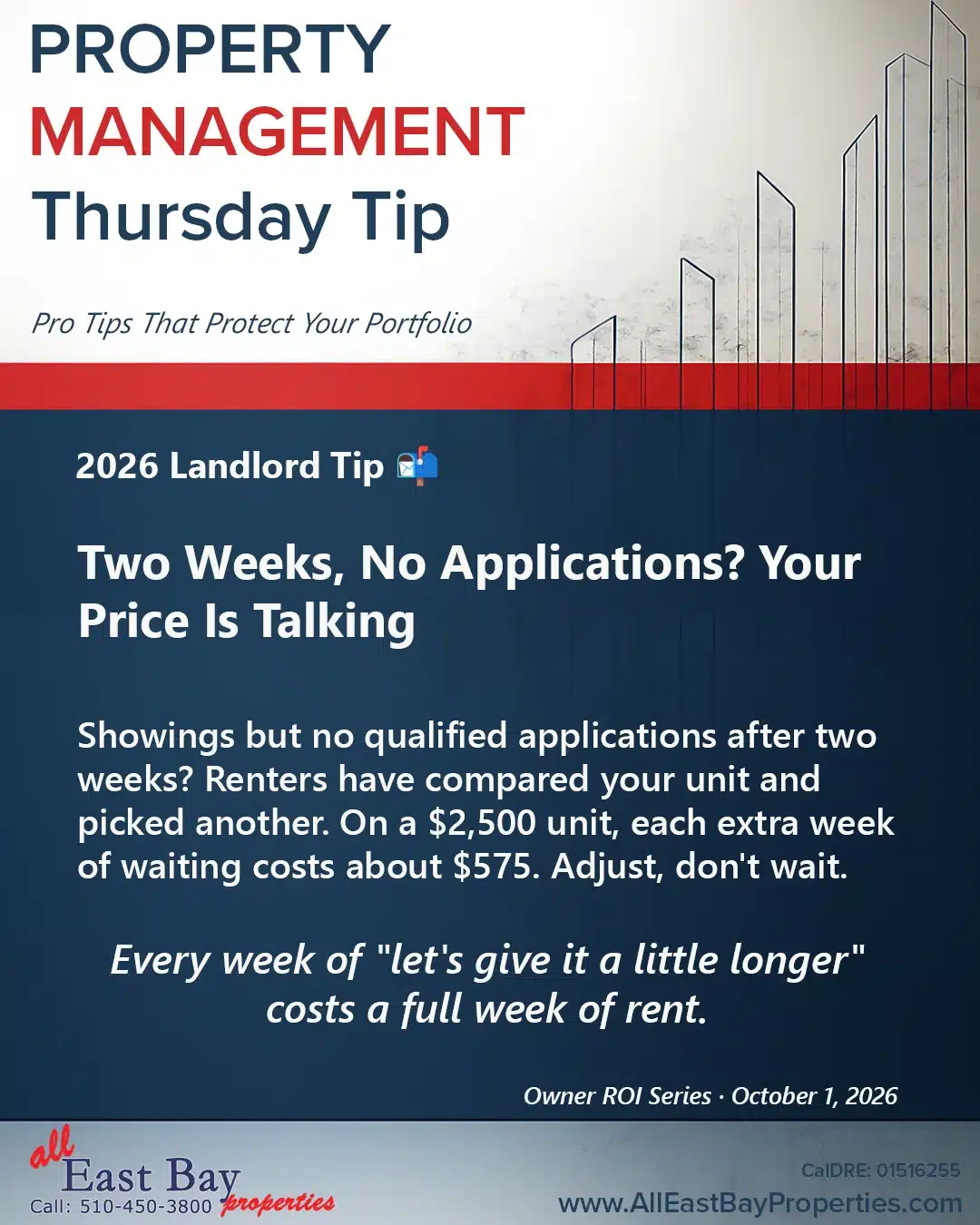
💡 Two weeks of showings and no qualified applications usually isn’t a slow start. It’s the market’s answer on price. Here’s what to check at the two-week mark, and why waiting another week usually costs more than the adjustment.
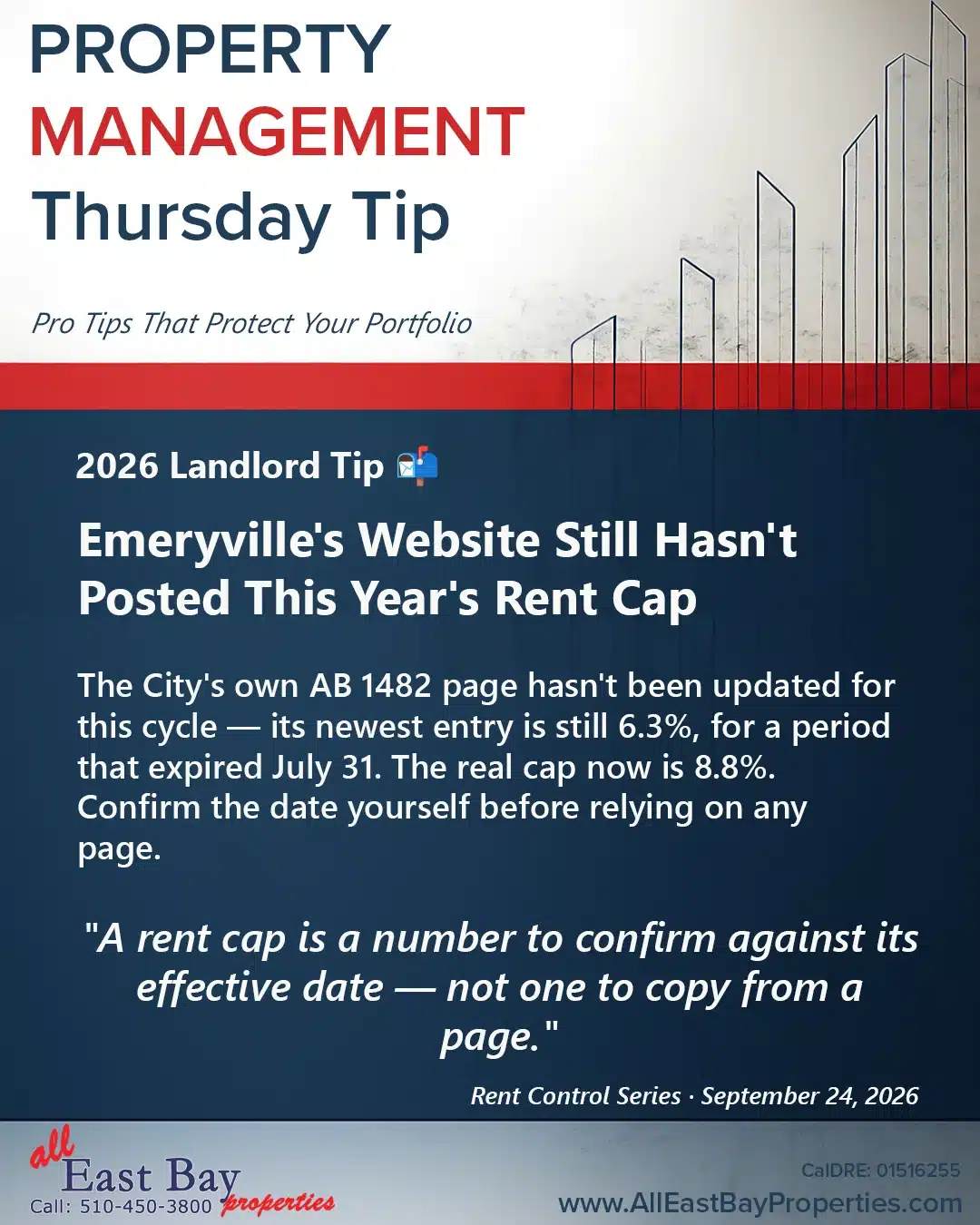
💡 Emeryville’s own Tenant Protection page hasn’t been updated for this cycle — its newest entry is still 6.3%, for a period that expired in July. Here’s why the city’s website isn’t where to confirm your number — and where is.
💡 Last cycle, Richmond’s rent cap ran higher than Oakland’s — close enough to round up and be fine. This cycle that flipped. Here’s why the old habit now over-charges.
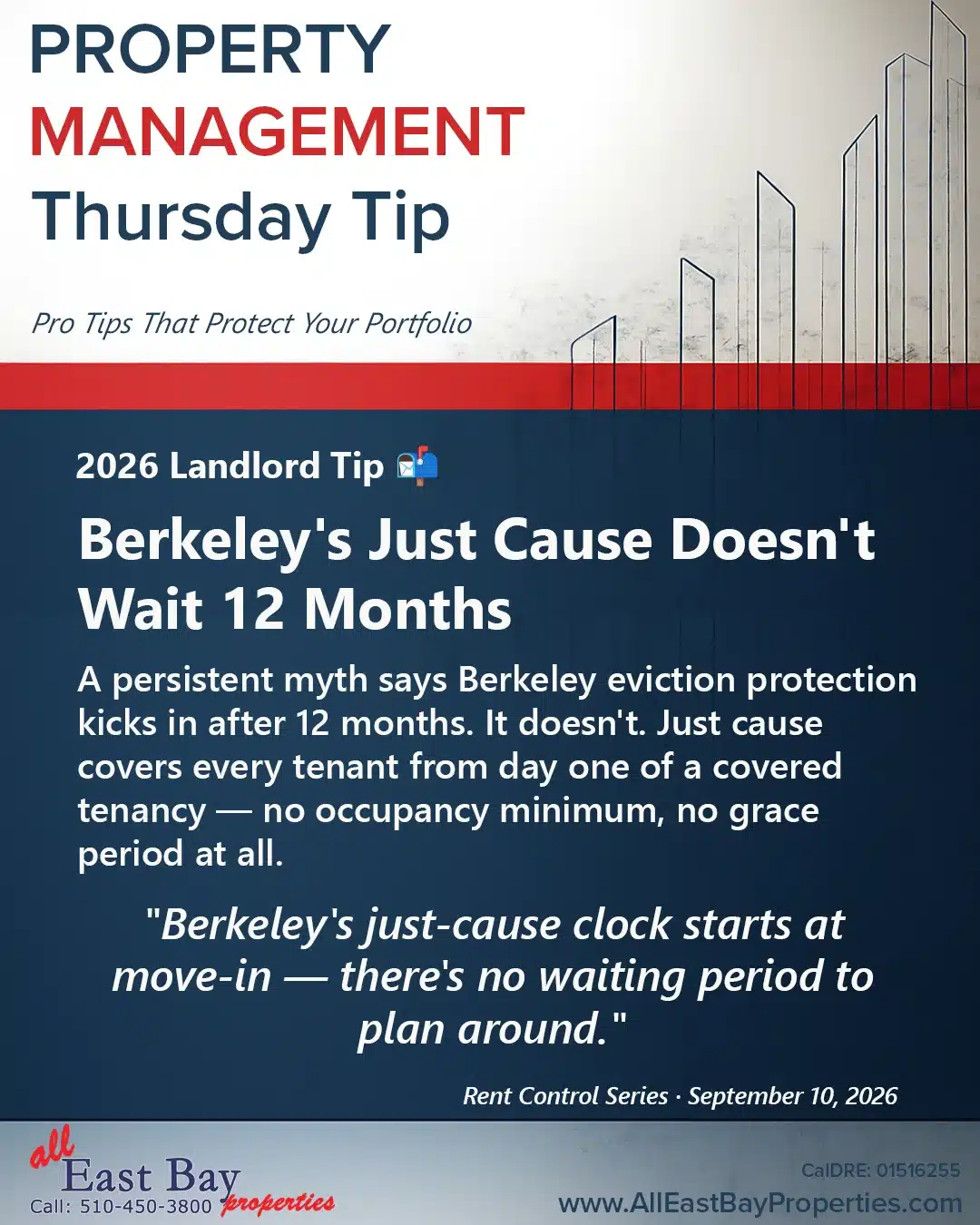
💡 A popular myth says Berkeley eviction protection waits 12 months. It doesn’t — just cause applies from day one. Here’s what that means before you serve any notice.
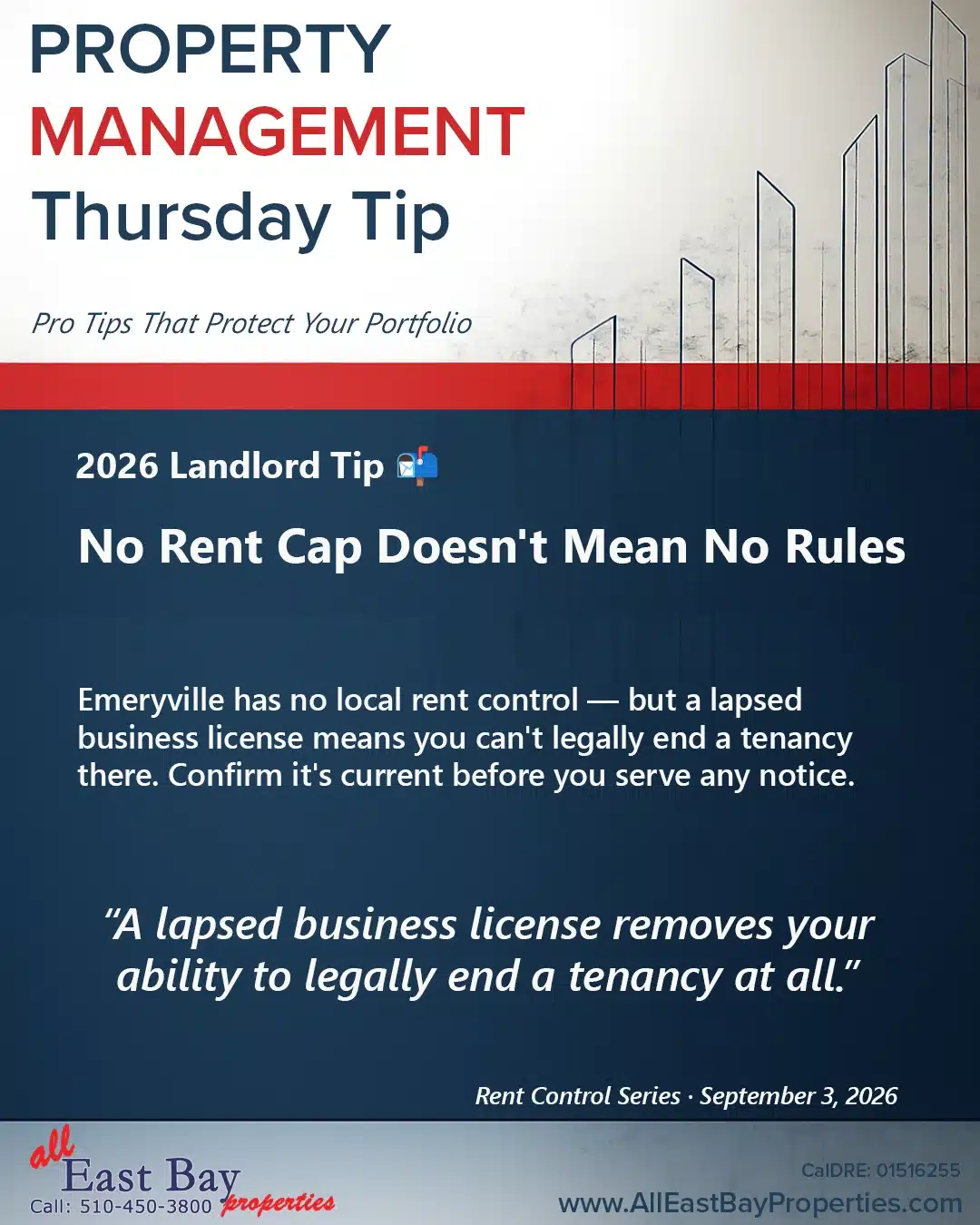
💡 Emeryville has no rent cap — but a lapsed business license means you can’t legally end a tenancy there, cause or no cause. Here’s what to check before you serve anything.
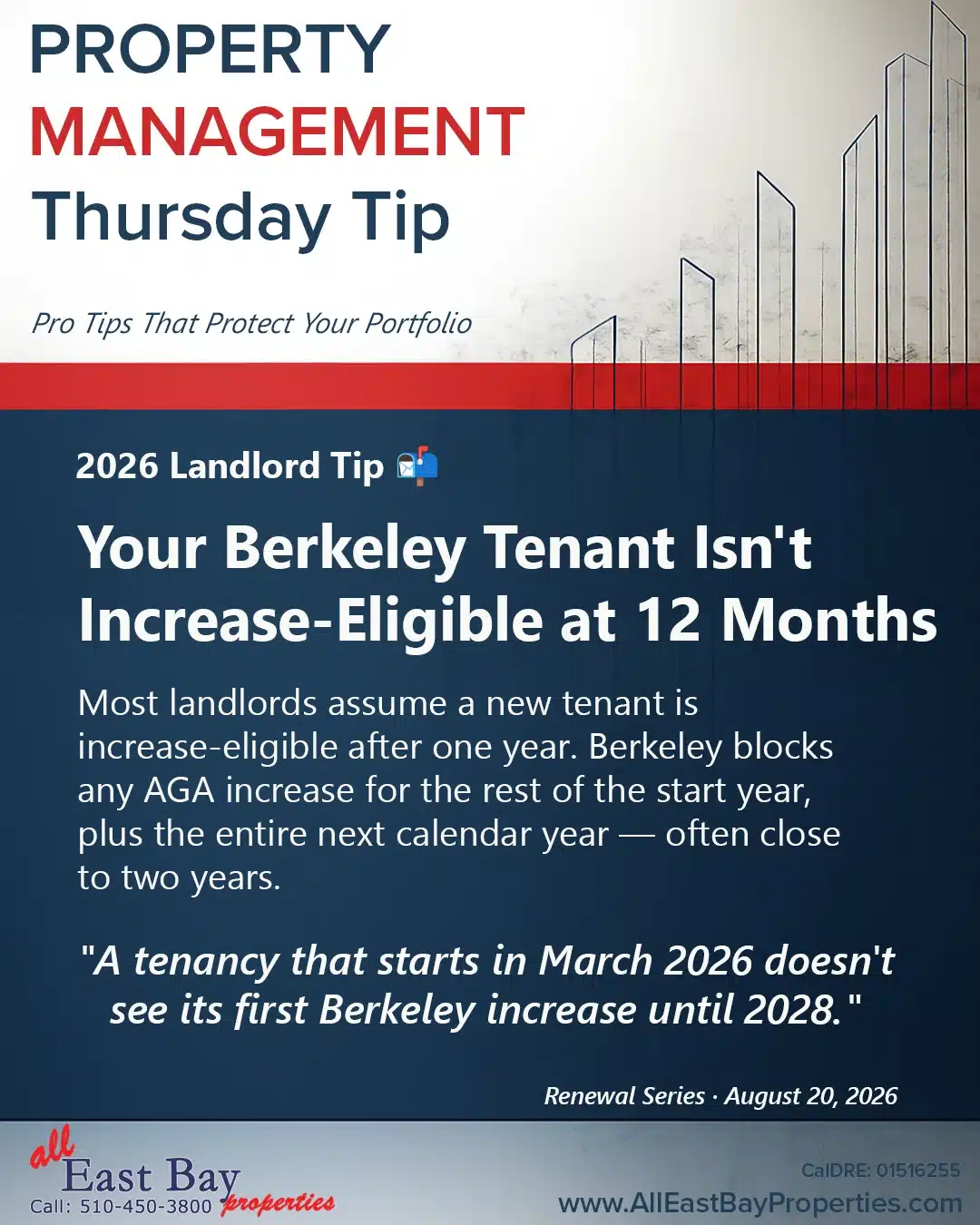
💡 Think a new Berkeley tenant is increase-eligible at the one-year mark, like everywhere else? Not quite — Berkeley’s delay runs through the entire following calendar year too, and we flag every new move-in date specifically so it isn’t missed.
Why This Matters for Bay Area Landlords
Rental rules in California — especially at the local level — don’t wait for lease renewals or calendar reminders.
A missed notice requirement, outdated clause, or procedural mistake can quietly invalidate enforcement actions or expose landlords to avoidable risk.
Our goal with Thursday Tips is simple: Help you catch problems early — before they become expensive.
Cookie Consent
We use cookies to improve your experience on our site. By using our site, you consent to cookies.
Contains information related to marketing campaigns of the user. These are shared with Google AdWords / Google Ads when the Google Ads and Google Analytics accounts are linked together.
90 days
__utma
ID used to identify users and sessions
2 years after last activity
__utmt
Used to monitor number of Google Analytics server requests
10 minutes
__utmb
Used to distinguish new sessions and visits. This cookie is set when the GA.js javascript library is loaded and there is no existing __utmb cookie. The cookie is updated every time data is sent to the Google Analytics server.
30 minutes after last activity
__utmc
Used only with old Urchin versions of Google Analytics and not with GA.js. Was used to distinguish between new sessions and visits at the end of a session.
End of session (browser)
__utmz
Contains information about the traffic source or campaign that directed user to the website. The cookie is set when the GA.js javascript is loaded and updated when data is sent to the Google Anaytics server
6 months after last activity
__utmv
Contains custom information set by the web developer via the _setCustomVar method in Google Analytics. This cookie is updated every time new data is sent to the Google Analytics server.
2 years after last activity
__utmx
Used to determine whether a user is included in an A / B or Multivariate test.
18 months
_ga
ID used to identify users
2 years
_gali
Used by Google Analytics to determine which links on a page are being clicked
30 seconds
_ga_
ID used to identify users
2 years
_gid
ID used to identify users for 24 hours after last activity
24 hours
_gat
Used to monitor number of Google Analytics server requests when using Google Tag Manager
1 minute
Marketing cookies are used to follow visitors to websites. The intention is to show ads that are relevant and engaging to the individual user.
Google Maps is a web mapping service providing satellite imagery, real-time navigation, and location-based information.
Registers a unique ID on mobile devices to enable tracking based on geographical GPS location.
1 day
VISITOR_INFO1_LIVE
Tries to estimate the users' bandwidth on pages with integrated YouTube videos. Also used for marketing
179 days
PREF
This cookie stores your preferences and other information, in particular preferred language, how many search results you wish to be shown on your page, and whether or not you wish to have Google’s SafeSearch filter turned on.
10 years from set/ update
YSC
Registers a unique ID to keep statistics of what videos from YouTube the user has seen.
Session
DEVICE_INFO
Used to detect if the visitor has accepted the marketing category in the cookie banner. This cookie is necessary for GDPR-compliance of the website.
179 days
LOGIN_INFO
This cookie is used to play YouTube videos embedded on the website.
Get your free eBook 5 Mistakes Landlords Make in the East Bay and start protecting your investment today.
By submitting, you consent to receive emails from All East Bay Properties. We never sell your information.
One more thing…
Get the trivia answer texted to you every Wednesday — before we post it anywhere else. Add your mobile number below to join. 2 msgs/week max.
By providing your phone number you agree to receive promotional messages from AllEastBay. Msg & data rates may apply. Text STOP to cancel · HELP for help. Terms · Privacy
Your eBook is on its way!
Check your inbox in a few minutes — and your spam folder if you don't see it.
We couldn't add your mobile number this time, but your eBook is on its way.