
Jason Crouch and the All East Bay Properties Editorial Team

Jason Crouch is the founder of All East Bay Properties, which he established in Emeryville in 2005. For more than 20 years, he has managed residential rental properties across Oakland, Berkeley, Emeryville, and the broader East Bay — navigating some of California’s most tenant-protective rental markets in the country.
Jason holds a California real estate broker license (DRE #01295378) and is a member of the Bridge Association of Realtors. He has served as Chair of the Emeryville Chamber of Commerce, as incoming Chair of the Oakland Association of Realtors, and on the board of BridgeMLS. He was also a board member of ECAP, the Emeryville Citizens Assistance Program.
His writing focuses on practical guidance for renters, property owners, and housing professionals, covering California rental laws, local regulations, tenant rights, rent control, security deposits, and day-to-day property management issues.
Content is provided for general informational purposes only and does not constitute legal advice. Readers should consult qualified professionals regarding their specific circumstances.
Core Topics We Cover
Explore Our Guides
Latest Articles

East Bay Rent Cap Update: New 2026–2027 Increase Limits for AB 1482, Oakland, Berkeley & Richmond
All four East Bay rent-cap rates for the 2026–2027 cycle are now confirmed: AB 1482 rises to 8.8%, Oakland’s RAP rises to 2.3%, Berkeley’s AGA holds at 1.0%, and Richmond’s AGA actually drops to 1.5%. Here’s what changed, when each takes effect, and what to check before your next rent increase notice.

What Does a Property Manager Actually Do? An East Bay Landlord’s Guide
Most landlords picture the job as “collects rent, calls a plumber.” That’s the smallest part. We break down the real day-to-day — leasing, screening, compliance, maintenance, accounting — plus the licensing question most owners skip and how to tell a good property manager from a bad one.
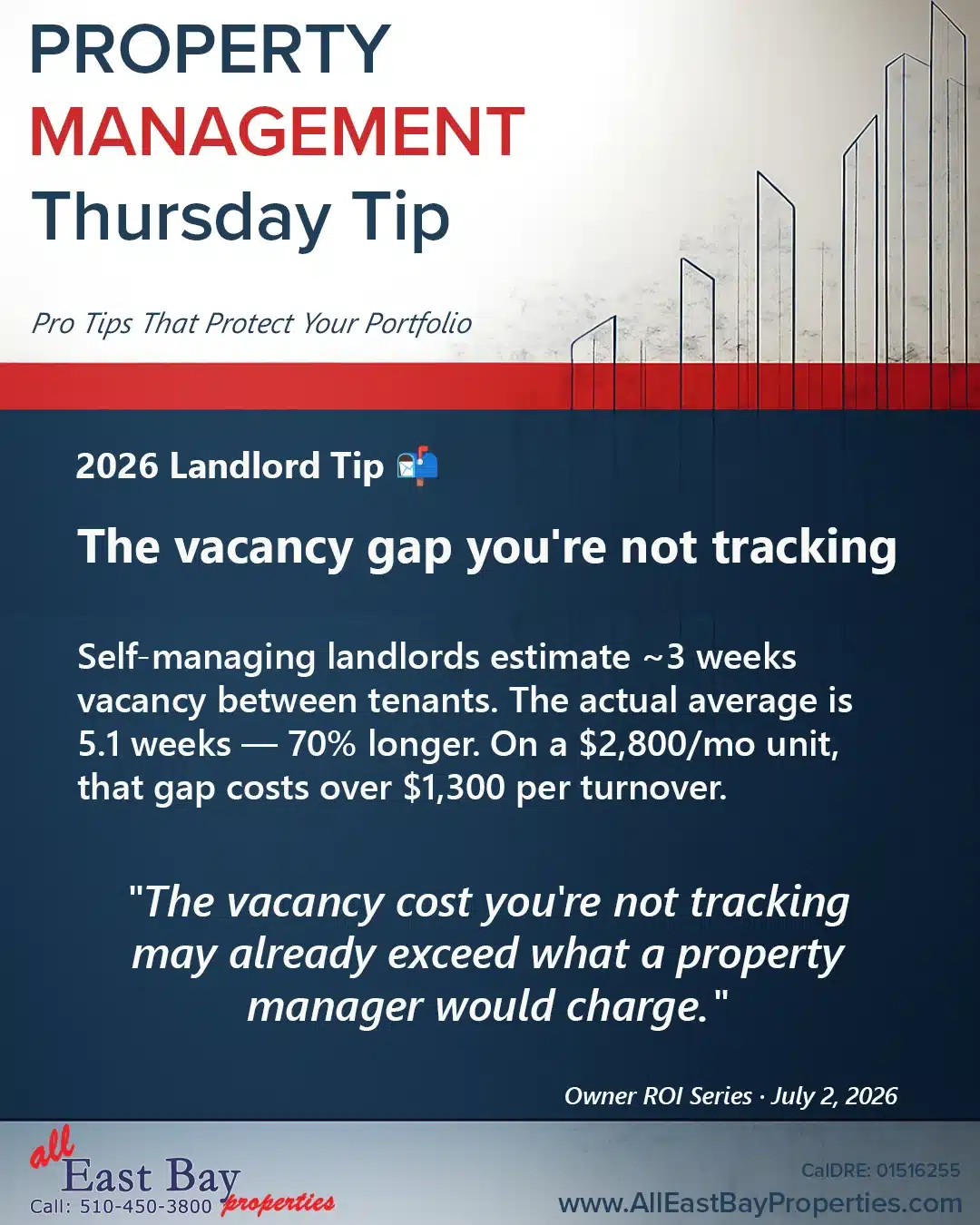
Thursday Tip: The Vacancy Gap You’re Not Tracking
💡 The Vacancy Gap Most Self-Managing Landlords Don’t See Coming Ask a self-managing landlord how long their unit typically sits vacant between tenants. Most will say two to three weeks. That’s the number they remember — because it’s the time the unit was actively listed. The PM Trends Report 2026 (Harris Poll, n=500 / ShowMojo…

Is a Property Manager Worth It? The Real Math for East Bay Landlords
Most East Bay landlords ask “is a property manager worth the fee?” — but that’s the wrong question. The right question is what self-managing is actually costing you. We break down the real math: vacancy drag, compliance risk, and what professional management covers — so you can decide based on numbers, not assumptions.
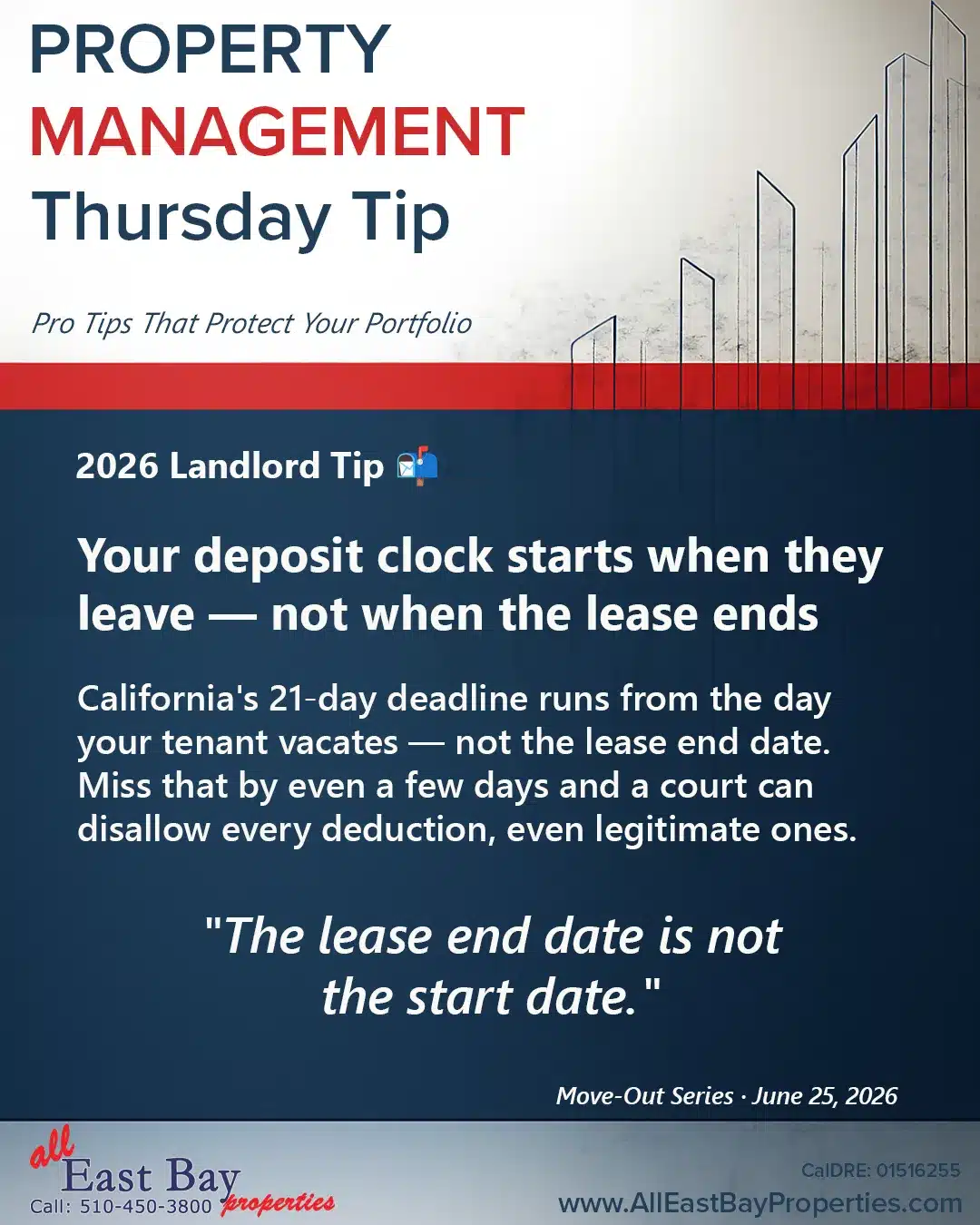
Thursday Tip: Your 21-Day Deposit Clock Starts When the Tenant Leaves
💡 Thursday Landlord Tip — The 21-Day Deposit Clock Most East Bay landlords know California has a 21-day security deposit return deadline. Fewer know exactly when that clock starts — and the difference can cost you every deduction you were entitled to make. The rule California landlords get wrong most often Under Civil Code §1950.5,…

California’s 21-Day Security Deposit Return Law: What Landlords Must Do (and When)
Most California landlords know there’s a 21-day deadline to return a security deposit — but two things consistently trip them up: they calculate from the wrong date, and they don’t know what to do when a repair isn’t finished in time. This guide covers when the clock actually starts, what must be included in your…

Oakland Just Cause Eviction: Legal Grounds, Notice Requirements & What Landlords Must Know (2026)
Oakland’s Just Cause for Eviction Ordinance limits landlords to exactly 11 permitted grounds — and the rules are stricter than most owners realize. This guide covers all 11 grounds under OMC 8.22.360, the HUD Fair Market Rent nonpayment threshold (which determines the minimum a tenant must owe before a notice is valid), owner move-in requirements,…

Thursday Tip: The Photo You Must Take Before Your Cleaning Crew Arrives
California’s AB 2801 requires move-out photos before any cleaning or repairs begin. The legal baseline closes the moment a vendor enters — here’s the operational fix that makes compliance automatic.

Move-Out Photos in California: What AB 2801 Requires (2026)
California’s AB 2801 requires dated move-out photos before deducting from a security deposit. Here’s exactly what to document — and what happens if you don’t.
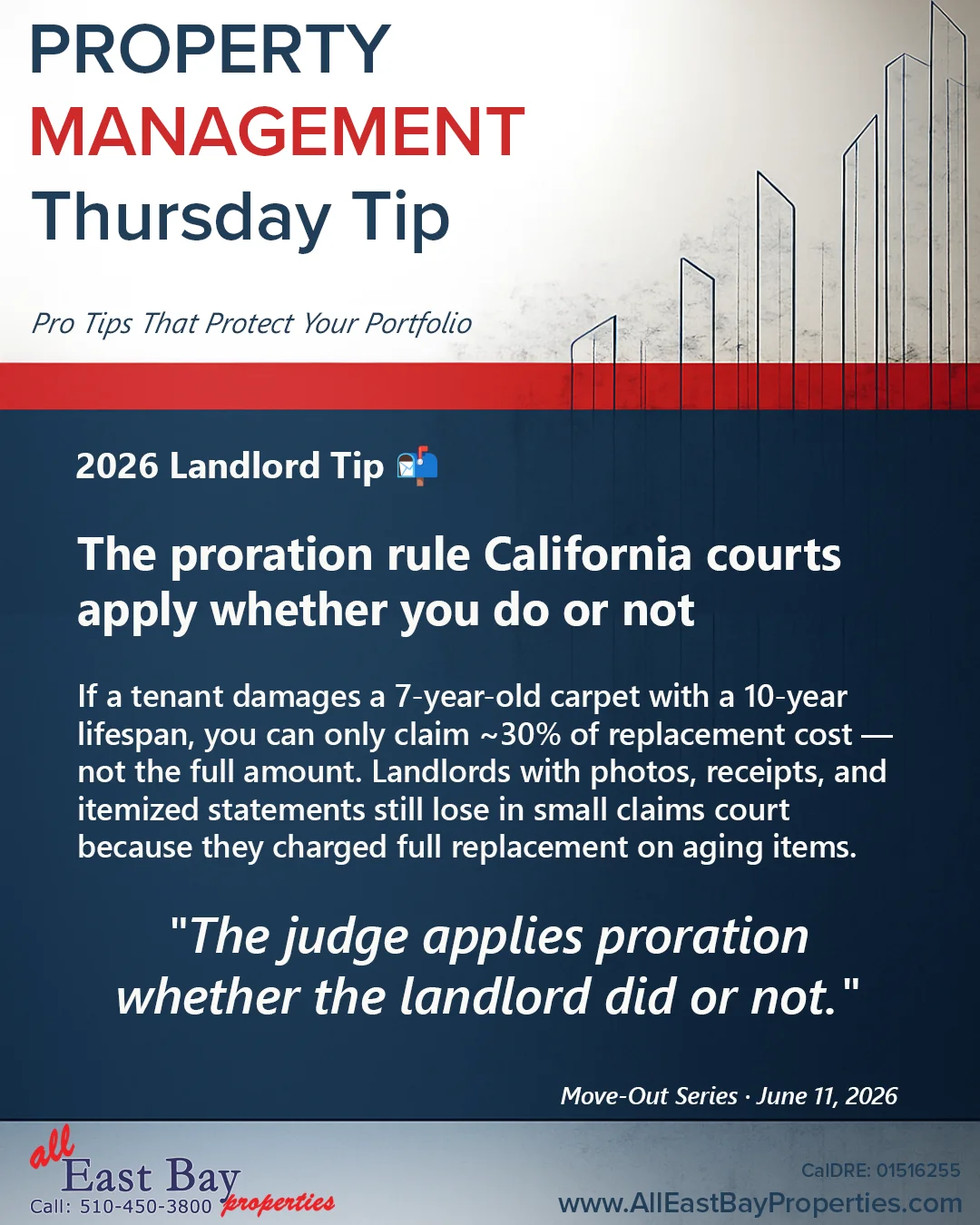
Thursday Tip: The California Proration Rule That Costs Landlords in Small Claims Court
California courts apply the proration rule to security deposit damage claims whether the landlord does or not. Here’s what that means for your move-out deductions — and the one thing to document at move-in.