
Last updated April 2026 — reflects current California landlord maintenance law, East Bay enforcement context, and 2026 habitability standards.
Share this post
Spring Maintenance Quick Facts for East Bay Landlords
- Checklist covers: HVAC, smoke & CO detectors, water heaters, roof & gutters, weatherstripping, exterior lighting, pest prevention, plumbing — 8 systems
- Smoke detectors required: Every sleeping area and every floor — California Health & Safety Code §13113.7
- CO detectors required: Any dwelling with attached garage, fossil fuel appliance, or fireplace — Health & Safety Code §17926
- CO sensor lifespan:
5–7 years — the test button confirms the alarm works, not that the sensor still detects CO. Check the manufacture date on the back. - Water heater strapping: Seismic strapping required by California law — Health & Safety Code §19211
- Habitability obligation: California Civil Code §1941 requires landlords to maintain rental units in habitable condition at all times
- Pest control: Rodent and vermin infestations are a landlord habitability obligation — Civil Code §1941.1
- Entry notice: 24-hour written notice required before any non-emergency maintenance visit — Civil Code §1954
- Documentation standard: Written notice → dated photos → work order on day issue is identified → vendor invoice filed by property and date
- No repair markup: All East Bay Properties owners pay contractor invoices directly at cost — no management fee added to maintenance
- East Bay enforcement: Berkeley Rent Stabilization Board and Oakland Rent Adjustment Program both have jurisdiction over habitability complaints
Video Transcript
Spring is here — and if you own a rental in the East Bay, there are five things you need to check before summer. Let’s go.
First: test every smoke and carbon monoxide detector. Replace anything older than seven years. California law requires both, and failure to maintain them can void your insurance. This one’s non-negotiable.
Second: your HVAC. Replace air filters, run a full test cycle on both heat and cooling, and schedule your annual service now — before every HVAC tech in the East Bay is booked through August.
Third: gutters and roof. Clear out whatever the winter left behind, check for sag or separation in the gutters, and do a visual scan of the roof. Interior water damage from a blocked downspout is entirely preventable.
Fourth: your water heater. Test the pressure relief valve, check for corrosion at the base, and confirm the earthquake strapping is intact. A water heater failure in the middle of summer is one of the most disruptive maintenance events in a rental.
Fifth — and most important: document everything. Dated photos, written notes, work orders in your system. In California, your paper trail is your legal protection. If it isn’t documented, it didn’t happen.
Full spring checklist — HVAC, plumbing, pest prevention, weatherstripping — linked below. All East Bay Properties. We handle the inspections, the vendors, and the documentation. So you don’t have to.
Who this checklist is for:
→ Self-managing landlords who want to stay compliant and avoid costly surprises this season
→ East Bay property owners evaluating whether professional management is worth the cost — and what “worth it” looks like in practice
Spring is the most consequential maintenance window of the year for East Bay landlords. Winter rains test roofs, gutters, and weatherproofing. Summer heat is coming. Smoke detector batteries die quietly. And tenants in Berkeley and Oakland are well-informed about their habitability rights.
A deferred inspection in April is a documented repair complaint in July.
This checklist is built for East Bay conditions specifically: aging housing stock in Oakland and Berkeley, seasonal moisture patterns, and the full legal context of California’s implied warranty of habitability. If you want the legal foundation for why these inspections matter, our earlier guide on California’s implied warranty of habitability covers that in depth. This post is the practical spring execution.
1. HVAC & Air Quality
Spring is the right time to inspect and service HVAC systems before cooling season demand peaks. For older East Bay properties — particularly pre-1980 Berkeley and Oakland housing stock with original duct systems — deferred HVAC maintenance is a common source of habitability complaints and expensive emergency calls in mid-summer.
- Replace air filters. Standard 1-inch filters every 1–3 months; high-efficiency 4-inch media filters every 6–12 months. Dirty filters degrade air quality and can trigger legitimate tenant complaints under Civil Code §1941.
- Test heating and cooling function. Run both heat and air conditioning through a full cycle before warm season. Compressor failures found in June are significantly more expensive — in parts, labor, and urgency — than those caught in April.
- Inspect and clean air vents and returns. Blocked vents in individual rooms are a frequent and preventable habitability issue.
- Schedule annual HVAC servicing if not done since last spring. A licensed HVAC technician should check refrigerant levels, clean coils, and confirm system capacity.
- Check for mold or moisture around air handlers, particularly in basement or crawl space installations common in older East Bay buildings. Mold is a habitability violation under California law — see Health & Safety Code §17920.3 for the statutory definition of substandard conditions.
- Note mini-split systems. Increasingly common in East Bay upgrades. These require filter cleaning at the air handler (not just a central return) and should be inspected for refrigerant leaks and adequate drainage at the condensate line.
2. Smoke & Carbon Monoxide Detectors

California law requires working smoke detectors in every sleeping area and on every floor of a rental unit under Health & Safety Code §13113.7. Carbon monoxide detectors are required in any dwelling with an attached garage, a fossil fuel-burning appliance, or a fireplace under Health & Safety Code §17926 — which covers the vast majority of East Bay rental properties.
Failure to maintain these is not just a habitability violation. Non-functional detectors can void your property insurance in a loss event, and courts have held landlords to a high standard of liability when required safety equipment was non-operational at the time of an incident.
Insurance risk: A non-functional smoke or CO detector at the time of a fire or carbon monoxide event can support an insurance company’s denial of a claim. The burden is on the landlord to demonstrate maintenance — not on the insurer to prove neglect. See California Insurance Code §533 regarding insurer defenses based on willful acts and neglect.
- Test every smoke detector and replace batteries. Battery-operated units need annual replacement; hardwired units with battery backup should also be tested monthly.
- Test every CO detector using the test button. Replace any unit older than 7 years. The test button confirms the alarm circuit works — it does not confirm the electrochemical sensor is still detecting CO. Most CO sensors have a functional lifespan of 5–7 years regardless of power status. Check the manufacture date on the back of the unit.
- Replace any detector that fails the test immediately. This is a non-deferrable habitability item.
- Check detector placement. Smoke detectors must be inside each bedroom and immediately outside sleeping areas. CO detectors must be on each floor and near sleeping areas — per Health & Safety Code §17926.
- Document all tests and replacements with date, property address, and location of each device. This is one of the most important paper-trail items in any habitability or liability dispute.
3. Water Heater Inspection

Water heater failure is among the most disruptive maintenance events in a rental. California courts have consistently held that a unit without hot water is a habitability deficiency requiring urgent remedy — hot water is explicitly listed as a habitability requirement under Civil Code §1941.1(a)(3). A spring inspection takes 20 minutes and can prevent an emergency service call in August when vendor availability is worst.
- Check the temperature and pressure relief valve (T&P valve) by lifting the lever briefly. If no water discharges or the valve won’t reset, replace it. The California Plumbing Code (Title 24, Part 5, CPC §504) requires an approved, listed T&P relief valve on all storage water heaters, with a Btu discharge capacity not less than the input rating of the unit.
- Inspect the area around the base for rust, corrosion, or moisture — early signs of tank deterioration before a failure event.
- Check the anode rod if the unit is more than 5 years old. A depleted anode rod significantly shortens tank life. Rod inspection typically requires a licensed plumber.
- Confirm the temperature setting at 120°F — the minimum recommended by the U.S. Department of Energy and consistent with CDC Legionella guidance, which recommends maintaining circulating hot water at or above 120°F to inhibit Legionella growth while staying within anti-scald thresholds for residential plumbing.
- Note the unit’s age and manufacture date. Average water heater lifespan is 8–12 years. Budget for proactive replacement if yours is in that window.
- Confirm earthquake strapping is in place — required by California Health & Safety Code §19211 for all residential water heaters. Unstrapped water heaters can rupture gas lines or plumbing during a seismic event.
- Note permit status for any recent replacement. Unpermitted or improperly strapped water heaters can create complications during resale. Both Oakland’s Building Services Division and Berkeley’s Building & Safety Division require permits for water heater replacement.
4. Roof & Gutters
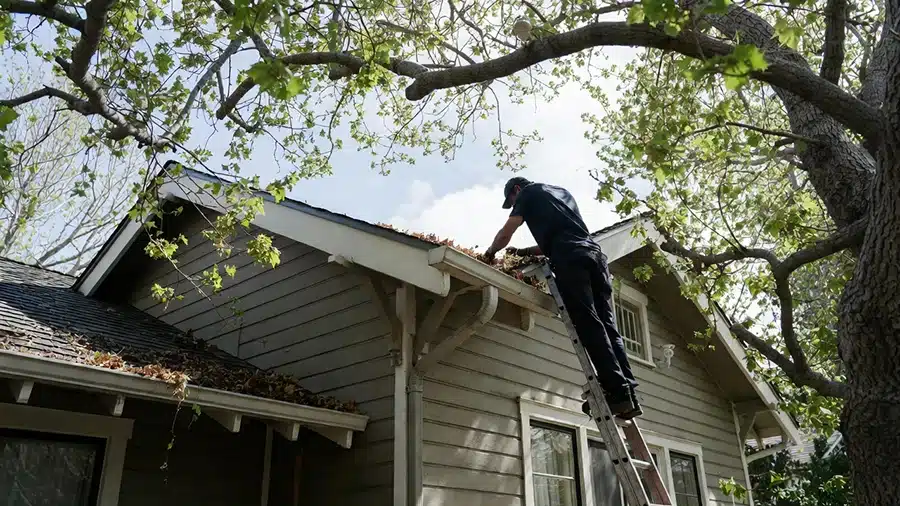
East Bay winters deliver concentrated rainfall between November and March. Spring is the window to assess winter damage before you need the roof again in December. Deferred gutter maintenance is one of the most common triggers for water intrusion claims — and once moisture enters walls, you’re no longer dealing with a maintenance issue. You’re dealing with mold exposure liability, tenant relocation costs, and remediation bills that dwarf the cost of an annual gutter cleaning.
California’s Health & Safety Code §17920.3(a)(11) specifically lists dampness, mold, and deterioration resulting from water intrusion as conditions that render a dwelling substandard.
- Clear gutters and downspouts of debris, including granules shed from aging asphalt shingles — a sign of roof deterioration worth noting separately.
- Inspect gutters for sagging, separation, or improper pitch. Gutters that hold standing water or pull away from the fascia need repair before next winter.
- Visually inspect the roof from the ground and, if accessible, from above. Look for missing or damaged shingles, exposed flashing at chimneys and skylights, and soft spots near ridges or valleys.
- Note flat roof areas if applicable. Flat roofs and low-slope sections — common on Oakland duplexes and fourplexes — require separate attention. Standing water after rain, membrane bubbling, or failed flashing at parapet walls are the primary failure points.
- Inspect the attic for signs of winter leaks — staining, moisture, or mold on the underside of the roof deck that may not yet be visible from below.
- Document condition with dated photos, including areas showing wear. This establishes baseline condition and protects against inflated damage claims later in the tenancy.
5. Weatherstripping & Window and Door Seals
Failing weatherstripping affects habitability (drafts, pest entry, weather protection) and energy efficiency — particularly relevant for utility-included units. Adequate weather protection is a habitability requirement under Civil Code §1941.1(a)(1), which requires that a dwelling “effectively resist[] the elements.” Older wood-frame windows and door frames in East Bay housing stock expand, contract, and gap seasonally.
- Inspect all exterior door seals — bottom sweeps and perimeter weatherstripping. Visible daylight around a door frame is an immediate fix item.
- Test window latches and seals. Windows that won’t latch are both a security and habitability concern.
- Check for gaps at window frames and caulk as needed. Failed caulk at window perimeters is a primary pathway for water intrusion in older East Bay buildings.
- Inspect sliding door tracks for debris and verify doors lock fully. Sliding doors that don’t latch securely are a security issue in any rental unit.
6. Exterior Lighting
Adequate exterior lighting is both a habitability expectation and a premises liability consideration. In Oakland, inadequate lighting in common areas — stairwells, walkways, parking — is a factor courts consider in slip-and-fall and security incident claims under premises liability doctrine. Adequate lighting of common areas is also a component of housing code compliance under the Oakland Building Maintenance Code (Chapter 15.08) and the Berkeley Housing Code (BMC §19.40.030), which requires that all public and common hallways, corridors, stairs, and exit-ways be adequately lighted at all times.
- Test all exterior and common-area lights. Entry, walkways, parking, stairwells. Replace burned-out bulbs immediately.
- Inspect fixtures for weather damage, particularly those in exposed locations. Water-damaged fixtures that allow moisture into the socket are a fire hazard.
- Consider motion-activated fixtures in high-traffic areas. They extend bulb life, reduce energy cost, and are generally preferred by tenants.
- Check timer or photocell sensors — confirm they’re set correctly for current daylight hours following the spring time change.
7. Pest Prevention
Spring brings increased pest pressure across the East Bay — ants and earwigs moving inside as soil saturates, rodents seeking access as conditions change. Under California Civil Code §1941.1(a)(6), a unit must be “free from dampness and vermin” to meet habitability standards. Rodent and cockroach infestations are a landlord habitability obligation regardless of how they originate — unless the infestation is demonstrably caused entirely by the tenant.
Proactive spring treatment is significantly cheaper than reactive remediation — and a vendor invoice from a scheduled licensed treatment is contemporaneous documentation that stands up in a complaint filed months later.
If your property has had any pest issues in the past 12 months, spring treatment is a higher-priority item than most landlords treat it. Deferred pest management is one of the fastest pathways to a formal habitability complaint in Berkeley and Oakland.
- Inspect the perimeter for entry points — gaps around pipes, cracks in foundation, openings where utilities enter. Seal with appropriate materials (steel wool + caulk for rodent exclusion, foam for insect gaps).
- Schedule a preventive perimeter treatment with a CDPR-licensed pest control operator. Quarterly treatments in Berkeley and Oakland are standard practice for well-managed properties.
- Clear debris from the building perimeter — wood piles, overgrown vegetation, and accumulated materials against the foundation provide harborage and entry points.
- Inspect under sinks and around plumbing penetrations during a properly noticed entry — see our guide on California’s landlord entry notice requirements — for evidence of rodent activity or moisture.
- File all treatment invoices by property and date. A contemporaneous invoice is the best documentation of active management if a complaint is filed later.
8. Plumbing
Plumbing failures in California rentals are habitability events requiring urgent landlord response. Civil Code §1941.1(a)(3) requires that a rental unit have working plumbing facilities and hot running water — a failed water heater, burst pipe, or non-functional toilet qualifies as a habitability deficiency that triggers the landlord’s duty to act promptly. The spring inspection goal is identifying slow-developing problems before they become emergencies.
- Check under all sinks for evidence of slow leaks — staining, moisture, warped cabinet bases.
- Test all shut-off valves — under sinks, at toilets, at the water main — to confirm they turn freely. Valves that seize in place are a liability when you need to isolate a leak quickly.
- Inspect visible drain lines for signs of deterioration, particularly in older East Bay buildings with original cast iron or galvanized steel drain pipes.
- Check toilet operation — confirm no running (phantom flush), no rocking at the base (failed wax ring), no supply line corrosion.
- Test exterior hose bibs after winter. Cracked spigots from freeze events are more common in hillside East Bay properties.
- Note any slow drains and confirm your drain maintenance schedule with your licensed plumbing contractor.
Documentation: This Is the Job
In most landlord-tenant disputes, the issue isn’t what happened — it’s what you can prove happened.
Completing a spring inspection is necessary. Documenting it is what makes it count legally. California courts evaluate the landlord’s maintenance record as primary evidence in habitability claims under Civil Code §1942, deposit deduction disputes under Civil Code §1950.5, and harassment claims under Civil Code §1940.2. Your paper trail is your legal protection. If it isn’t documented, it didn’t happen.
The minimum documentation standard for any spring inspection or maintenance event:
- Written notice to the tenant before entry — at least 24-hour written notice per California Civil Code §1954. See our full guide on California landlord entry rules for the required format.
- Dated photos of every inspected area — baseline conditions throughout, not just problems. These are your before-and-after record if condition is disputed at move-out. See our guide on California’s security deposit law for how photo documentation ties directly to deposit deduction rights under Civil Code §1950.5.
- A work order created on the day the issue is identified, not after the repair is complete. The creation date establishes when you had documented notice — the legal starting point courts evaluate in a habitability dispute.
- Vendor invoice filed by property address and date of service. Invoices confirm who did the work, when, and at what cost — the basis for any legitimate deposit deduction.
- Brief written inspection notes — property address, inspector name, date, time, areas inspected, findings, and action taken.
What Professional Documentation Infrastructure Actually Looks Like
For owners working with a professional property manager, the advantage isn’t just that the inspection gets done — it’s that every step is documented, timestamped, and recoverable if there’s ever a dispute.
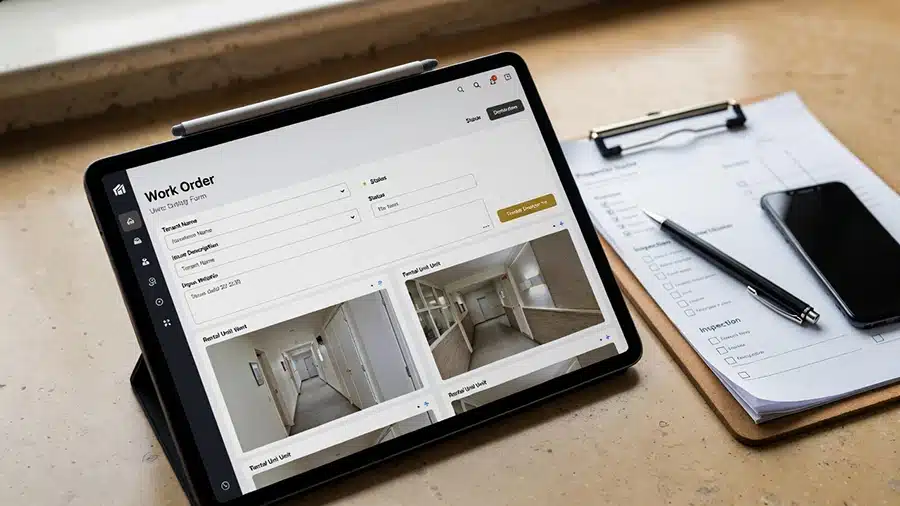
At All East Bay Properties, we manage the full maintenance workflow in AppFolio. When a maintenance issue is identified — during a spring inspection or at any point in the year — a work order is created that day. That work order creates a timestamped record of when the issue was discovered, which licensed vendor was assigned, and when the repair was completed. That record lives permanently in the system, tied to the property address, and can be exported as a complete maintenance history at any time.
AppFolio’s vendor management module also tracks each vendor’s license status, insurance documentation, and billing history. For East Bay landlords managing multiple units across Berkeley and Oakland, centralized vendor tracking prevents the costly problem of discovering mid-project that a vendor’s license has lapsed — which creates liability exposure and insurance complications.
The difference between a self-managing landlord and a managed property isn’t just the inspection getting done. It’s a defensible paper trail, across every vendor, every property, every year — automatically.
No-Markup Repairs: What That Actually Means
Most property managers profit from maintenance. We don’t.
At All East Bay Properties, owners pay contractor invoices directly — at cost, with no management markup. Most management companies add a fee on top of maintenance work, either as a percentage of the invoice or a flat coordination charge. We don’t, because owners deserve to know exactly what their properties cost to maintain, and vendors should be directly accountable for the work they bill for.
For spring maintenance in particular, this means owners receive vendor invoices line by line — no management layer inflating the cost of an HVAC service, a gutter cleaning, or a water heater inspection.
2026 Spring Maintenance Quick Checklist
Use this checklist as the basis for your inspection walk-through. Every item requiring a repair or follow-up should generate a dated work order on the day the issue is identified.
HVAC & Air Quality
- Replace HVAC air filters; test full heating and cooling cycle
- Schedule annual HVAC service (including mini-splits if applicable)
- Check air vents and returns; inspect around air handler for moisture or mold
Smoke & CO Detectors
- Test all smoke detectors; replace batteries
- Test all CO detectors; check manufacture date — replace any unit older than 7 years
- Confirm detector placement meets Health & Safety Code §13113.7 and §17926
Water Heater
- Test T&P valve; inspect base for moisture or corrosion
- Check anode rod if unit is 5+ years old
- Confirm temperature at 120°F; confirm earthquake strapping per H&S Code §19211
Roof & Gutters
- Clear gutters and downspouts; inspect for sagging or separation
- Visually inspect roof (including flat sections); inspect attic for leak signs
Weatherstripping & Seals
- Inspect and replace exterior door weatherstripping and window caulk as needed
- Test window latches and sliding door locks
Exterior Lighting
- Test all exterior and common-area lights; replace burned-out bulbs
- Verify timer/photocell sensors are correctly set
Pest Prevention
- Seal foundation and utility entry gaps
- Schedule quarterly licensed pest control treatment; file invoice
Plumbing
- Check under all sinks; test all shut-off valves
- Inspect toilet function; test exterior hose bibs
Documentation
- Create a dated work order for every identified issue
- Take dated before/after photos of all inspected and repaired areas
- File all vendor invoices by property address and date of service
If this checklist feels like more than a quick afternoon walkthrough, that’s because it is. For most East Bay landlords, spring maintenance isn’t just the inspection — it’s scheduling vendors, sending proper entry notices, documenting conditions, tracking repairs, and maintaining a defensible paper trail across multiple systems and units. Our property management services handle all of it: licensed vendors, no repair markup, and complete documentation on every work order.
Frequently Asked Questions
What does a landlord have to maintain under California’s implied warranty of habitability?
California Civil Code §1941 requires landlords to maintain rental properties in a habitable condition at all times. Civil Code §1941.1 specifies the conditions a dwelling must meet, including effective weather protection, functioning plumbing and gas facilities, working heating, hot running water, adequate lighting, functioning smoke and CO detectors, and freedom from dampness and vermin. A spring maintenance inspection focused on the eight categories in this checklist addresses the core habitability systems. See our full guide on California’s implied warranty of habitability.
Are carbon monoxide detectors required in California rental properties?
Yes. California Health & Safety Code §17926 requires CO detectors in any residential dwelling with an attached garage, a fossil fuel-burning appliance (furnace, water heater, gas range), or a fireplace. This covers the vast majority of East Bay rental units. CO detectors must be maintained in working condition — and “working” means both the alarm circuit and the electrochemical sensor are functional. The sensor has a lifespan of 5–7 years regardless of whether the unit has power. Check the manufacture date on the back. Failure to maintain required CO detectors can support insurance claim denial and landlord liability in a CO exposure event.
How often should a California landlord inspect a rental property?
California law does not specify a required frequency for general landlord inspections. In practice, most professional property managers conduct a formal documented inspection at least once per year — typically in spring — plus a move-in inspection and a pre-move-out inspection tied to each tenancy. The pre-move-out inspection under Civil Code §1950.5 must be offered in writing within the final two weeks of tenancy with 48-hour written notice. Any entry requires 24-hour written notice per Civil Code §1954.
Can a California landlord conduct a spring inspection without the tenant present?
Yes. California law does not require the tenant to be present for any entry with proper 24-hour written notice for a permitted purpose. The tenant may choose to be present or not. What the landlord cannot do is use the tenant’s absence as an opportunity to access areas unrelated to the stated purpose, or to enter without the required written notice. See our full guide on California landlord entry rules.
Is earthquake strapping required for water heaters in California?
Yes. California Health & Safety Code §19211 requires all residential water heaters to be braced, anchored, or strapped to resist falling or horizontal displacement due to earthquake motion. An unstrapped water heater that falls during a seismic event can rupture gas lines or plumbing connections, creating fire and flooding hazards. The California Department of Housing and Community Development (HCD) enforces this requirement in single-family and multifamily housing not otherwise regulated by a local building department.
How should a landlord document repairs for legal protection in California?
The documentation that provides the strongest protection: (1) written entry notice to the tenant before any maintenance visit per Civil Code §1954, (2) dated photographs before and after the repair, (3) a work order created on the day the issue is identified — the creation date establishes when the landlord had documented notice, which is the legal starting point courts evaluate, (4) vendor invoice filed by property address and date of service, and (5) brief written inspection notes. Repairs that aren’t documented are difficult or impossible to defend in habitability disputes and deposit litigation under Civil Code §1950.5.
What is the landlord’s obligation for pest control in California?
Civil Code §1941.1(a)(6) requires a rental dwelling to be “free from dampness and vermin.” Rodent and cockroach infestations are a landlord habitability obligation regardless of how they originated — unless the infestation is demonstrably and entirely caused by tenant conduct. Spring pest prevention — sealing entry points, scheduling perimeter treatments with a CDPR-licensed operator, clearing harborage areas — is proactive compliance with this obligation. Vendor invoices from scheduled treatments are the best contemporaneous documentation of active management.
Does All East Bay Properties charge a markup on maintenance and repairs?
No. All East Bay Properties owners pay contractor invoices directly at cost — no management markup is added to maintenance or repair work. Most property management companies add a fee on top of maintenance invoices, either as a percentage of the total or a flat coordination charge. We don’t, because owners deserve full transparency on what their properties cost to maintain and vendors should be directly accountable for their work. This applies to routine maintenance and emergency repairs alike.
Do Berkeley and Oakland have additional requirements for rental property maintenance?
Both cities enforce California’s habitability requirements through their own mechanisms and have active tenant advocacy resources that lower the barrier for formal complaints. The Berkeley Rent Stabilization Board and Oakland Rent Adjustment Program both have jurisdiction over habitability complaints, and a documented pattern of deferred maintenance can be used as evidence in eviction defense proceedings — even when the eviction is for an unrelated reason. Both cities also maintain local housing codes: Oakland Municipal Code Chapter 15.08 and Berkeley Housing Code Title 19 impose requirements that run alongside state law.
More In This Series
Articles and videos in this series