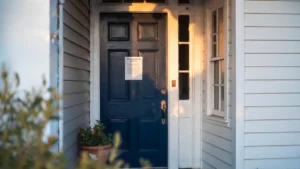

Can your landlord just walk into a rental whenever they want? In California — no. And if you’re a landlord not following the rules exactly, you could be forfeiting deposit deductions without knowing it.

Prefer to read? California Landlord Entry Rules in 2026 is the full written guide, with the notice checklist, the weekend-showing limits from Dromy v. Lukovsky, and the penalties for improper entry.
What This Video Covers
- Can your landlord just walk in? — 0:00
- The 24-hour written notice rule — 0:11
- Permitted reasons for entry — 0:30
- What counts as a real emergency — 0:50
- The pre-move-out inspection (most landlords miss this) — 1:07
- Berkeley & Oakland — why compliance matters more here — 1:38
- Free consultation — 1:57
Key Takeaways
- 24 hours’ written notice is required for virtually all non-emergency entries. The notice must state the date, approximate time, and specific purpose — verbal notice does not satisfy §1954.
- Only four permitted reasons exist for landlord entry: emergencies, repairs/improvements, showings, and court orders. A general inspection requires tenant consent.
- Emergency entry requires an immediate, genuine threat to health, safety, or property. A slow leak or a routine check does not qualify — courts look carefully at how this exception is used.
- The pre-move-out inspection is mandatory — it must be offered within the final two weeks of tenancy with 48 hours’ written notice. Skipping it can forfeit your right to make deposit deductions even for legitimate damage.
- Reasonable hours are generally Monday–Friday, 8 AM–5 PM. Weekend showings are permitted only under narrow circumstances established in Dromy v. Lukovsky (2013).
- Berkeley and Oakland landlords face elevated exposure — entry violations are more likely to trigger formal rent board complaints and appear in eviction proceedings here than in most California markets.
Laws & Resources Mentioned
- California Civil Code §1954 — Landlord entry rights and notice requirements
- California Civil Code §1950.5 — Security deposits and pre-move-out inspection requirements
- Dromy v. Lukovsky (2013) — Weekend showings: when they qualify and under what conditions
- Berkeley Rent Stabilization Board
- Oakland Rent Adjustment Program
- Full guide: California Landlord Entry Rules in 2026 — Inspections, Notice & What You Can and Can’t Do
- Related: California’s Implied Warranty of Habitability — What East Bay Landlords Must Maintain
Have Questions About Your Property?
We handle entry notices, move-out inspections, and deposit documentation for every property we manage — so the paper trail is always there when you need it.
Video Transcript
Can your landlord just walk into your rental whenever they want? In California — absolutely not. And if you’re a landlord who isn’t following the rules exactly, you could be losing money and not even know it.
California Civil Code 1954 requires landlords to give at least 24 hours’ written notice before entering a rental — for almost any reason. That notice has to be in writing, include the date, the time, and the specific purpose. A verbal heads-up doesn’t count. A text message usually doesn’t count either.
And landlords can only enter for specific permitted reasons — repairs, showings to buyers or new tenants, or a court order. “I just want to look around” is not a valid reason. Not with notice. Not without it.
And routine general inspections? Those require the tenant’s consent — they’re not automatically permitted under state law.
The one exception is a true emergency — active flooding, a gas leak, fire. Those don’t require notice. But a slow drip, a squeaky hinge, a check you want to do on short notice? That’s not an emergency. That’s a scheduled repair with proper notice.
Here’s the one most East Bay landlords miss — and it costs them real money. California law requires you to offer your tenant a pre-move-out inspection within the final two weeks of the tenancy. You give 48 hours’ written notice, walk through the unit together, and give the tenant a written list of anything that would come out of their deposit — so they have the chance to fix it before they leave. Skip that step, and you may lose your legal right to make those deductions. Even if the damage is real. Even if you have photos. The tenant was supposed to get the chance to fix it first.
For landlords in Berkeley and Oakland specifically — both cities have active rent boards and tenant advocacy organizations. Entry violations don’t just damage tenant relationships here. They can trigger formal complaints, rent board proceedings, and show up as evidence in eviction cases. Compliance isn’t optional in this market.
If you’d rather not manage entry notices, inspection scheduling, and deposit documentation yourself — that’s exactly what we do. All East Bay Properties handles the full process for every property we manage, so the paper trail is always there when you need it. Link below to schedule a free consultation.