
Spring isn’t just cleaning season for East Bay landlords — it’s compliance season. Before summer arrives, there are five maintenance checks California law makes non-negotiable. Here’s what to inspect, why each one matters legally, and how a proper paper trail protects you if anything is ever disputed.
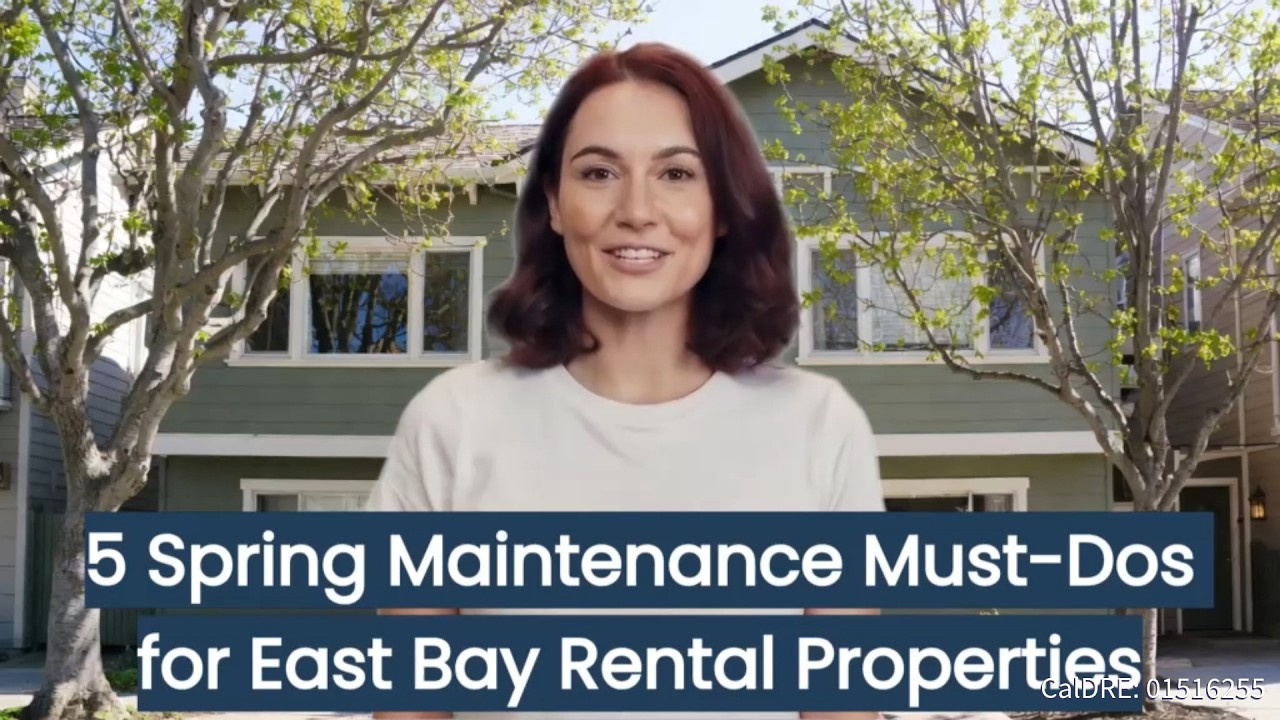
What This Video Covers
- Spring maintenance as a compliance obligation — 0:00
- #1 Smoke & CO detectors — California law, insurance risk, and sensor lifespan — 0:07
- #2 HVAC — filters, full test cycle, booking service before summer — 0:20
- #3 Gutters & roof — winter damage, water intrusion liability — 0:31
- #4 Water heater — T&P valve, corrosion check, earthquake strapping — 0:44
- #5 Document everything — work orders, photos, and why the paper trail is legal protection — 0:57
- Full checklist & next steps — 1:10
What East Bay Landlords Need to Know
Spring is the most consequential maintenance window of the year for East Bay rental properties — and the one where deferred decisions create the most legal exposure. Winter rains test roofs and gutters. Carbon monoxide detector sensors age past their functional lifespan with no visible sign. HVAC systems fail in mid-summer when every technician in the East Bay is already booked. Under California’s implied warranty of habitability — codified in Civil Code §1941 — landlords are legally required to maintain rental properties in habitable condition at all times. A deferred inspection in April is a documented habitability complaint in July.
The video covers five of the eight systems in the full spring checklist. The first is smoke and carbon monoxide detectors. California Health & Safety Code §17926 requires CO detectors in any dwelling with an attached garage, fossil fuel appliance, or fireplace — the vast majority of East Bay rentals. What many landlords don’t know: CO detector sensors have a functional lifespan of 5–7 years. The test button confirms the alarm circuit works, not that the sensor is still detecting CO. Check the manufacture date on the back. If it’s more than 7 years old, replace it. Non-functional CO detectors at the time of an exposure event can support insurance claim denial and landlord liability.
For HVAC, the urgency is timing. HVAC service vendors in Oakland and Berkeley are routinely booked 6–8 weeks out by mid-June. Scheduling a service call in April — replacing filters, running a full heating and cooling test cycle, having a technician inspect coils and refrigerant — prevents the emergency call in August that costs three times as much and disrupts your tenant during the hottest part of the year.
On gutters and roof: deferred gutter maintenance is one of the most common triggers for water intrusion claims. California Health & Safety Code §17920.3 specifically lists dampness, mold, and deterioration from water intrusion as conditions that render a dwelling substandard. Once moisture enters walls, you’re no longer dealing with a maintenance issue — you’re dealing with mold exposure liability, tenant relocation costs, and remediation bills that dwarf the cost of an annual gutter clearing.
Water heaters carry two separate legal requirements in California. The temperature and pressure relief valve must be functional — the California Plumbing Code (CPC §504) requires an approved, listed T&P valve on all storage water heaters. And earthquake strapping is mandatory under Health & Safety Code §19211. Both are inspectable conditions — and both can surface in habitability complaints or insurance claims if they’re found to be non-compliant after an incident.
The final point — documentation — is the one most landlords under invest in. In California, the paper trail determines the outcome in habitability disputes, deposit deduction defense, and rent board proceedings. Creating a work order the day an issue is identified (not after the repair) establishes when you had documented notice — the legal starting point courts evaluate. Dated photos, written inspection notes, and filed vendor invoices convert a maintenance visit into legal protection. If it isn’t documented, it didn’t happen.
Key Takeaways
- Smoke and CO detectors are both legally required — California Health & Safety Code §13113.7 requires smoke detectors in every sleeping area and on every floor. Health & Safety Code §17926 requires CO detectors in units with an attached garage, fossil fuel appliance, or fireplace. Non-functional detectors can void property insurance in a loss event.
- CO sensor lifespan is 5–7 years — the test button does not confirm the electrochemical sensor is functional. Check the manufacture date on the back of every unit and replace anything older than 7 years.
- HVAC service should be booked in spring — before summer demand makes scheduling difficult and emergency call rates spike. Test both heating and cooling before the season requires them.
- Gutter and roof maintenance prevents mold liability — blocked downspouts and winter roof damage are the primary pathways to water intrusion claims. Health & Safety Code §17920.3 lists dampness and mold as substandard conditions.
- Water heaters require a functional T&P valve and earthquake strapping — both are legal requirements. A hot water failure is a habitability event requiring urgent landlord response under Civil Code §1941.1.
- Documentation is as important as the repair itself — work orders, dated photos, and vendor invoices are your legal protection. The work order creation date establishes when you had notice of an issue — the clock courts use in habitability disputes.
- Berkeley and Oakland landlords face elevated compliance stakes — the Berkeley Rent Stabilization Board and Oakland Rent Adjustment Program both have jurisdiction over habitability complaints, and documented deferred maintenance can surface in eviction defense proceedings.
Laws & Resources Mentioned
- California Civil Code §1941 — Implied warranty of habitability; landlord’s duty to maintain rental properties
- California Civil Code §1941.1 — Specific habitability conditions including hot water, pest-free, weather protection
- California Civil Code §1954 — 24-hour written notice requirement for landlord entry
- California Health & Safety Code §13113.7 — Smoke detector requirements in residential rentals
- California Health & Safety Code §17926 — Carbon monoxide detector requirements
- California Health & Safety Code §17920.3 — Substandard conditions including mold, dampness, water intrusion
- California Health & Safety Code §19211 — Earthquake strapping required for all residential water heaters
- California Plumbing Code §504 — T&P valve requirements for storage water heaters
- Berkeley Rent Stabilization Board
- Oakland Rent Adjustment Program
- Full guide: The East Bay Landlord’s Spring Maintenance Checklist: What to Inspect, Fix & Document in 2026
- Related: California’s Implied Warranty of Habitability — What East Bay Landlords Must Maintain
- Related: California Landlord Entry Rules in 2026 — Inspections, Notice & What You Can (and Can’t) Do
Need Help Managing Spring Inspections for Your Portfolio?
We handle spring inspections, vendor coordination, and documentation for every property we manage — with no repair markup and AppFolio work orders on every maintenance item. So the paper trail is always there when you need it.
Video Transcript
Spring is here — and if you own a rental in the East Bay, there are five things you need to check before summer. Let’s go.
First: test every smoke and carbon monoxide detector. Replace anything older than seven years. California law requires both, and failure to maintain them can void your insurance. This one’s non-negotiable.
Second: your HVAC. Replace air filters, run a full test cycle on both heat and cooling, and schedule your annual service now — before every HVAC tech in the East Bay is booked through August.
Third: gutters and roof. Clear out whatever the winter left behind, check for sag or separation in the gutters, and do a visual scan of the roof. Interior water damage from a blocked downspout is entirely preventable.
Fourth: your water heater. Test the pressure relief valve, check for corrosion at the base, and confirm the earthquake strapping is intact. A water heater failure in the middle of summer is one of the most disruptive maintenance events in a rental.
Fifth — and most important: document everything. Dated photos, written notes, work orders in your system. In California, your paper trail is your legal protection. If it isn’t documented, it didn’t happen.
Full spring checklist — HVAC, plumbing, pest prevention, weatherstripping — linked below. All East Bay Properties. We handle the inspections, the vendors, and the documentation. So you don’t have to.