
💡 Two Weeks of Silence Is an Answer
Most landlords treat the first price cut as a last resort. They give the listing a third week, then a fourth, hoping the right renter will turn up at the asking price.
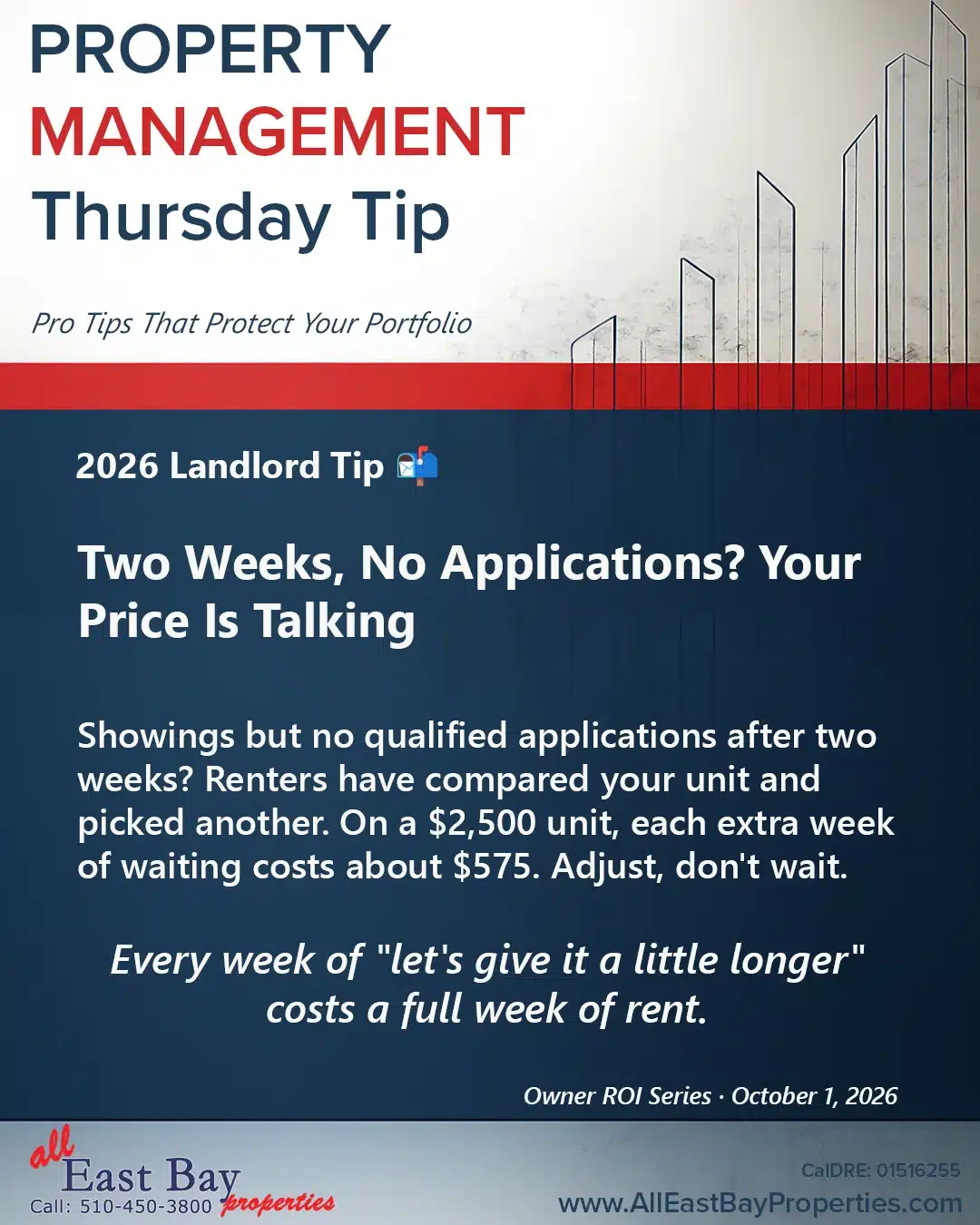
But the first 7–14 days of a listing tell you the most. If a unit has had showings and no qualified applications by the end of week two, renters have usually already compared it with everything else on the market and picked something else. That isn’t a slow start. It’s an answer. And on a $2,500-a-month unit, every extra week of waiting costs about $575 in rent.
What We See at AEBP
In one turnover we handled, the owner wanted to list well above what comparable units nearby were renting for. That’s an understandable instinct for a well-kept property. The unit went through several price reductions over a period of months, and it finally leased at about the level the comparables had suggested from the start. The market price wasn’t found by waiting. It was found by adjusting.
That’s why we look at the numbers at the two-week mark rather than at the calendar. Here’s how we read them (professional opinion, not a legal requirement):
| At day 14, you’re seeing… | It usually means… |
|---|---|
| Few inquiries, almost no showings | Renters are ruling it out at a glance, often on price or photos |
| Plenty of showings, no applications | Renters are comparing it and choosing something else, often on price relative to condition |
| Applications, but none that qualify | The price is reaching renters who can’t meet your screening standards |
| Several qualified applications | You’re at or near market. Screen carefully and lease. |
Every week of “let’s give it a little longer” costs a full week of rent.
What to Do at the Two-Week Mark
- Count, don’t guess: inquiries, showings, applications and qualified applications since launch.
- Rule out non-price causes: photos, showing availability, listing details and how fast inquiries get a reply.
- Check what renters are comparing you to right now: current listings and recent signed leases for similar units nearby, not what the unit rented for last time.
- Adjust once, meaningfully: if price is the likely cause, move it far enough to change which listings renters see yours alongside.
- Set the next check-in: seven days out, same numbers.
💡 This week’s takeaway
Two weeks of showings with no qualified applications is usually the market’s answer, not a slow start. Check the numbers at the two-week mark and adjust, instead of waiting. On a $2,500 unit, each extra week of hoping costs about $575, and in fall there are fewer renters to wait for.
📘 Learn more
This tip comes from Monday’s full guide on pricing and vacancy:
→ What Overpricing a Rental Really Costs: The Vacancy Math East Bay Landlords Miss — the week-by-week math, showing signals, and a before-you-list checklist
→ Thursday Tip: The Vacancy Gap You’re Not Tracking — how vacancy adds up across a full turnover
This tip is part of our ongoing education series for Bay Area landlords focused on compliance, risk reduction, and smarter property management. 📋 Browse all Thursday Landlord Tips →