
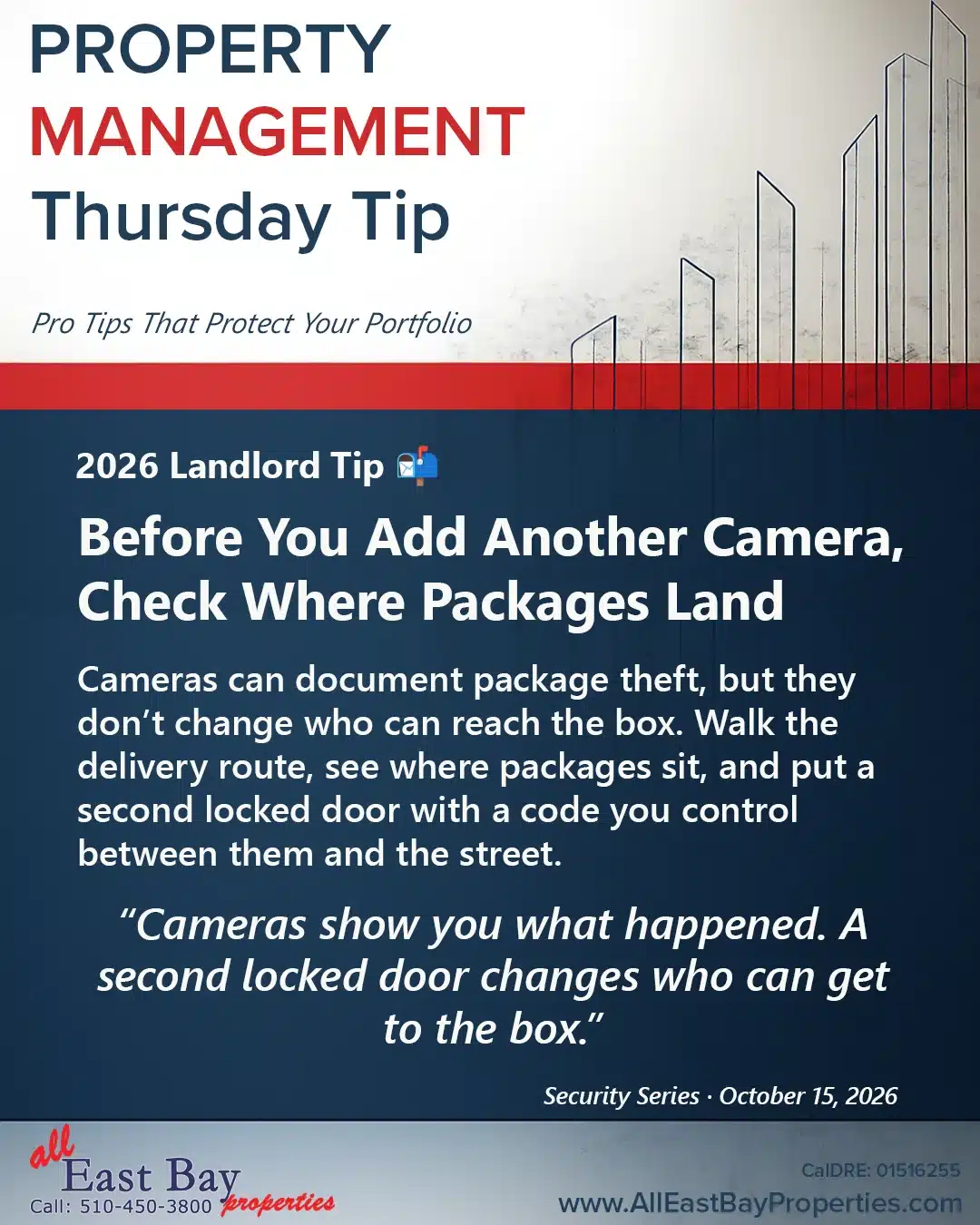
💡 Cameras Don’t Decide Who Can Reach the Box
When packages start disappearing, the first instinct is usually another camera. Cameras can document an incident and may deter some theft. But they don’t change where packages sit or who can get to them.
That matters most in older East Bay apartment buildings, where deliveries often end up on a lobby floor, in a mail alcove near the street, or on the front steps. Apartment and condo residents are more than three times as likely as single-family residents to have had a package stolen, according to Security.org’s October 2025 survey. And the holiday shipping season is about to add volume to whatever spot packages land in now.
What We See at AEBP
Package theft is a common complaint we hear from tenants across the 600+ East Bay units we manage. When we asked our local post office what building owners can do about it, the best advice they had was to get a PO box. They didn’t have a better solution, and they told us mail carriers are being robbed for their master keys.
Our takeaway: the fix isn’t coming from the carriers. It has to happen inside the building, and it starts with knowing where packages actually land. Here’s a quick way to size up what you find (general guidance and professional opinion, not legal advice for a specific property):
| Where packages land | Who can reach them | A reasonable first step |
|---|---|---|
| Front steps or an open vestibule | Anyone on the sidewalk | Get deliveries inside a locked door; a carrier access program may help |
| Lobby floor or mail alcove behind the entry door | Anyone who gets in: tenants, guests, tailgaters, someone with a stolen postal key | Add a second locked door with a code you can change, where the layout allows |
| Locked package room or lockers | People with the code | Change the code on a schedule and after any theft |
Cameras show you what happened. A second locked door changes who can get to the box.
What to Do Before the Holiday Shipping Rush
- Walk the delivery route: on a weekday afternoon, follow the path a driver takes. Note how they get in, where boxes end up, and how long they sit there.
- Check the entry door: California’s lock law (Civil Code §1941.3) addresses locks on exterior doors into common areas of multifamily buildings. Best practice: also confirm the door closer works so the door latches reliably.
- Close the gap: where the layout allows, move packages behind a second locked door with a code you can change, such as a storage closet or part of the mailroom. Have fire, egress and accessibility requirements checked before converting space.
- Send tenants a written package policy: where packages go, whether management accepts them, and how to report a theft. Mention off-site options like carrier pickup points or a PO box for valuable items.
- Remind tenants about the door: don’t buzz in unexpected or unverified visitors, even if they claim to have a delivery, and don’t prop entry doors.
💡 This week’s takeaway
Before you add another camera, check where packages land. Cameras can help document an incident, but controlling who can reach delivered packages is where reducing theft starts. Walk the route, fix the entry door, and put a second locked door between the street and the boxes where your building allows it.
📘 Learn more
This tip comes from Monday’s full guide to package theft in older East Bay buildings:
→ How to Stop Package Theft in an Apartment Building: What Actually Works in Older East Bay Buildings — package rooms vs. lockers vs. cameras, the postal key problem, and an owner checklist
→ Package Theft in California Apartments: Landlord Liability & Prevention — when a landlord can be responsible for a stolen package
→ Landlord Security Duties in California — the §1941.3 lock list and what you don’t automatically owe
This tip is part of our ongoing education series for Bay Area landlords focused on compliance, risk reduction, and smarter property management. 📋 Browse all Thursday Landlord Tips →