
Last updated October 2026. This update adds a background section on §1954 and Dromy v. Lukovsky, adds guidance on smart locks and cameras, and corrects the small-claims limit to $12,500, which has applied to individual tenants since 2024. It also lists every reason for entry §1954 allows, clarifies the notice delivery methods the statute names, and describes the §1940.2 $2,000 amount as a civil penalty.
Share this post
California Landlord Entry Quick Facts for 2026
- Governing law: California Civil Code §1954 — limits when and how landlords may enter a rental unit
- Standard notice requirement: At least 24 hours’ written notice for all non-emergency entries
- Notice must include: Date, approximate time, and specific purpose of entry
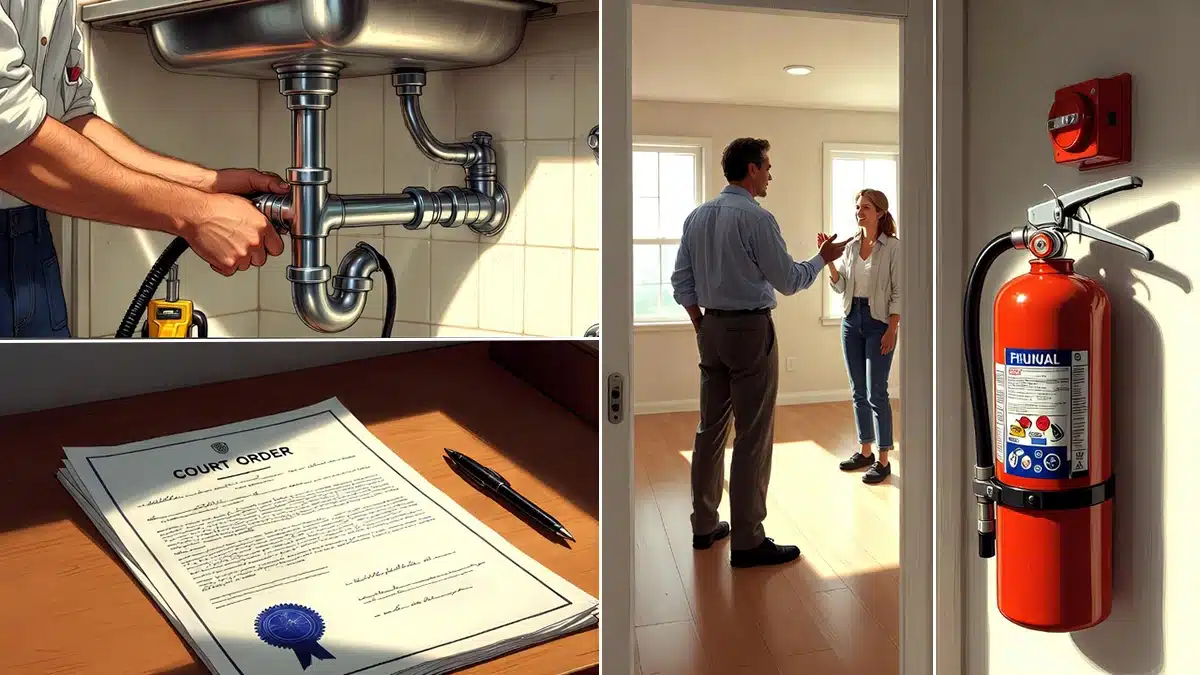
- Permitted reasons for entry: Emergencies; repairs, alterations, or improvements; showings to prospective tenants, buyers, or contractors; court orders
- Routine inspections: Not listed as a standalone permitted purpose under §1954 — typically must be tied to a permitted reason or require tenant consent
- Reasonable hours: Generally Monday–Friday, 8 AM–5 PM; weekend showings may qualify under limited circumstances (Dromy v. Lukovsky, 2013)
- Emergency entry: No notice required for genuine threats to health, safety, or property — courts scrutinize this exception carefully
- Pre-move-out inspection: Required under Civil Code §1950.5 — must be offered within the final two weeks of the tenancy with 48 hours’ written notice; failing to offer it may forfeit certain deposit deduction rights
- Tenant privacy rights: Tenants have a constitutionally protected right to privacy and quiet enjoyment — entries that interfere with this right, even with notice, can create legal exposure
- Penalties: Small claims up to $12,500 (individual tenants); civil penalties up to $2,000 per violation under Civil Code §1940.2 for harassing conduct
- East Bay context: Berkeley and Oakland have active rent boards and tenant advocacy organizations — entry violations are more likely to trigger formal complaints and proceedings here than in most California markets
Prefer video? Watch the 2-minute video version, with chapter links and a full transcript.
__CMVEWR34U”,”type”:”rich”,”providerNameSlug”:”embed-handler”,”responsive”:true} –>
Video Transcript
Can your landlord just walk into your rental whenever they want? In California — absolutely not. And if you’re a landlord who isn’t following the rules exactly, you could be losing money and not even know it.
California Civil Code 1954 requires landlords to give at least 24 hours’ written notice before entering a rental — for almost any reason. That notice has to be in writing, include the date, the time, and the specific purpose. A verbal heads-up doesn’t count. A text message usually doesn’t count either.
And landlords can only enter for specific permitted reasons — repairs, showings to buyers or new tenants, or a court order. “I just want to look around” is not a valid reason. Not with notice. Not without it.
And routine general inspections? Those require the tenant’s consent — they’re not automatically permitted under state law.
The one exception is a true emergency — active flooding, a gas leak, fire. Those don’t require notice. But a slow drip, a squeaky hinge, a check you want to do on short notice? That’s not an emergency. That’s a scheduled repair with proper notice.
Here’s the one most East Bay landlords miss — and it costs them real money. California law requires you to offer your tenant a pre-move-out inspection within the final two weeks of the tenancy. You give 48 hours’ written notice, walk through the unit together, and give the tenant a written list of anything that would come out of their deposit — so they have the chance to fix it before they leave. Skip that step, and you may lose your legal right to make those deductions. Even if the damage is real. Even if you have photos. The tenant was supposed to get the chance to fix it first.
For landlords in Berkeley and Oakland specifically — both cities have active rent boards and tenant advocacy organizations. Entry violations don’t just damage tenant relationships here. They can trigger formal complaints, rent board proceedings, and show up as evidence in eviction cases. Compliance isn’t optional in this market.
If you’d rather not manage entry notices, inspection scheduling, and deposit documentation yourself — that’s exactly what we do. All East Bay Properties handles the full process for every property we manage, so the paper trail is always there when you need it. Link below to schedule a free consultation.
Most East Bay landlords know they can’t walk into a tenant’s home unannounced. But knowing that rule exists and actually executing it correctly are two different things.
The details — exactly how much notice, in what form, for which reasons, during what hours — are where landlords get tripped up. And in rent-controlled cities like Berkeley and Oakland, a misstep doesn’t just damage tenant relations. It can expose you to harassment claims, rent board proceedings, and forfeited deposit rights.
California Civil Code §1954 governs landlord entry rights and has been in place since 1975. This post is the 2026 practical playbook: notice requirements, permitted entry reasons, what qualifies as an emergency, what “reasonable hours” actually means, and — critically — the move-out inspection step that costs landlords legitimate deposit deductions every year.
What is California Civil Code §1954? California Civil Code §1954 is the law that limits when and how a landlord may legally enter a residential rental unit. It requires advance written notice (typically 24 hours), restricts entry to specific permitted purposes, and protects a tenant’s right to privacy and quiet enjoyment. The statute has been in effect since 1975 and cannot be waived by lease agreement.
The 24-Hour Written Notice Requirement
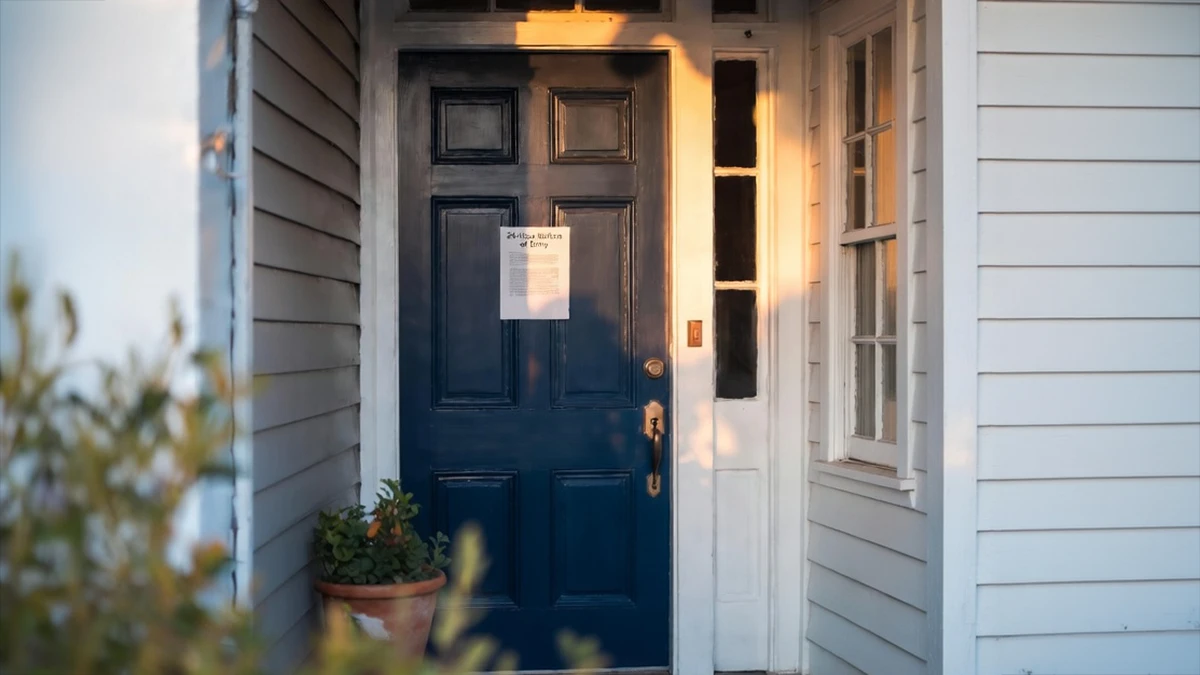
In most cases, California landlords must give at least 24 hours’ written notice before entering a rental unit. That notice must specify the date, an approximate time window, and the specific purpose of the entry. Handing it to the tenant, leaving it with a suitable adult at the unit, or leaving it on, near, or under the entry door all qualify. Section 1954 doesn’t list email or text as delivery methods, so use one of the listed methods and send email as a courtesy copy. A verbal call-ahead generally does not qualify, outside the narrow oral-notice cases covered below.
If you send notice by mail, California law presumes it was received six days after mailing — making USPS notice functionally impractical for any entry within that window. Hand delivery or posting at the door is almost always the practical choice. At All East Bay Properties, when we can’t simply reach a tenant directly, we post the written notice to their online tenant portal, email it, and post it on their front door, giving at least 24 hours’ notice.
| Delivery Method | Satisfies Requirement? | Notes |
|---|---|---|
| Written note (hand-delivered or posted) | ✅ Yes | Post in a conspicuous place; keep a photo or log of delivery date and time |
| ⚠️ Not a listed method | §1954 doesn’t mention email; send it as a courtesy copy alongside hand delivery or a door posting | |
| Text message | ⚠️ Generally no | Unless lease or written agreement explicitly establishes text as an accepted method |
| Verbal notice | ❌ No | Not sufficient under §1954 for standard non-emergency entries |
| USPS mail | ⚠️ Yes, but 6-day presumption applies | Must be mailed at least 6 days before the entry date to be safe — impractical for most situations |
The 24-hour written notice requirement cannot be waived in a lease. Any clause attempting to waive it is void and unenforceable as a matter of California law.
Permitted Reasons for Entry
§1954 is narrow by design. Landlords may only enter a rental unit for specific permitted purposes. A landlord’s right of entry in California is not general — it requires both proper notice and a legitimate reason from the statute.
| Permitted Reason | Notice Required? | Key Consideration |
|---|---|---|
| Emergency | ❌ No — entry permitted immediately | Must be a genuine, immediate threat to health, safety, or property — courts scrutinize this exception closely |
| Repairs, alterations, or improvements | ✅ 24 hours written | Covers agreed or necessary repairs; excessive or purely cosmetic entries may be challenged if they interfere with the tenant’s quiet enjoyment |
| Showings (prospective tenants, buyers, lenders, contractors) | ✅ 24 hours written | Must occur during reasonable hours; weekend showings subject to additional limits under Dromy v. Lukovsky |
| Court order | Per the order | Entry pursuant to a valid court order; landlord must possess and present the order |
| Tenant has abandoned or surrendered the unit | ❌ No | Landlords should not assume abandonment — California requires a formal legal process before treating a unit as abandoned |
| Pre-move-out inspection (Civil Code §1950.5(f)) | ✅ 48 hours written | Offered near the end of the tenancy so the tenant can fix issues before move-out; see the inspection section below |
| Waterbed or balcony (exterior elevated element) inspections | ✅ Written notice | Narrow inspections allowed under Civil Code §1954.201 et seq. and Health & Safety Code §17973 |
What About Routine Inspections?
A standalone “general inspection” is not explicitly listed as a permitted reason under §1954. In practice, inspections are typically justified when tied to a permitted purpose — confirming habitability conditions before scheduling a repair, for example, or conducting a lender-required inspection as part of a sale. Without tenant consent, a vague “routine walkthrough” not connected to a specific permitted reason can create legal risk even when 24-hour notice was given.
If you want to conduct periodic inspections, the cleanest approach is to address it explicitly in the lease at signing — with the frequency, notice method, and tenant acknowledgment documented in writing.
What Qualifies as an Emergency
The emergency exception allows entry without notice and at any hour — but the threshold is high. California courts require an immediate threat to health, safety, or property that cannot reasonably wait 24 hours.
Clear emergencies:
- Active flooding from a burst pipe or appliance failure
- Gas leak — detected odor or reported by tenant or utility
- Fire or smoke in or immediately affecting the unit
- Structural failure or collapse hazard presenting an immediate safety threat
Not emergencies:
- A slow drip or minor leak reported last week in a maintenance request
- A routine smoke detector or HVAC check that isn’t actively malfunctioning
- An inspection the landlord wants to conduct on short notice for convenience
- Any condition that can wait 24 hours without causing additional harm
Courts look carefully at whether the emergency exception was legitimately invoked. A landlord who uses it for a non-emergency condition — even once — creates a record that can support a harassment or pattern claim in later litigation. When in doubt, give the 24-hour written notice.
What “Reasonable Hours” Means — and the Oral Agreement Exception
Reasonable Hours
§1954 requires non-emergency entries to occur during “normal business hours.” Courts and the California Courts’ Tenant Rights Guide have consistently interpreted this as Monday through Friday, 8 AM to 5 PM, unless the tenant agrees to a different schedule in writing.
The 2013 appellate case Dromy v. Lukovsky established that weekend showings can qualify as reasonable in limited circumstances — but the ruling imposed meaningful guardrails: no more than twice monthly, during specific afternoon windows (1:00–4:30 PM), with a licensed real estate agent present. This is a ceiling, not a standard baseline.
For Berkeley and Oakland landlords: Both cities have active rent boards and tenant advocacy organizations that take “unreasonable hour” entry claims seriously. Erring toward weekdays, mid-morning to mid-afternoon, significantly reduces your formal complaint exposure. When in doubt, be more conservative, not less.
The Oral Agreement Exception
California law allows one meaningful flexibility: if a tenant verbally agrees to let you enter for a specific repair on short notice — say, the oven fails and they ask you to fix it today — that oral agreement is valid under §1954 without the written notice formality. The agreement must specify the date and approximate time, and entry must occur within one week of the agreement.
Best practice: Confirm any oral entry agreement in writing immediately — a quick email or text creates a timestamped record that the entry was consensual if the situation is later disputed.
Move-In Inspections: Not Required, But Critical
California law does not mandate a written move-in inspection — but conducting one is among the most important steps a landlord can take to protect their deposit rights. The unit’s condition at move-in is the baseline against which damages are measured at move-out under Civil Code §1950.5.
Without a documented, signed move-in inspection, there’s no objective reference point for what the unit looked like when the tenant arrived — and that ambiguity almost always favors the tenant in a deposit dispute. Our guide on California’s new security deposit law covers how move-in documentation connects to the full deposit lifecycle under the updated 2024 rules.
Best practice: Conduct a written move-in inspection with the tenant present, photograph every room and fixture, have the tenant sign the completed form, and provide them a copy — before they move any belongings in.
The Pre-Move-Out Inspection: The Step Most Landlords Miss
This is where most East Bay landlords lose legitimate deposit deductions — and where the most preventable disputes originate.
California Civil Code §1950.5(f) requires landlords to offer tenants a pre-move-out inspection within the final two weeks of a tenancy. Once a tenant gives notice to vacate — or the landlord issues a notice of termination — the landlord must offer this inspection in writing. The inspection requires at least 48 hours’ written notice before it’s conducted (unless the tenant waives this requirement in writing).
The purpose: identify deficiencies beyond normal wear and tear that would result in deposit deductions, and give the tenant an opportunity to remedy those issues before they vacate. After the inspection, the landlord must provide a written itemized statement of observed deficiencies.
If you fail to offer the pre-move-out inspection, you may forfeit the right to make certain deposit deductions — even when the damage is real, documented, and otherwise chargeable. The tenant was legally entitled to the chance to fix it first.
The Step-by-Step Workflow
| Step | Action | Legal Note |
|---|---|---|
| 1 | Tenant gives notice to vacate (or landlord issues termination notice) | This triggers the pre-move-out inspection obligation |
| 2 | Landlord sends written offer for pre-move-out inspection | Must occur within the final two weeks of the tenancy — this is the step most landlords miss |
| 3 | If tenant accepts: schedule with at least 48 hours’ written notice | Note: 48 hours — not the standard 24 — is required for this specific inspection |
| 4 | Conduct walkthrough; tenant may be present | Photograph and document all observed deficiencies |
| 5 | Provide tenant with written itemized statement of deficiencies | Required after the inspection; tenant then has the opportunity to remedy before move-out |
| 6 | Tenant has opportunity to remedy issues before move-out date | Landlord cannot charge for conditions the tenant has since repaired |
| 7 | Final inspection after tenant vacates | Document final condition with photos; compare to move-in report and pre-move-out statement |
| 8 | Return deposit (or itemized deductions) within 21 days of move-out | 21-day statutory deadline under §1950.5; failure to comply can forfeit all deductions |
If the tenant declines the inspection in writing, the landlord is protected and can proceed to the final accounting. The landlord’s obligation is to make the written offer — not to compel participation. But the offer must be made, within the required two-week window. For the complete move-out sequence — inspection, AB 2801 photo documentation, deposit return timeline, and itemized statement requirements — see our California tenant move-out checklist for 2026.
Managing written notices, pre-move-out inspections, itemized statements, and 21-day deposit deadlines correctly takes time — and one missed step can cost thousands in forfeited deductions or a formal claim. All East Bay Properties manages the entire process — from notice delivery to final deposit accounting — for our managed properties in Berkeley, Oakland, and throughout the East Bay.
Berkeley & Oakland: Why Entry Compliance Matters More Here
Both cities operate tenant protection frameworks that layer on top of state law — and both have institutional infrastructure that makes landlord entry violations more likely to result in formal action than in most other California markets.
In Berkeley, the Berkeley Rent Stabilization Board treats repeated or pattern entry violations as potential harassment — a finding that can trigger formal board proceedings independent of any court action. Berkeley tenants are among the most informed about their rights in the state, and local advocacy organizations actively assist in filing complaints.
In Oakland, the Oakland Rent Adjustment Program and Just Cause for Eviction Ordinance both treat harassing conduct — including unauthorized entries — as actionable grounds for tenant relief. Oakland’s tenant advocacy network is similarly active in supporting formal claims.
In both cities, a documented pattern of improper entry can be introduced as evidence in eviction defense proceedings, even when the eviction is for a completely unrelated reason. If you’re managing rent-controlled properties in either market, treat entry compliance as a non-negotiable operational standard.
Background: Where §1954 Came From and How Courts Read It
Before 1975, a California landlord’s right to enter was set mostly by the lease and the general covenant of quiet enjoyment. There was no statute listing the permitted reasons for entry or a notice period. Civil Code §1954, added in 1975, changed that. It is still the rule today:
- Limited reasons for entry: emergencies, necessary or agreed repairs and services, showings to buyers, tenants, lenders or contractors, a court order, abandonment, and certain inspections
- Written notice: 24 hours is presumed reasonable; six days if the notice is mailed
- Normal business hours unless it’s an emergency or the tenant consents
The statute never defined “normal business hours.” That question reached the Court of Appeal in 2013.
Dromy v. Lukovsky (2013): What the Court Actually Ordered
A Santa Monica owner listed a rent-controlled condo for sale. His tenant, there since 1994, agreed to private showings by appointment but refused weekend open houses. The owner sued under §1954. In Dromy v. Lukovsky, 219 Cal. App. 4th 278, the Court of Appeal held that “normal business hours” means “objectively reasonable hours under the facts and circumstances of the case.” It upheld a judgment that set specific limits:
| Term | What the judgment allowed |
|---|---|
| Frequency | Up to two open houses per month |
| Days and hours | Weekend days, 1:00–4:30 PM |
| Supervision | The owner’s licensed agent must be present |
| Notice | 10 days’ advance email notice of proposed dates. The tenant has 48 hours to confirm or propose other weekend dates. |
The court also rejected the argument that Sundays are off-limits because they’re state holidays. The practical lesson for East Bay owners selling a tenant-occupied property is to put a written showing schedule in front of the tenant early, and to treat the Dromy limits as an upper bound rather than a default.
Smart Locks, Video Doorbells, and the Right of Entry
§1954 predates keypad locks and doorbell cameras, but the same rules apply to them:
- Tenant-installed smart locks: Require written approval in the lease or an addendum. Require a working backup (a code or physical key) so you can still enter in a genuine emergency. A lock you can’t open doesn’t cancel your emergency-entry right; it just delays your response.
- Landlord cameras: Keep them to common areas such as entries, garages and hallways. Never aim one where it can see inside a unit when the door opens.
- Audio: California is an all-party-consent state for recording confidential conversations (Penal Code §632). Disable audio on common-area cameras unless the recording is clearly disclosed.
- Access logs aren’t notice: A smart-lock log shows when you entered. It doesn’t replace the 24-hour written notice for a non-emergency entry.
Penalties for Entry Violations
Under California Civil Code §1940.2, a significant and intentional violation of §1954, done to pressure a tenant to move out, exposes the landlord to a civil penalty of up to $2,000 per violation. Beyond that, tenants have several remedies available:
| Remedy | Details |
|---|---|
| Small claims court | Up to $12,500 for an individual tenant, for trespass, invasion of privacy, or breach of quiet enjoyment |
| Civil penalty | Up to $2,000 per violation under Civil Code §1940.2, for a significant, intentional entry violation aimed at pressuring a tenant to move out |
| Injunctive relief | Court order requiring the landlord to cease unauthorized entries |
| Emotional distress damages | Available in cases where unauthorized entry caused demonstrable psychological or personal harm |
| Partial rent refund | Rent reduction for periods where quiet enjoyment was materially impaired by illegal entry |
| Lease termination without penalty | Available in cases of repeated unauthorized entries that effectively amount to constructive eviction |
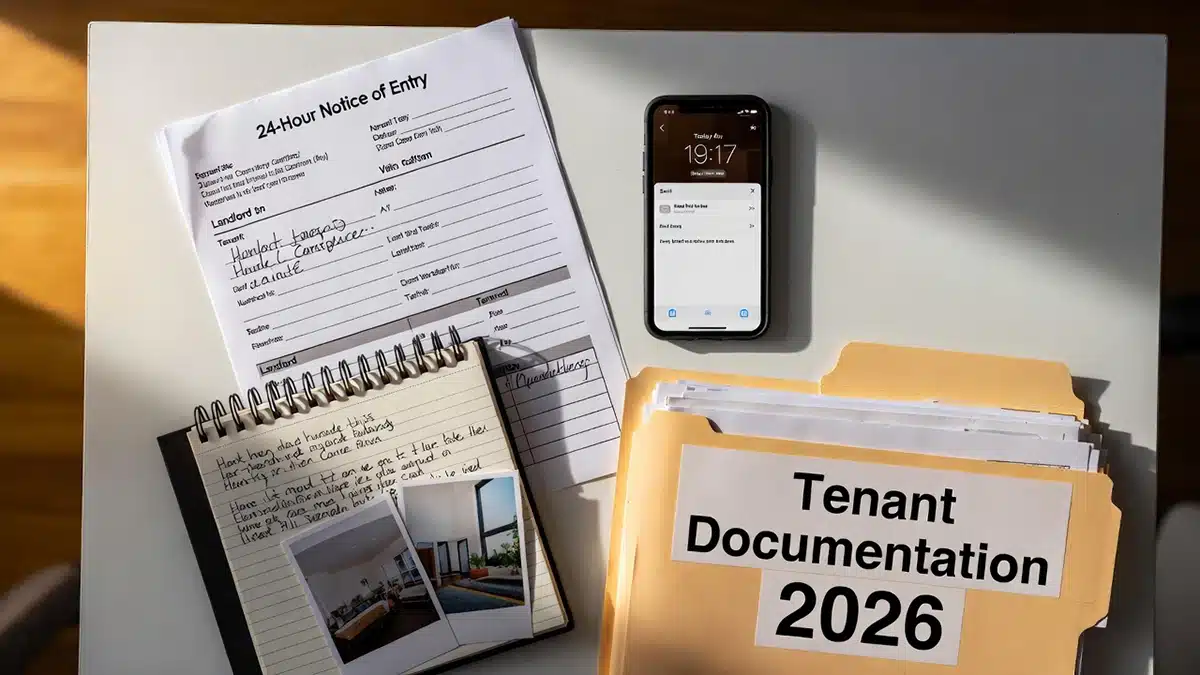
The paper trail is everything. Landlords who can produce written notices, timestamped emails, and inspection reports are in a fundamentally different legal position than those who rely on verbal agreements and informal communication. Kimball Tirey & St. John and Tobener Law both note that documentation is the single most important factor in distinguishing compliant landlords from those who face valid tenant claims.
2026 Compliance Checklist: Landlord Entry & Inspections
- Provide written notice at least 24 hours in advance for all non-emergency entries
- Include the date, approximate time window, and specific purpose in every notice
- Deliver notice by hand, to an adult at the unit, or at the entry door, or mail it at least 6 days ahead; email a courtesy copy
- Schedule entries Monday–Friday, 8 AM–5 PM unless tenant consents to another time in writing
- Do not enter for a vague “routine inspection” — tie it to a permitted purpose or get tenant consent in writing
- Confirm any oral entry agreement immediately in writing (email or text)
- Reserve the emergency exception for genuine emergencies; document your reasoning when invoking it
- Conduct a written, signed, photographed move-in inspection before tenant takes possession
- Offer the pre-move-out inspection in writing within the final two weeks of the tenancy
- Give at least 48 hours’ written notice before the pre-move-out inspection
- Provide the tenant with a written itemized statement of deficiencies after the pre-move-out inspection
- Complete final deposit return or accounting within 21 days of move-out
- Keep copies of all notices, inspection reports, photos, and written communications
Eliminate the Risk Entirely
If you’d rather not manage notices, inspections, documentation, and deposit compliance on your own — we handle all of it. All East Bay Properties manages the full process from entry notice to final deposit accounting for every property in our portfolio, in full compliance with California law.
Frequently Asked Questions
Can a landlord enter without notice in California?
Only in a genuine emergency — active flooding, fire, gas leak, or structural failure. Outside of true emergencies, California Civil Code §1954 requires at least 24 hours’ written notice before a landlord may enter a rental unit. Entering without notice — or under a false claim of emergency — can support a tenant’s harassment or invasion of privacy claim.
How much notice does a landlord have to give before entering a rental in California?
At least 24 hours’ written notice is required for all non-emergency entries under Civil Code §1954. The notice must specify the date, an approximate time, and the purpose. Verbal notice does not satisfy this requirement. If sent by mail, the notice is presumed received six days after mailing — making mail impractical for most entry situations.
Can a landlord do a routine inspection in California without the tenant’s consent?
Not straightforwardly. A standalone “routine inspection” is not listed as a permitted reason for entry under §1954. In practice, inspections are legally defensible when tied to a specific permitted purpose — repairs, habitability assessment, or a lender-required walkthrough, for example. Without tenant consent, a vague periodic walkthrough not connected to a recognized permitted reason can create legal risk even if proper notice was given. The cleanest approach: address inspection rights explicitly in the lease at signing.
What hours can a landlord enter a rental unit in California?
§1954 requires entry during “normal business hours” — generally interpreted as Monday through Friday, 8 AM to 5 PM. The 2013 case Dromy v. Lukovsky established that weekend showings may qualify as reasonable in specific, limited circumstances — but the ruling imposed clear limits (twice monthly maximum, specific afternoon windows, licensed agent present). Entry outside normal business hours requires tenant consent.
What is the pre-move-out inspection in California and is it required?
Yes — it’s required. Under Civil Code §1950.5, landlords must offer tenants a pre-move-out inspection within the final two weeks of the tenancy. The inspection requires at least 48 hours’ written notice. After the inspection, the landlord must give the tenant a written list of deficiencies that would result in deposit deductions — giving the tenant the chance to fix those issues before vacating. Failing to make the written offer may forfeit certain deposit deduction rights, even for legitimate damage.
Is it 24 or 48 hours’ notice for a move-out inspection in California?
Both apply — but to different inspections. The standard 24-hour written notice under §1954 applies to most non-emergency entries, including repairs and showings. The pre-move-out inspection specifically requires 48 hours’ written notice under Civil Code §1950.5 — unless the tenant waives this in writing. Using only 24-hour notice for a pre-move-out inspection likely does not satisfy the statutory requirement.
What happens if a landlord illegally enters a rental in California?
Tenants can pursue claims in small claims court (up to $12,500 for an individual) for trespass, invasion of privacy, or breach of quiet enjoyment. Under Civil Code §1940.2, a significant and intentional entry violation meant to pressure a tenant to move out carries a civil penalty of up to $2,000 per violation. Repeated violations can also result in lease termination without penalty. In Oakland and Berkeley, violations can additionally trigger rent board investigations and formal proceedings.
Can a tenant refuse a landlord’s entry in California?
A tenant cannot unreasonably refuse entry when proper notice has been given and the entry is for a permitted purpose under §1954. However, if the notice is defective — wrong format, insufficient time, no stated purpose — the tenant has grounds to deny access. A tenant may also decline the pre-move-out inspection in writing; they simply waive the opportunity to remedy deficiencies before deposit deductions are made.
Can a landlord enter a rental for a showing without the tenant present?
Yes. California law does not require the tenant to be present for an entry with proper 24-hour written notice for a permitted purpose. The tenant can choose to be there or not. What the landlord cannot do is use the tenant’s absence as an opportunity to access areas unrelated to the stated purpose of the entry.
Do Berkeley and Oakland have additional landlord entry rules beyond California state law?
Neither city has a separate notice period that overrides §1954’s 24-hour baseline — but both have active rent boards and tenant advocacy organizations that pursue entry violations aggressively. The Berkeley Rent Stabilization Board and Oakland Rent Adjustment Program both have jurisdiction over landlord conduct claims, and a documented pattern of improper entries can be used as evidence in eviction defense proceedings in both cities — even when the eviction is for an unrelated reason.