Share this post
For rental property owners in Oakland, Berkeley, Emeryville, and the East Bay
Key Facts: California Security Deposit Deductions at a Glance
| Rule | What It Means |
|---|---|
| What’s deductible | Unpaid rent, damage beyond normal wear and tear, excessive cleaning, unauthorized alterations, unreturned keys |
| What’s never deductible | Normal wear and tear — always the landlord’s cost |
| 21-day deadline | Itemized statement + remaining deposit due within 21 calendar days of move-out |
| Receipts required | Any deduction over $125 requires written documentation |
| Proration rule | You can only charge for remaining useful life — not full replacement cost |
| AB 2801 photo requirement | Move-in AND move-out photos required; missing move-in photos can void damage claims |
| Bad faith penalty | Up to 2× the wrongfully withheld amount, plus attorney’s fees (Civil Code §1950.5(l)) |
| Oakland local note | Deposit disputes: tenants may seek assistance through RAP or pursue claims in small claims court |
| Berkeley local note | Landlords must pay annual interest on deposits held (Berkeley Rent Board) |
Video Transcript
If you manage rental property in California, you’ve probably had this moment: a tenant moves out, you walk the unit, and now you have to decide — can I charge for this, or not?
That question is at the heart of nearly every security deposit dispute in California. And getting it wrong — even with a legitimate claim — can cost you the entire deposit and then some.
I’m with All East Bay Properties, and today we’re breaking down the difference between normal wear and tear and actual damage — and what that means for your deposit deductions in 2026.
Let’s start with the basic rule. California Civil Code 1950.5 says you cannot deduct for normal wear and tear. Ever. The problem is, the statute doesn’t define it. So here’s the working standard: normal wear and tear is the deterioration that happens through ordinary, intended use of a rental unit over time. Faded paint. Carpet that’s matted from furniture. Minor scuffs on walls. Small nail holes from pictures. That’s all wear and tear — and it’s always the landlord’s cost.
Damage is different. Holes in walls. Pet stains. Burns in carpet. Broken fixtures. Unauthorized paint colors. That’s deductible — with documentation and receipts.
Here’s what most landlords miss: the useful life rule. California courts treat interior paint as having roughly a two-year useful life. Carpet is typically seven to ten years depending on grade. The older the item, the smaller your recoverable claim. And this is where proration comes in — and where most deposit disputes actually start.
If a tenant destroys carpet that’s already five years into a ten-year lifespan, you generally cannot charge the full replacement cost. You can only claim the remaining useful life — in that case, roughly fifty percent. So a two-thousand dollar carpet replacement might yield a thousand dollar defensible claim.
In our experience managing properties across Oakland, Berkeley, and the East Bay, most landlords with legitimate damage claims lose them not because the damage wasn’t real — but because they charged full replacement on aging items. Oakland RAP hearings and Berkeley Rent Board proceedings both apply proration. Whether you do or not.
Now let’s talk about the 21-day clock, because this one is absolute. From the day the tenant vacates — not the lease end date, not when keys are returned, not when repairs are done — you have 21 calendar days to deliver an itemized statement, receipts or good-faith estimates for any deduction over $125, and the remaining deposit balance.
Miss that deadline, and you may forfeit every deduction. A court finding of bad faith can result in twice the wrongfully withheld amount, plus attorney’s fees.
One more thing that changed in 2024 and 2025 — AB 2801. California now requires landlords to take move-in photos before the tenant takes possession, and move-out photos after they vacate. This isn’t optional. No move-in photos means no baseline. No baseline means no provable damage — even if the damage is real.
We’ve onboarded landlords who had legitimate claims they couldn’t enforce for exactly this reason. A fifteen-hundred dollar carpet replacement becomes zero if you can’t prove the carpet was undamaged when the tenant moved in.
So here’s the short version. To make a deposit deduction hold up: One — document condition at move-in with AB 2801-compliant photos. Two — prorate any deduction for items that weren’t new. Three — send your itemized statement with receipts within 21 days of move-out. Four — be specific. “Repairs: $450” is not a compliant deduction. “Carpet replacement, bedroom two, 120 square feet at four-fifty per square foot, receipt attached” — that holds up.
If you’re managing East Bay properties and want a move-in and move-out process that protects every claim from the start, we can help. Find the full guide — including the wear and tear comparison table and 21-day checklist — at alleastbayproperties.com. Link in description.
The Core Question: Normal Wear and Tear vs. Damage in California
When a tenant moves out, the central question in every deposit dispute is the same: did this deterioration result from ordinary use, or from something the tenant did wrong?
California law under Civil Code §1950.5 prohibits deducting for normal wear and tear — but the statute doesn’t define the phrase. Courts and housing authorities fill in that gap case by case, which is why understanding the practical standard matters more than knowing the statute.
What Is Normal Wear and Tear?
Normal wear and tear is the deterioration that occurs through ordinary, intended use of a rental property over time. California landlords may not deduct for normal wear and tear from a security deposit, but may deduct for damage caused by negligence, misuse, or abuse.
The key variable is tenancy length. The longer a tenant lived in the unit, the harder it becomes to charge for cosmetic items. A tenant who lived in your Oakland unit for four years didn’t damage your paint — they used it.
The Side-by-Side: Wear and Tear vs. Deductible Damage
| Item | Wear & Tear — Not Deductible | Damage — Deductible |
|---|---|---|
| Carpet | Worn, matted, or faded after several years of normal use | Burns, stains, pet damage, tears |
| Paint | Faded, light scuffs, small nail holes from hanging pictures | Large holes, unauthorized paint colors, excessive markings |
| Walls | Small picture-hanging nail holes | Large holes, deep gouges, water damage from tenant negligence |
| Appliances | Normal use wear over time | Broken parts resulting from misuse or abuse |
| Cleaning | Reasonable dust, light dirt — a clean but imperfect unit | Excessive filth requiring professional remediation |
| Blinds | Fading from sunlight over time | Broken slats, bent mechanisms from mishandling |
| Floors | Minor surface scratches from furniture over years | Deep gouges, burns, pet urine damage |
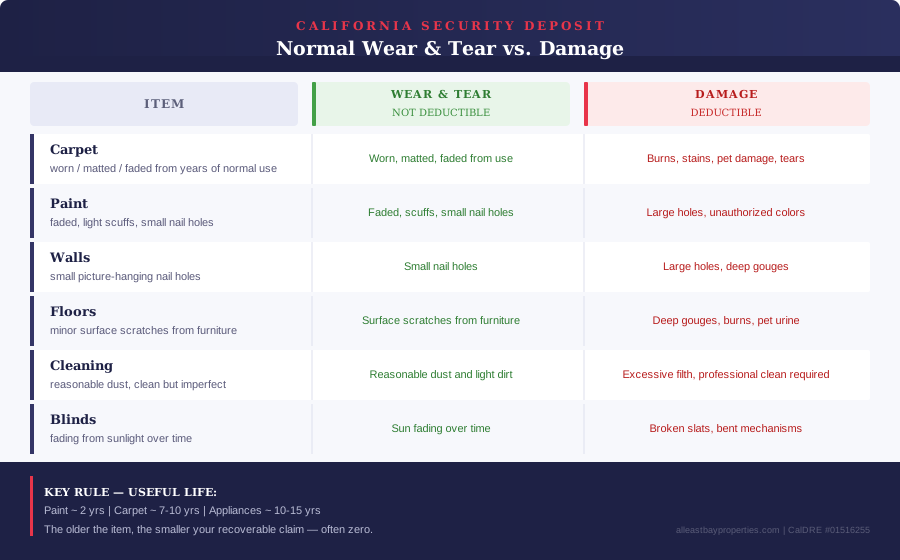
The useful life rule. California courts and housing authorities frequently treat interior paint as having an approximate two-year useful life when evaluating deposit disputes. Apply the same logic proportionally to carpet (typically 7–10 years depending on grade), blinds, and appliances. The older the item, the smaller your recoverable claim — and in many cases, zero.
What You CAN Deduct From a California Security Deposit
California Civil Code §1950.5 permits landlords to deduct for four categories:
1. Unpaid rent. Any rent owed at move-out, including a final month shortfall.
2. Damage beyond normal wear and tear. Physical damage — holes in walls, broken fixtures, pet damage, unauthorized alterations — that exceeds ordinary use. Documentation and receipts are required for any deduction over $125.
3. Excessive cleaning costs. If a unit requires professional cleaning beyond what a reasonable tenant would have left behind. The standard is “reasonable” — a clean but imperfect unit generally cannot be charged for cleaning.
4. Restoration costs and unreturned keys. Unauthorized alterations, removed fixtures, unpainted accent walls, unreturned keys, fobs, or garage remotes.
What you cannot deduct: pre-existing conditions, items already worn or damaged at move-in, or anything that qualifies as normal wear and tear — including the cost of repainting a unit after a long tenancy simply because you want it fresh.
Proration: Why You Usually Can’t Charge Full Replacement Cost
This is the most commonly misunderstood rule in California deposit law, and it’s the one most likely to turn a legitimate claim into a bad faith finding.
When a tenant damages something that had already been in use for years, you generally cannot charge the full cost of replacing it with a brand-new item. You can only recover the remaining useful life of what was damaged.
Example — carpet damage:
| Factor | Value |
|---|---|
| Carpet useful life | 10 years |
| Carpet age at move-out | 5 years |
| Replacement cost | $2,000 |
| Recoverable amount | ~$1,000 (50% of replacement — half the useful life remained) |
If the carpet was already 9 years into a 10-year lifespan, your recoverable amount approaches zero — even if the tenant caused real damage.
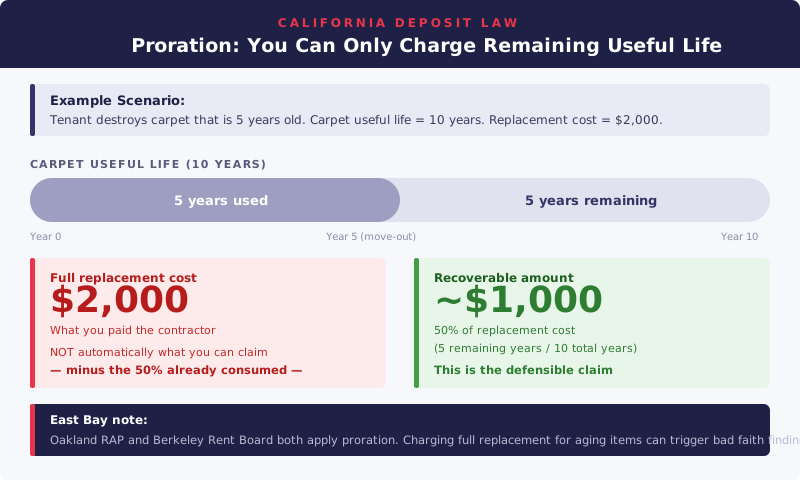
Why this matters in the East Bay: Oakland RAP hearings and Berkeley Rent Board proceedings both apply proration principles. Landlords who charge full replacement cost for aging items are routinely required to refund the excess — and may face bad faith findings on top of it.
The practical rule: document the age and condition of carpets, appliances, and other major items at move-in. That documentation is what allows you to calculate — and defend — a prorated claim.
AB 2801: Why Photos Are Now Non-Negotiable
AB 2801 is the most consequential change to California deposit law in recent years — and it’s still not widely understood.
What it requires:
- Move-in photos: Taken before the tenant takes possession — before keys are handed over, not after the first night.
- Move-out photos: Taken after the tenant vacates and before the deposit is returned or the itemized statement is sent.
When it applies:
| Requirement | Effective Date |
|---|---|
| Move-in photo requirement | July 1, 2024 |
| Move-out photo requirement | January 1, 2025 |
| Full compliance for all covered deposits | January 1, 2026 |
The consequence of non-compliance: No move-in photos means no baseline. No baseline means no provable damage. A landlord with legitimate damage but no compliant move-in photos is in a much weaker legal position than a landlord with photos and a borderline claim.
At AEBP, we updated move-in and move-out protocols for all managed properties before AB 2801’s effective dates. In the months since, we’ve onboarded self-managing landlords who came to us with legitimate damage claims they couldn’t enforce — because they had no compliant move-in photos to establish baseline condition. A $1,500 carpet replacement claim becomes a $0 recovery if you can’t prove the carpet wasn’t already damaged when the tenant moved in.
The 21-Day Clock: When It Starts and What Happens If You Miss It
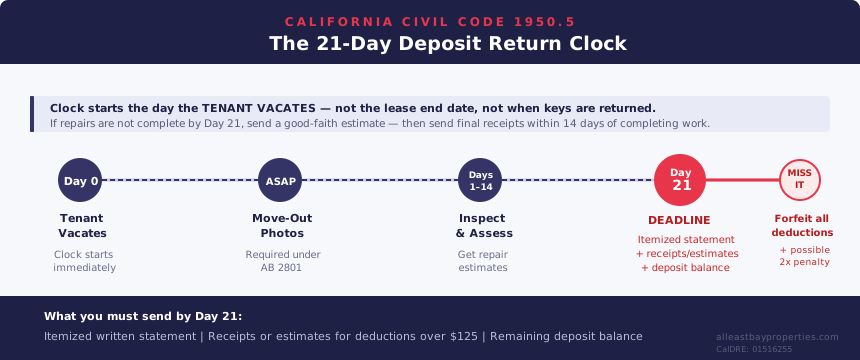
What’s due within 21 calendar days:
- The itemized written statement of all deductions
- Receipts or good-faith cost estimates for any deduction over $125
- The remaining deposit balance (or the full deposit if no deductions)
Good-faith estimates: If work hasn’t been completed within 21 days, you may provide an estimate. But you must send final receipts within 14 calendar days of completing the work (Civil Code §1950.5(g)(1)(B)).
What happens if you miss: You may forfeit the right to make any deductions and owe the full deposit back. A court finding of bad faith — holding the deposit without cause — can result in up to 2× the wrongfully withheld amount plus attorney’s fees.
Writing a Compliant Itemized Statement
The itemized statement is your legal defense. A vague statement (“cleaning: $300”) is far weaker than a specific one (“professional cleaning: 3-bedroom unit, 8 hours @ $75/hour, receipt attached”).
Checklist for a compliant itemized statement:
- Tenant’s name and rental unit address
- Move-out date
- Each deduction listed separately with a specific description
- Dollar amount for each deduction
- Supporting receipt or invoice for any item over $125
- Total deducted
- Remaining deposit being returned (or statement that no balance remains)
- Sent within 21 calendar days of move-out
Send via first-class mail to the tenant’s last known address, or via email if the tenant provided written consent to electronic notice. Keep proof of mailing.
The 5 Most Common Security Deposit Mistakes We See
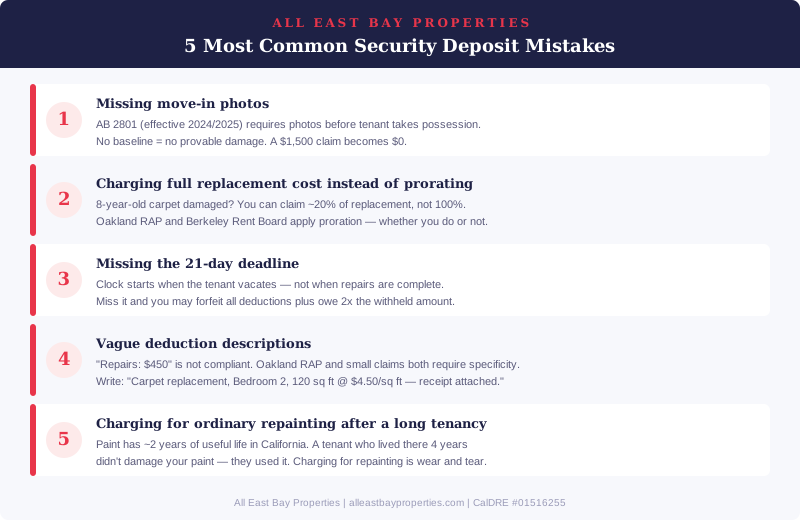
Most East Bay deposit disputes aren’t complicated. They follow the same patterns.
1. Missing move-in photos.
Under AB 2801, the absence of move-in photos can void an otherwise valid damage claim. This is now the single most common documentation gap we see in properties that weren’t professionally managed at move-in.
2. Charging full replacement cost instead of prorating.
A $2,500 flooring replacement charge for 8-year-old floors isn’t a deductible expense — it’s a bad faith claim waiting to happen. Proration applies whether or not the landlord is aware of it.
3. Missing the 21-day deadline.
The clock starts the day the tenant vacates, not the day you finish the walk-through. Landlords who wait until repairs are complete to start the clock routinely miss the deadline.
4. Vague deduction descriptions.
“Repairs: $450” without supporting documentation is not a compliant deduction. Oakland RAP and Berkeley Rent Board proceedings both require specificity. So does any small claims proceeding.
5. Charging for ordinary repainting after a long tenancy.
A full repaint charged to a tenant who lived in the unit for three or four years is almost impossible to defend. If the paint is faded from use, that’s wear and tear — and courts and housing authorities treat it accordingly.
What We See Most Often in East Bay Deposit Disputes
In our experience managing rental properties across Oakland, Berkeley, Emeryville, and other East Bay cities, most deposit disputes don’t arise from major damage. They arise from poor documentation.
Landlords often have legitimate claims — real damage, real costs — but cannot support them with move-in photos, itemized receipts, or compliant statements. The tenant files with Oakland RAP or Berkeley Rent Board or files in small claims court, and the landlord’s case collapses not on the merits, but on the paperwork.
The good news: every item on that list is fixable before a tenant ever moves in. The right process at move-in protects every deduction you might need to make at move-out.
Oakland and Berkeley: What’s Different Locally
Oakland: State law governs deposit deductions. Tenants may seek assistance through the Rent Adjustment Program (RAP) or pursue claims directly in small claims court. Oakland tenants are well-informed about both options, which means your itemized statement needs to be genuinely defensible — not just technically compliant.
Berkeley: Same 21-day deadline. Berkeley landlords must also pay annual interest on security deposits held — the rate is set by the Berkeley Rent Board each year. Failure to pay interest is itself a violation that can affect deposit dispute outcomes.
Emeryville and Richmond: State law applies with no additional local deposit rules beyond what’s described above.
FAQ
Can I charge a tenant for repainting the entire apartment?
It depends on tenancy length. California courts and housing authorities frequently treat paint as having an approximate two-year useful life. If the tenant lived there two or more years and the walls show only fading and normal scuffs, repainting is wear and tear. If there are large holes, unauthorized colors, or excessive markings, those specific repairs may be deductible — but a full repaint charged to a long-term tenant is difficult to defend, and proration applies regardless.
Can I charge for carpet cleaning?
This is a frequently contested question. Carpet cleaning after normal use over a long tenancy is generally wear and tear. However, a lease provision explicitly requiring professional carpet cleaning at move-out — with a receipt — is treated differently from a discretionary deposit deduction. California courts have drawn a distinction between a contractual move-out obligation the tenant agreed to at lease signing and a unilateral deduction taken after the fact. Our leases include this provision specifically for this reason. If yours does not, consult a licensed California attorney before relying on a carpet cleaning deduction.
What if the tenant left the unit filthy?
Excessive filth requiring professional remediation beyond what a reasonable tenant would leave is deductible as a cleaning charge. “Reasonable” is the operative word — a clean but imperfect unit generally cannot be charged for cleaning. Document with move-out photos (required under AB 2801) and attach the cleaning invoice to your itemized statement.
What if the tenant disputes my deductions?
Oakland tenants may seek assistance through RAP or file in small claims court. Berkeley tenants may contact the Rent Board. Your itemized statement, move-in and move-out photos, and receipts are your defense. If you have all three and your deductions are reasonable and properly prorated, you’re in a defensible position. If you’re missing move-in photos or receipts, you may lose a claim even if the damage is real.
What’s the maximum deposit I can charge?
Under AB 12 (effective July 1, 2024), most landlords are limited to one month’s rent — no extra for pets or furnished units. Small-landlord exception: natural persons or all-natural-person LLCs owning no more than two residential rental properties totaling no more than four units may charge up to two months’ rent. This exception does not apply to service members.
Security Deposit Compliance Is a Process, Not a Checklist
Security deposit disputes are one of the most common sources of landlord litigation in California. The good news is that compliance isn’t complicated — it’s consistent.
A documented move-in process, AB 2801-compliant photos, a timely and specific itemized statement, and correctly prorated deductions dramatically reduce your exposure. Most of the landlords we’ve worked with who faced deposit disputes had legitimate claims. They just didn’t have the documentation to support them when it counted.
If you’re unsure whether a specific deduction is defensible — or if you want a move-in and move-out process that protects every claim from the start — professional property management can help.
Related Resources
- California Security Deposit Deductions: The Complete Reference — AEBP’s evergreen guide
- The California Move-Out Inspection: What Landlords Must Do — Week 1 of this series
- AB 2801: Photo Documentation Rules for Security Deposits (coming Week 3)
- California Civil Code §1950.5 — Full statute
- Oakland Rent Adjustment Program
- Berkeley Rent Board