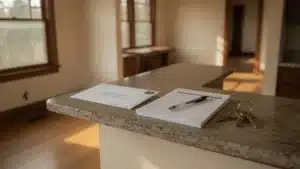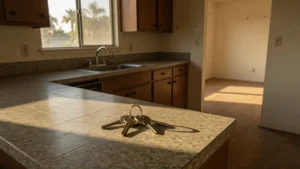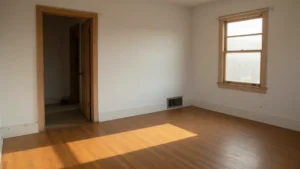

If you own a rental property in Oakland, Berkeley, or the East Bay, this is the one documentation requirement AB 2801 created — and most landlords don’t know the window closes the moment their cleaning crew walks in.
What This Video Covers
- The scenario: keys in, cleaning crew called, no photos taken — 0:00
- What AB 2801 changed and when it took effect — 0:28
- Phase 1: Move-out photos (required before any cleaning or repairs) — 1:07
- Phase 2: Move-in photos (new tenancies July 1, 2025 and later) — 1:41
- Phase 3: Post-repair photos (before and after each job) — 2:08
- How to deliver photos to the tenant — and what doesn’t count — 2:25
- AEBP’s move-out documentation protocol — 3:04
- Full compliance checklist and next steps — 3:38
What East Bay Landlords Need to Know
California’s AB 2801 amended Civil Code §1950.5 to make photo documentation a legal requirement at three specific points in a tenancy — not just a best practice. The law took effect in two phases: move-out and post-repair photos became mandatory on April 1, 2025, and move-in photos for new tenancies followed on July 1, 2025. Both phases apply to all California residential landlords regardless of portfolio size.
The most common mistake is operational, not intentional. A tenant hands in keys on a Friday. The cleaning crew is available over the weekend. By Monday, the unit has been scrubbed and a wall has been patched — and the landlord now has no documentation of the condition the tenant left it in. That baseline is gone the moment the first vendor walks through the door. Under AB 2801, that gap can make an otherwise valid deduction unenforceable.
The law requires photos at three distinct moments: immediately after the tenant vacates and before any work begins (all tenancies); at or before move-in for tenancies beginning July 1, 2025 or later; and before and after any repair or cleaning that results in a deduction. Move-in photos are not retroactively required for earlier tenancies, but the move-out requirement applies to all active tenancies regardless of when they started.
Documentation alone isn’t enough — the photos must be delivered. All photos must accompany the itemized statement of deductions within 21 calendar days of move-out. Email, mail, or a shareable link (Google Drive, Dropbox) all satisfy the requirement. Video does not — the statute specifically requires photographs. Keep proof that delivery happened.
At AEBP, we updated our move-out protocol before the April 2025 effective date. Keys are logged with a timestamp, a standardized room-by-room photo walkthrough happens within 24 hours, photos are uploaded to AppFolio before vendors are scheduled, and proof of delivery goes out with the itemized statement. We’ve seen prospective clients lose deposit disputes they should have won — not because the damage wasn’t real, but because no one photographed the unit before the cleaning crew arrived. The fix is simple. The habit is the hard part.
Key Takeaways
- Photograph every room immediately after a tenant vacates — before any cleaning or repair begins. This is the highest-risk moment and the narrowest window.
- For tenancies starting July 1, 2025 or later, move-in photos are legally required. Without them, you cannot prove damage wasn’t pre-existing.
- Any deduction requires before-and-after photos of the specific work. An invoice alone is not sufficient.
- All photos must be delivered to the tenant with the itemized statement within 21 days of move-out. Video does not satisfy the photo requirement.
- Keep proof of delivery — a sent email or link-share confirmation is your record if the deduction is disputed.
Laws & Resources Mentioned
- California Civil Code §1950.5 — the security deposit statute amended by AB 2801
- Move-Out Photos in California: What AB 2801 Requires (2026) — full written guide with compliance checklist
- California Security Deposit Deductions: What Landlords Can (and Cannot) Charge — cornerstone reference
- Normal Wear and Tear vs. Damage: The California Landlord’s Guide
Have Questions About Your East Bay Property?
We manage rent-controlled properties across Oakland, Berkeley, Richmond, and Emeryville — and we handle AB 2801 compliance documentation for every managed unit every turnover.
Video Transcript
A tenant hands in their keys on a Friday afternoon. The property owner calls the cleaning crew and says — get a head start this weekend.
By Monday morning, the floors are mopped, a scuffed wall is patched, and the unit is ready to show.
Then the tenant disputes twelve hundred dollars in deductions. And the landlord has receipts, has invoices — but no photos of the unit before anyone touched it.
Under California law, that documentation gap is now a legal problem.
We manage rentals in Oakland, Berkeley, Emeryville, and the East Bay — and what I just described is exactly the scenario that Assembly Bill 2801 was written to address.
AB 2801 amended California Civil Code Section 1950.5 — the security deposit statute — to make photo documentation a legal requirement, not just a best practice.
It took effect in two phases: April 1st, 2025 for move-out and post-repair photos, and July 1st, 2025 for move-in photos on new tenancies.
If you’re a California landlord, this is for you.
AB 2801 creates three distinct photo requirements.
Phase one: move-out photos. This is the most critical. The moment a tenant hands in keys, you need to photograph the unit — every room — before any cleaning or repairs begin. This applies to all tenancies, regardless of when they started.
The window is narrow. The moment a cleaner mops a floor or a contractor patches a wall, your baseline is gone. Courts want to see the condition of the unit as the tenant left it.
Phase two: move-in photos. For any tenancy that began on or after July 1st, 2025, you must photograph the unit at or before move-in. These photos establish the baseline that makes move-out deductions defensible. Without them, you can’t prove that damage wasn’t pre-existing.
Important note: this is not retroactive. Tenancies that started before July 2025 don’t require move-in photos — but the move-out requirement still applies.
Phase three: post-repair and post-cleaning photos. Any time you make a deduction, you need before-and-after photos of the specific work. An invoice alone isn’t enough. A photo of the damage, a photo of the completed repair — that’s what justifies the deduction amount.
Here’s the part many landlords miss: taking the photos isn’t enough. You have to deliver them.
All photos must be sent to the tenant alongside the itemized statement, within 21 calendar days of move-out.
You can send them by mail, by email, or by a shareable link — a Google Drive folder or Dropbox works fine. What doesn’t work: video. The statute specifically requires photographs. Video alone does not satisfy the requirement.
And keep proof of delivery — a sent email, a tracking number, a link-share confirmation. If it’s disputed, you want a record.
At All East Bay Properties, we updated our move-out protocol before the April 2025 effective date.
When keys come in, they’re logged with a timestamp. A property manager completes a room-by-room photo walkthrough within 24 hours, before any vendor sets foot in the unit. Photos go straight into AppFolio with the date and address embedded. Vendors aren’t called until the walkthrough is confirmed complete.
We’ve had prospective clients come to us after losing deposit disputes they should have won — not because the damage wasn’t real, but because no one photographed it before the cleaning crew arrived.
The fix is simple. The habit is the hard part.
If you want the full breakdown — the exact legal requirements, an AB 2801 compliance checklist, and how Oakland’s RAP mediation process works — the link is in the description.
And if you own rental property in the East Bay and want to know how we handle documentation across your portfolio, reach out. We’re at alleastbayproperties.com.