

Thursday Tips for Bay Area Landlords
Short, practical insights to help East Bay property owners navigate rental laws, reduce risk, and manage smarter — one week at a time.
New tips added weekly • Oakland • Berkeley • Emeryville • East Bay
Managing rental property in the Bay Area isn’t just about rent collection and maintenance — it’s about navigating constantly evolving laws, local ordinances, and operational details that can quietly create risk.
Each week, our Thursday Tips share short, actionable guidance based on real issues we see affecting landlords across Oakland, Berkeley, Emeryville, and the greater East Bay.
No fluff. No legal jargon. Just practical insight you can actually use.
🗓️ This Month’s Focus: Legal Notices, Evictions & Owner Protections (May 2026)
The rules governing how — and whether — you can end a tenancy in Oakland, Berkeley, or anywhere in California are more layered than most owners realize. State law sets a floor. AB 1482 adds a statewide just cause requirement on top of that. Oakland and Berkeley both have local ordinances that go further still. And the procedural rules for serving notices are precise enough that a single error in date, delivery method, or notice type can void the entire process and send you back to square one.
👉 California Eviction Law 101 (2026): Oakland, Berkeley & Alameda County Guide for Landlords
📘 Featured Guides:
Week 2: California Eviction Notice Requirements (2026): How to Serve a 3-Day, 30-Day & 60-Day Notice
Week 3: How Long Does an Eviction Take in California? The Alameda County UD Timeline (2026)
Week 4: California Landlord Protections & Self-Help Eviction Risks: What You Can (and Absolutely Cannot) Do (2026)
📬 Get Thursday Tips by Email
Want these insights delivered directly to your inbox each week?
We send one concise Thursday Tip — no spam, no sales pitches — focused on helping Bay Area landlords stay informed, compliant, and protected.
👉 Join the Thursday Tip email list and get our FREE “2026 Rental Rules Cheat Sheet”
💡Recent Thursday Tips
Each tip is tied to a broader monthly theme and links to deeper resources when needed — so you can read just the tip, or dive deeper when something applies to your property.
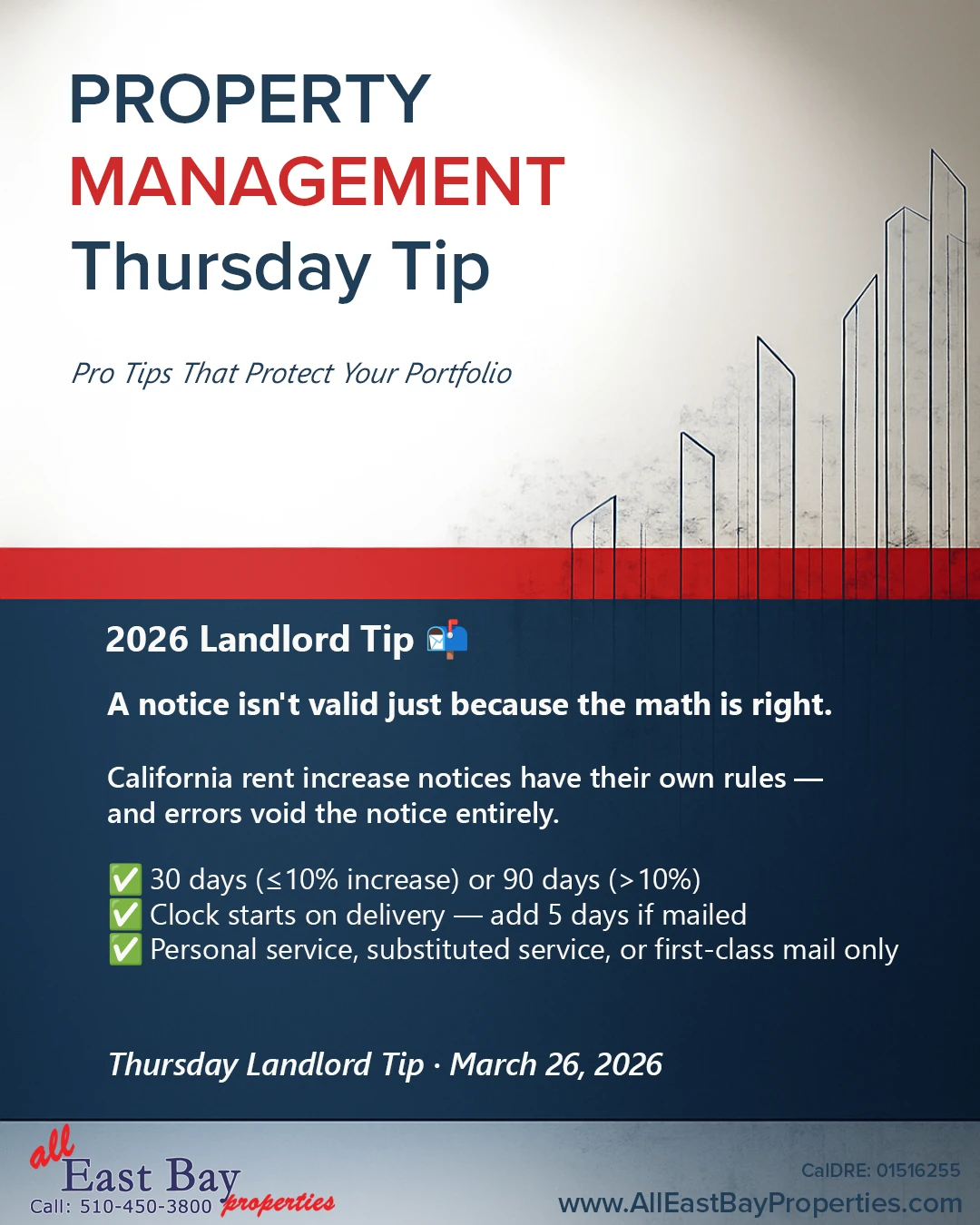
Thursday Landlord Tip: A Rent Increase Notice Isn’t Valid Just Because the Math Is Right
💡 Thursday Landlord Tip Most California landlords spend time calculating whether their rent increase is within the legal cap. Fewer spend time checking whether the notice itself is valid — and that’s where the compliance exposure actually lives. Under Civil Code §827, a rent increase notice has two separate requirements: the amount must be legal,…

Thursday Landlord Tip: Oakland Rent Increase Notices Require a Business Tax Certificate — Or They’re Void
💡 Thursday Landlord Tip Most Oakland landlords know their rent increases are capped at 2.3% beginning August 1, 2026. But not all know that even a perfectly calculated, correctly served notice can be voided at a RAP hearing for a single missing document. Since April 15, 2025, Oakland has required landlords to attach a current…
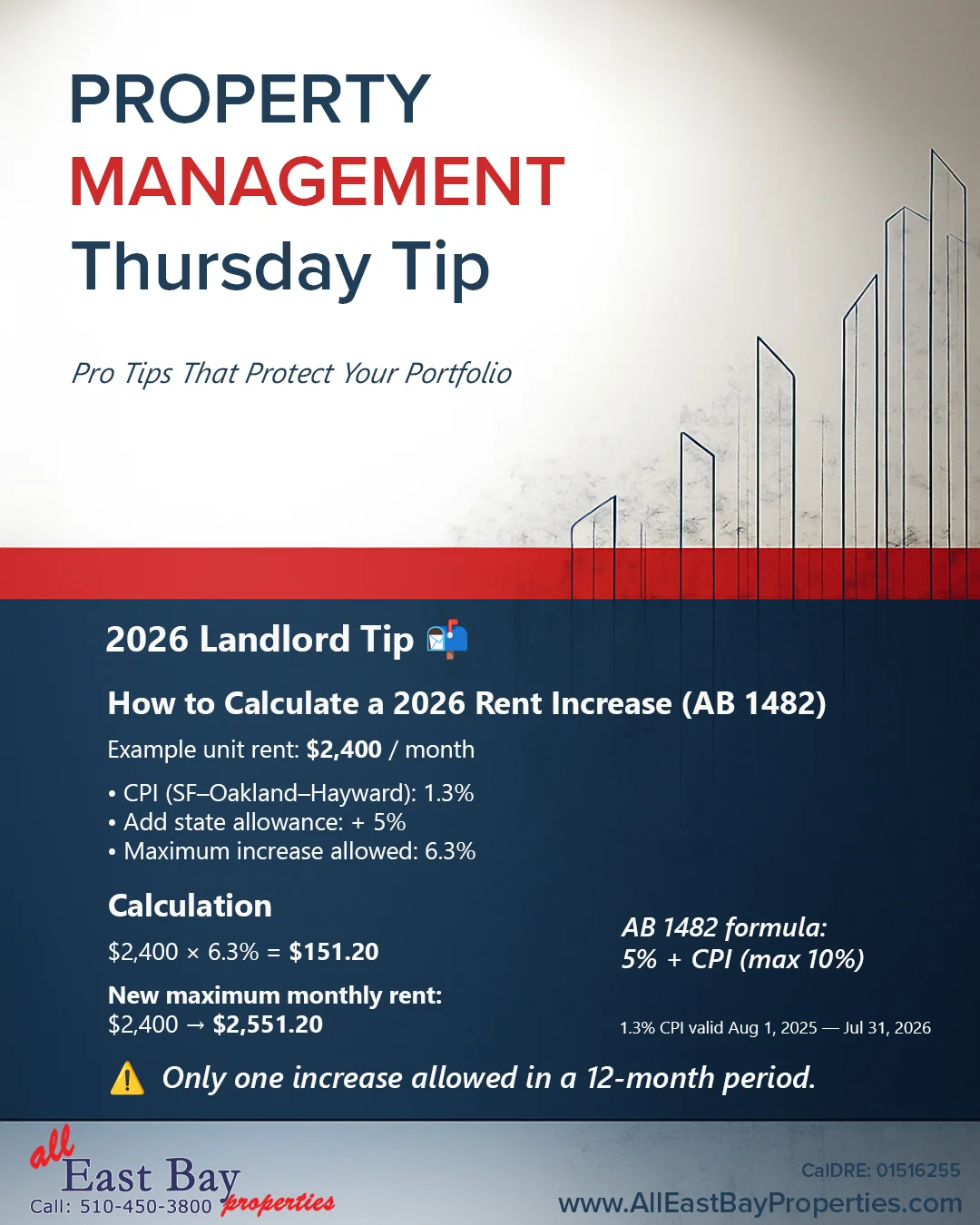
Thursday Landlord Tip: The AB 1482 Calculation Most East Bay Landlords Get Wrong
💡 Thursday Landlord Tip Most East Bay landlords know that AB 1482 limits how much they can raise rent each year — but fewer know how to calculate the allowable increase correctly. The statewide cap isn’t a fixed number. It’s a formula based on regional inflation data, combined with a fixed 5% allowance, subject to…

Thursday Landlord Tip: Fair Housing Risk Starts in the Rental Ad
💡 Thursday Landlord Tip Fair Housing violations don’t usually start with tenant screening — they start with the rental ad. Many landlords unintentionally create risk before an application is ever submitted. Under the Fair Housing Act, it is illegal to make, print, or publish any advertisement that indicates a preference or limitation based on a…

Thursday Landlord Tip: Protected Classes Create Hidden Fair Housing Risk in California
💡 Thursday Landlord Tip Fair Housing violations don’t usually start with bad intent — they start with everyday questions and assumptions landlords don’t realize are risky. In California, Fair Housing law protects far more categories than most landlords expect. Asking the wrong question, making a casual comment, or treating two qualified applicants differently can create…

Thursday Landlord Tip: Flexible Screening Can Create Fair Housing Risk
💡 Thursday Landlord Tip Flexible tenant screening often feels fair — but in California, it’s one of the most common sources of Fair Housing exposure. When landlords approve or deny applicants based on subjective judgment, undocumented exceptions, or case-by-case decisions, even well-intentioned choices can trigger complaints. In many situations, approving the first applicant who fully…

Thursday Landlord Tip: Inconsistent Tenant Screening Creates Fair Housing Risk
💡Thursday Landlord Tip Most Fair Housing violations aren’t intentional — they’re procedural. In California, inconsistent tenant screening practices are one of the most common triggers for Fair Housing complaints. Even well-meaning landlords can face legal exposure when screening criteria is applied unevenly from one applicant to the next. Why This Matters Many landlords assume Fair…

Thursday Landlord Tip: Compliance Isn’t One-and-Done
💡Thursday Landlord Tip Compliance isn’t just about knowing the rules — it’s about tracking changes all year long. Why This Matters In the Bay Area, rental laws don’t change once a year — they evolve continuously at the state and local level, often city by city. A lease, notice, or policy that was compliant last…

Thursday Landlord Tip: When a Notice Legally “Doesn’t Exist”
💡Thursday Landlord Tip If a notice isn’t delivered correctly, it may legally “not exist” — even if the tenant received it. Why This Matters In the Bay Area, notice errors are one of the most common — and costly — compliance mistakes landlords make. Even when a tenant clearly receives a notice, it can still…

Thursday Landlord Tip: When Lease Language Ages Out of Compliance
💡 Thursday Landlord Tip If you haven’t reviewed your lease since before 2026, assume it needs a check. Why This Matters Lease agreements can age out of alignment with current laws faster than most landlords expect — especially in California and the Bay Area. Rental statutes, local ordinances, and procedural requirements evolve year after year.…
Why This Matters for Bay Area Landlords
Rental rules in California — especially at the local level — don’t wait for lease renewals or calendar reminders.
A missed notice requirement, outdated clause, or procedural mistake can quietly invalidate enforcement actions or expose landlords to avoidable risk.
Our goal with Thursday Tips is simple:
Help you catch problems early — before they become expensive.