
In Short
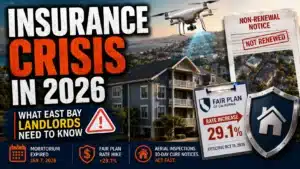
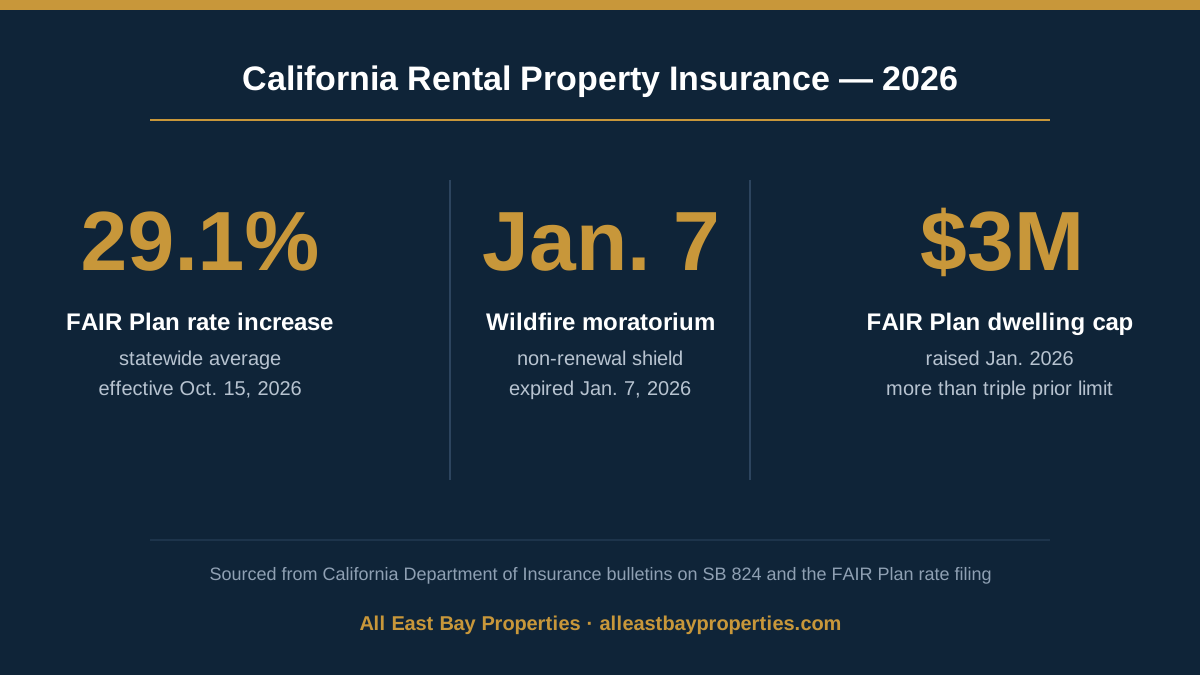
California’s one-year moratorium on wildfire-related policy non-renewals expired January 7, 2026, and insurers are moving fast: satellite and aerial imagery now drive many renewal decisions, and the state’s FAIR Plan — the insurer of last resort most East Bay hills owners are falling back on — is raising rates by 29.1% starting October 15, 2026. If you own rental property in the Oakland or Berkeley hills, Richmond, or anywhere with fire exposure, assume your next renewal will look different, and start shopping coverage 60-90 days before it’s due, not after a non-renewal notice arrives. This isn’t just a large-building problem: 4-plex-and-larger properties are seeing this as an annual, routine cure-notice cycle, while condos and single-family rentals are also getting cancelled off satellite imagery of the roof and yard — sometimes with no clear reason given at all.
Key Facts: California Rental Property Insurance in 2026
| Fact | Detail |
|---|---|
| Wildfire non-renewal moratorium | Expired January 7, 2026 (ran one year from the Governor’s Jan. 7, 2025 emergency declaration under SB 824). Insurers can now issue non-renewals again, subject to standard notice rules. |
| FAIR Plan rate increase | +29.1% statewide average, effective October 15, 2026, on new and renewal policies. (FAIR Plan requested 35.8%; the CA Dept. of Insurance approved 29.1%.) Wildfire-exposed properties see a bigger share of the increase than low-risk ones. |
| FAIR Plan dwelling coverage cap | Raised to $3 million as of January 2026 — more than triple the prior limit. |
| FAIR Plan eligibility for rentals | Expanded to include rental properties of up to 4 units under specific conditions (previously far more restrictive). |
| FAIR Plan usage in high-fire-severity zones | 28% of homeowners in these zones now hold a FAIR Plan policy (Q1 2026), up from 11% in 2023. |
| Typical CA landlord policy cost | Roughly $900–$1,200/year in lower-risk areas; $2,000+/year in wildfire-exposed ZIP codes — often 2-3x the low-risk rate. |
| Your rights on aerial-image cancellations | If an insurer cancels or non-renews based on a satellite/aerial photo, it must give you the image and its reasoning. It generally can’t rely on an image older than 45 days unless the issue is persistent and confirmed in person. |
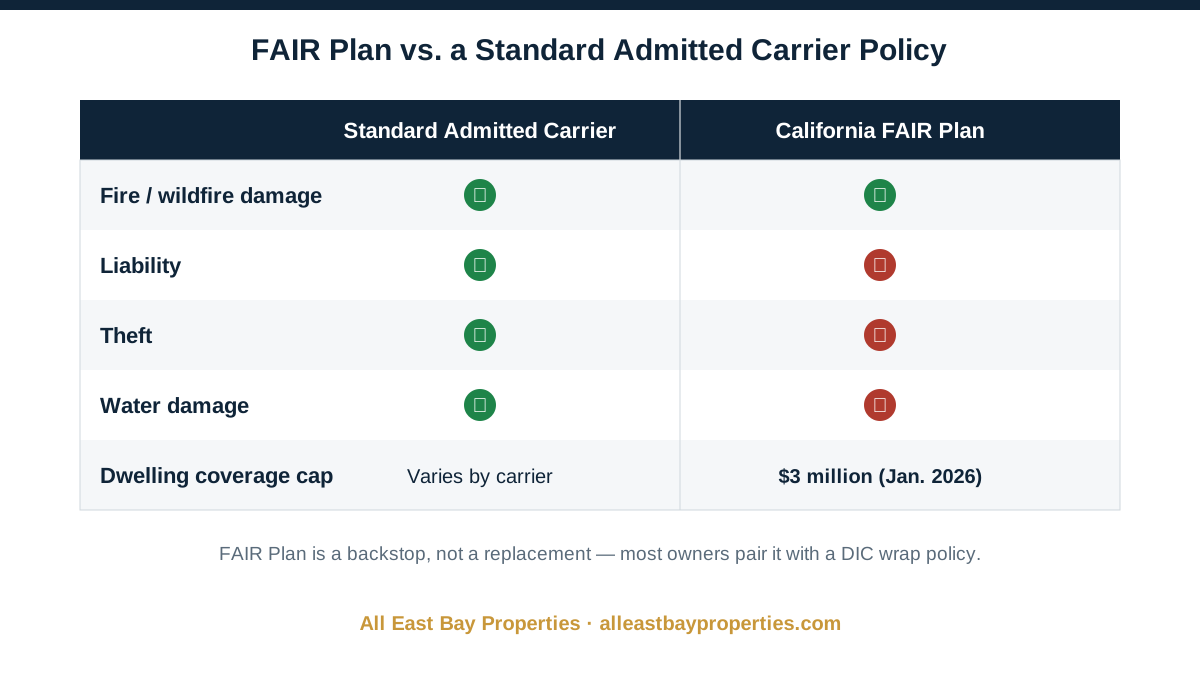
| What FAIR Plan doesn’t cover | Liability, theft, and water damage are excluded. Most owners pair it with a Difference in Conditions (DIC) wrap policy for full coverage. |
| Who’s affected, and how | Two distinct patterns AEBP is seeing: (1) 4-plex-and-larger buildings get an annual, routine satellite/imagery inspection with 30-day cure notices if something’s flagged — every owner in that bracket renewing recently has seen a rate increase; (2) condos and single-family rentals are also being cancelled off satellite imagery of the roof and yard, sometimes with no clear reason given at all. |
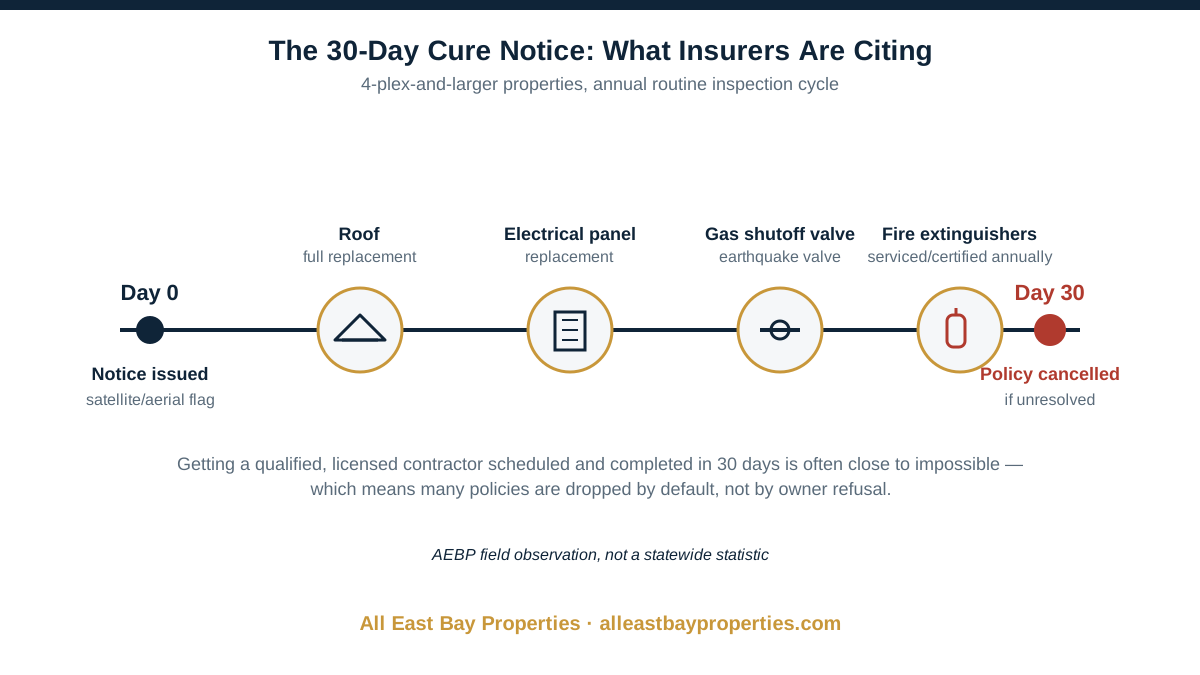
| Most common items cited in a 4-plex+ cure notice | Full roof replacement (not a patch repair), electrical panel replacement, an earthquake shutoff valve on the gas line, externally-accessible fire extinguishers (serviced/certified annually) — and, in some cases, general yard clutter, not just overgrown vegetation. (AEBP field observation, not a statewide statistic.) |
Sourced from California Department of Insurance bulletins on SB 824 and the FAIR Plan rate filing, plus industry reporting.
Video Transcript
If you own rental property anywhere in the East Bay with fire exposure, your next insurance renewal is going to look different — and it’s worth understanding why before that notice shows up.
Two things changed at the start of this year. California’s one-year moratorium on wildfire-related non-renewals expired on January 7th, 2026. And the state’s FAIR Plan — the insurer of last resort a lot of East Bay hills owners are falling back on — is raising rates by 29.1% starting October 15th, 2026. Insurers are also leaning hard on satellite and aerial imagery to make renewal decisions now, not just occasional spot checks.
Three concrete things shifted this year. First, the non-renewal shield came down — insurers in fire-affected ZIP codes are no longer required to hold policies they’d otherwise drop. Second, FAIR Plan got both bigger and more expensive: the dwelling coverage cap tripled to $3 million, and eligibility expanded to rental properties up to four units — but that same filing raises rates 29.1%, so more owners are being funneled onto a plan that’s getting pricier. Third, aerial and satellite underwriting became the default first pass for a lot of carriers’ renewal reviews. That’s where the real friction is.
Here’s the part most coverage of this topic misses. For four-plex and larger properties, insurers are now running satellite and imagery-based inspections as a routine, annual part of the renewal cycle. Instead of a clean non-renewal, owners get a notice saying the policy will be cancelled in 30 days unless something specific is fixed — most commonly a full roof replacement, an electrical panel replacement, an earthquake shutoff valve on the gas line, or externally accessible fire extinguishers that are serviced and certified annually.
The problem is timing. It’s often close to impossible to get a qualified, licensed contractor scheduled and the work completed in 30 days, especially with how tight contractor demand is right now in the East Bay. In practice, that means a lot of these policies get dropped by default — not because the owner refused to comply, but because 30 days was never realistically achievable. Every owner in that four-plex-plus bracket who’s come up for renewal recently has seen a rate increase, no exceptions.
And it’s not only larger buildings. We’re also seeing condos and single-family rentals get cancelled off satellite imagery of the roof and yard — sometimes with no clear reason given at all, unlike the itemized notices larger buildings receive. If that happens to you, you’re entitled to see the image and the insurer’s stated reasoning, and it generally can’t be based on a photo older than 45 days.
If you do end up on FAIR Plan, remember what it doesn’t cover: liability, theft, and water damage are all excluded. Most owners pair it with a separate Difference in Conditions policy to actually get full coverage for a rental with tenants in it.
A few concrete steps. Don’t wait for your renewal notice — ask your insurance broker for a coverage review 60 to 90 days out. If a cure notice does arrive, treat it as urgent the same day; the 30-day clock is the real enemy, not the paperwork. And loop in your property manager immediately — the bottleneck is almost always finding a contractor, and a PM with existing electrician, roofer, and plumber relationships can get a quote and a start date in days instead of weeks.
To be clear: we’re a property management company, not a licensed insurance broker, so we won’t be the ones shopping your coverage. But we can absolutely help you beat that 30-day clock on the contractor side.
If you’re already holding a cure notice, or you just want a property manager who moves fast when one shows up — reach out. We’ll link the full breakdown, with the exact numbers and a coverage comparison table, below.
What Actually Changed in 2026 (and Why “2026” Isn’t Just a Label Here)
Three concrete things shifted this year, not just a calendar page. For the full landscape of what else changed for East Bay landlords this year, see our East Bay Landlord Resources hub.
- The non-renewal shield came down. SB 824 forced a one-year freeze on wildfire-related non-renewals starting the day Governor Newsom declared a wildfire emergency (January 7, 2025). That freeze expired January 7, 2026. Insurers in affected ZIP codes are no longer required to hold policies they’d otherwise drop.
- FAIR Plan got both bigger and more expensive. The dwelling cap tripling to $3 million and rental-property eligibility expanding sound like good news — and for owners who couldn’t get any private coverage, they are. But the same filing that expanded eligibility also raises rates 29.1% starting in October, meaning more owners are funneled onto FAIR Plan just as it gets pricier.
- Aerial/satellite underwriting went mainstream. This isn’t new technology, but 2026 is the year it became the default first pass for many carriers’ renewal reviews — which is where the real friction for East Bay owners is showing up (see below).
The Part Most Coverage Misses: How Non-Renewal Actually Happens Now
Most articles on this topic describe non-renewal as a clean, single event — a letter saying “your policy will not be renewed.” That’s not what East Bay property owners are actually experiencing.
What’s really happening — an AEBP-specific observation:
For 4-plex-and-larger properties, insurers are now running satellite/imagery-based inspections as an annual, routine part of the renewal cycle — not a one-time underwriting check. Instead of an outright non-renewal, owners get a notice that the policy will be cancelled in 30 days unless a specific condition is fixed: most commonly a full roof replacement (not just a patch repair), an electrical panel replacement, an earthquake shutoff valve installed on the gas line, or externally-accessible fire extinguishers placed around the property and certified annually. We’ve even seen general yard clutter cited, not just overgrown vegetation. The problem: it’s often close to impossible to get a qualified, licensed contractor scheduled and the work completed within that 30-day window, especially with East Bay contractor demand what it is. In practice, that means a lot of these policies are being dropped by default — not because the owner refused to comply, but because compliance in 30 days was never realistically achievable. Owners then scramble to find replacement coverage, often ending up with lesser-known, non-admitted insurers at meaningfully higher premiums. Every owner in that 4-plex-plus bracket who’s come up for renewal recently has seen a rate increase — no exceptions.
Jason Crouch, Founder & Principal Broker, All East Bay Properties
It’s not only the larger buildings. Separately from that annual cure-notice cycle, AEBP is also seeing condos and single-family rental homes get cancelled using satellite imagery of the roof and yard — but often with no clear reason given at all, unlike the itemized cure notices larger buildings receive. That distinction matters for what an owner can do about it: a 4-plex owner at least knows what to fix. A single-family owner facing an unexplained cancellation has less to act on directly, which is exactly where the right to request the underlying image and the insurer’s stated reasoning (see Key Facts above) becomes the more useful lever.
A note on what AEBP can and can’t help with here: AEBP is a property management company, not a licensed insurance broker or agent — we don’t shop coverage or give insurance advice, and owners should work with a licensed insurance broker on the coverage decision itself. Where we do add real value once a cure notice lands: we maintain vetted, fast-moving relationships with electricians, roofers, and plumbers, so the contractor side of a 30-day deadline isn’t the reason a client loses coverage.
FAIR Plan vs. a Standard Admitted Carrier Policy
| Standard Admitted Carrier | California FAIR Plan | |
|---|---|---|
| Covers fire/wildfire damage | Yes | Yes (this is its core purpose) |
| Covers liability | Yes | No — needs a separate policy or DIC wrap |
| Covers theft | Yes | No |
| Covers water damage | Yes | No |
| Dwelling coverage cap | Varies by carrier | $3 million (as of Jan. 2026) |
| Who it’s for | Owners who can still get standard coverage | Owners who’ve been declined or non-renewed by 2+ admitted carriers |
| Typical cost vs. wildfire-exposed admitted policy | Baseline | Often comparable or higher once a DIC wrap is added |
Bottom line: FAIR Plan is a backstop, not a replacement policy. If you’re moved onto it, budget for a DIC wrap too — a FAIR Plan-only policy leaves real gaps (liability, theft, water damage) that matter a lot for a rental property with tenants in it.
What East Bay Rental Property Owners Should Do Now
- Don’t wait for your renewal notice. Ask your insurance broker for a coverage review 60-90 days before your current policy expires, not after a non-renewal or cure notice shows up.
- If you get a cure notice, act the same day. Given how tight contractor timelines are, the 30-day clock is the enemy. Call for quotes immediately and get everything in writing — including any request for an extension.
- Know your rights on aerial-image decisions — especially if you own a condo or single-family rental. If a cancellation or non-renewal cites a satellite or aerial photo, you’re entitled to see the image and the stated reason, even if the cancellation notice itself didn’t spell one out. If the image is more than 45 days old and the issue isn’t persistent, that’s worth challenging.
- If you land on FAIR Plan, budget for a DIC wrap. A FAIR Plan-only policy is not full coverage for a rental property.
- Get a second opinion from a licensed insurance broker before signing with an unfamiliar insurer. Non-admitted carriers aren’t automatically bad, but they vary widely in reliability and claims-paying history. (AEBP isn’t a licensed insurance broker and doesn’t shop coverage — this one’s on your insurance broker, not your property manager.)
- Loop in your property manager the moment a cure notice arrives, not after you’ve missed the deadline. The bottleneck is almost always the contractor, not the paperwork — a PM with existing electrician, roofer, and plumber relationships can get a quote and a start date in days instead of weeks.
Bottom Line
The safety net that protected East Bay landlords from sudden non-renewals expired in January 2026, right as satellite-driven underwriting and a 29% FAIR Plan rate hike are converging — and AEBP’s own portfolio shows 4-unit-and-larger buildings bearing the brunt of it. AEBP doesn’t broker insurance and won’t shop your coverage, but the owners handling this well are the ones who treat the contractor side of a cure notice as the real emergency it is — which is exactly where a property manager with existing electrician, roofer, and plumber relationships earns their keep.
Already holding a cure notice, or want a property manager who can move fast on the contractor side before your next renewal? Talk to us about your East Bay rental property →
AEBP is a licensed California real estate brokerage and property management company (CalDRE #01516255) — not a licensed insurance broker or agent. For coverage decisions, consult a licensed insurance professional.
FAQ
Is the California wildfire insurance non-renewal moratorium still in effect in 2026?
No. The SB 824 moratorium ran one year from the Governor’s January 7, 2025 wildfire emergency declaration and expired January 7, 2026. Insurers in the affected ZIP codes can now issue non-renewals again, subject to standard notice requirements.
Can my insurer really cancel my policy based on a satellite photo of my roof?
It can flag your property for review that way, but if it cancels or non-renews based on an aerial or satellite image, it’s required to provide you the image and its reasoning, and generally can’t rely on an image older than 45 days unless the issue is persistent and confirmed by an in-person inspection.
What is the California FAIR Plan, and should I use it for my rental property?
The FAIR Plan is the state’s insurer of last resort for owners who’ve been declined by admitted carriers. It’s expanded to cover rental properties of up to 4 units under certain conditions and raised its dwelling cap to $3 million, but it doesn’t cover liability, theft, or water damage — most owners need to pair it with a separate DIC (Difference in Conditions) policy.
How much is rental property insurance going up in 2026?
The FAIR Plan’s approved statewide average increase is 29.1%, effective October 15, 2026. Wildfire-exposed properties will see a larger share of that increase than low-risk properties. Private-market premiums vary by carrier and are moving as well, particularly for owners recently non-renewed.
What should I do if I get a notice that my policy will be cancelled in 30 days unless I fix something?
Treat it as urgent the day it arrives — get contractor quotes immediately, document everything in writing, and ask your insurer about extension options given realistic contractor scheduling. If the notice is based on an aerial image, you have a right to see it and can request confirmation the image is current (45 days or less) before assuming the cited issue is even still accurate.
Does this affect single-family rentals, or just larger buildings?
Both, but differently. The moratorium expiration and FAIR Plan rate increase apply statewide regardless of property size. For 4-plex-and-larger buildings, AEBP is seeing satellite-driven inspections and itemized 30-day cure notices (roof, electrical panel, gas shutoff valve, fire extinguishers) as a routine, annual part of renewal. Condos and single-family rentals are also being cancelled using satellite imagery of the roof and yard, but sometimes with no specific reason given — a less predictable pattern than the itemized cure notices larger buildings get.
More In This Series
There are currently no other posts in the series, check back next week or take a look at these