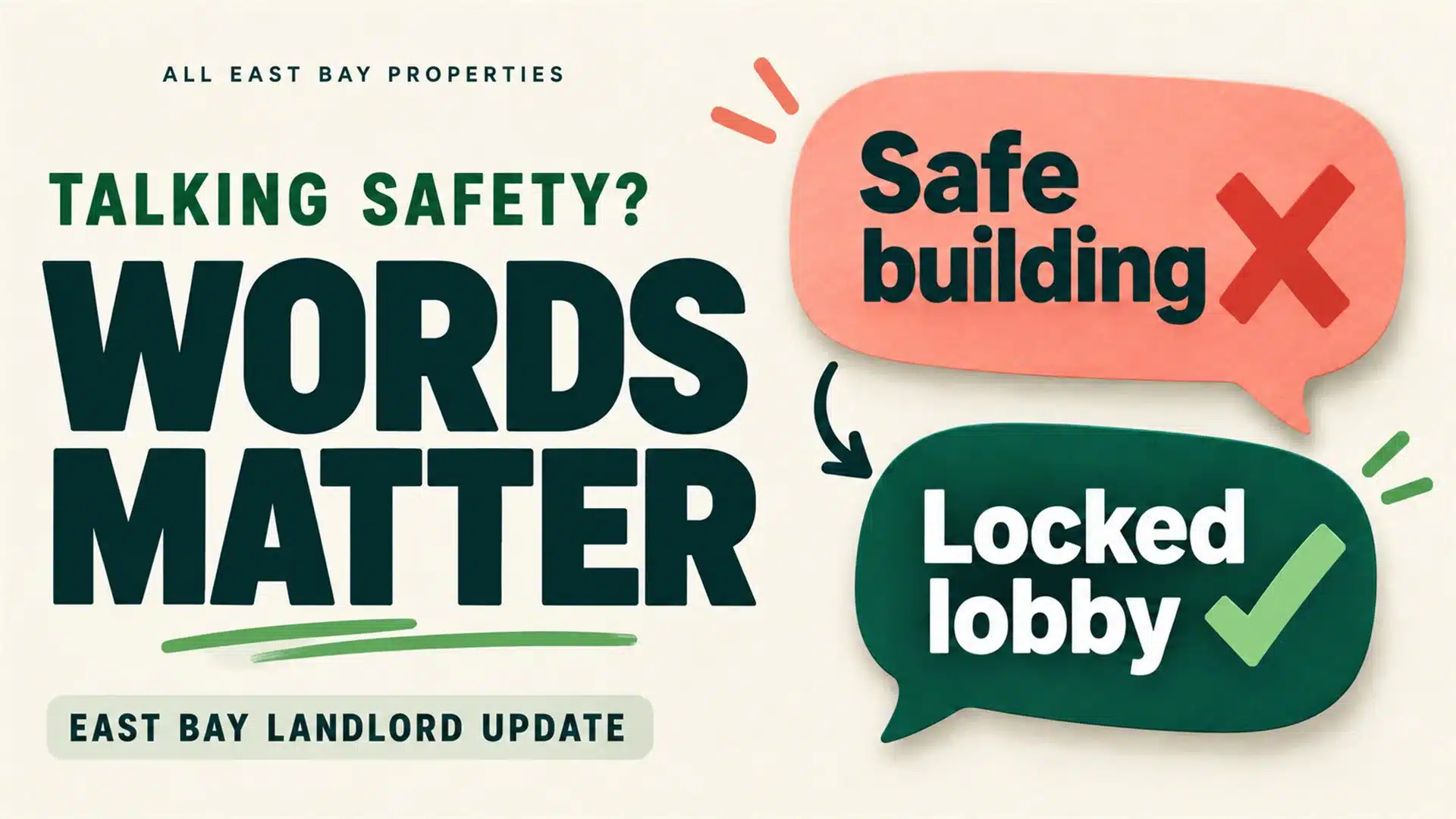
What you say to tenants about safety can matter as much as what you fix. This short video covers the words to avoid, what to put in writing for every tenant, and how to handle a security report once you get one.
Prefer to read? How East Bay Landlords Can Talk With Tenants About Safety Without Promising More Than the Law Requires adds a words-to-avoid table with safer phrasings, a move-in packet checklist, a five-step complaint process, and five FAQs.
What This Video Covers
- 0:00 Why safety talk can matter as much as repairs
- 0:09 Describing features, not outcomes, and the California case behind it
- 0:32 What every tenant should have in writing
- 0:42 Protected calls for police or emergency help
- 0:59 Handling security reports, and when a report counts as notice
- 1:14 How AEBP handles move-in information and lock reports
- 1:29 Where to find the full guide and checklist
Key Takeaways
- Say “locked lobby with a self-closing door,” not “secure building” or “safe neighborhood”
- In O’Hara v. Western Seven Trees (1977), calling a complex safe and patrolled while knowing of earlier assaults supported negligence and deceit claims
- Give every tenant, in writing: how to report a broken lock, light or door; 911 for emergencies; your city’s non-emergency line
- Civil Code §1946.8 protects calls about abuse, a crime or an emergency when the caller believes help is needed; leases can’t restrict those calls and landlords can’t penalize them
- Best practice: acknowledge security reports promptly, assess urgency, arrange needed repairs and document follow-up. A report of a covered lock problem can give notice under Civil Code §1941.3
Laws & Resources Mentioned
Want Tenant Communication That Doesn’t Overpromise?
We manage 600+ rental units across Oakland, Berkeley, Emeryville and the wider East Bay. Let’s talk about how your building handles safety questions and security reports.
Video Transcript
What you say about safety can matter as much as what you fix. Here’s how East Bay landlords can talk with tenants about it without promising more than the law requires.
First, describe features, not outcomes. “Locked lobby with a self-closing door” is a fact. “Secure building” or “safe neighborhood” is a promise nobody can keep. In one California case, a landlord told a prospective tenant the complex was safe and patrolled, while knowing about earlier assaults there. The court let her claims for negligence and deceit go forward.
Second, put the basics in writing. Every tenant should know how to report a broken lock, light or door, when to call nine one one, and their city’s non-emergency police line.
Third, don’t discourage calls for help. California Civil Code section 1946.8 protects calls about abuse, crime or an emergency when the caller believes help is needed. A lease can’t restrict those calls, and a landlord can’t penalize a tenant or resident for them.
Fourth, as a best practice, acknowledge security reports promptly, assess the urgency, arrange needed repairs and keep a record. A report about a required lock can give notice under California’s lock statute; other reports may raise different duties.
At AEBP, every new tenant gets a welcome sheet with our 24/7 maintenance line, and a broken entry lock is an emergency, with a vendor sent the same day. Our lease asks tenants to research the neighborhood themselves. We describe the building, and how to reach us.
The full guide, with a words-to-avoid table and five common questions, is linked below.