
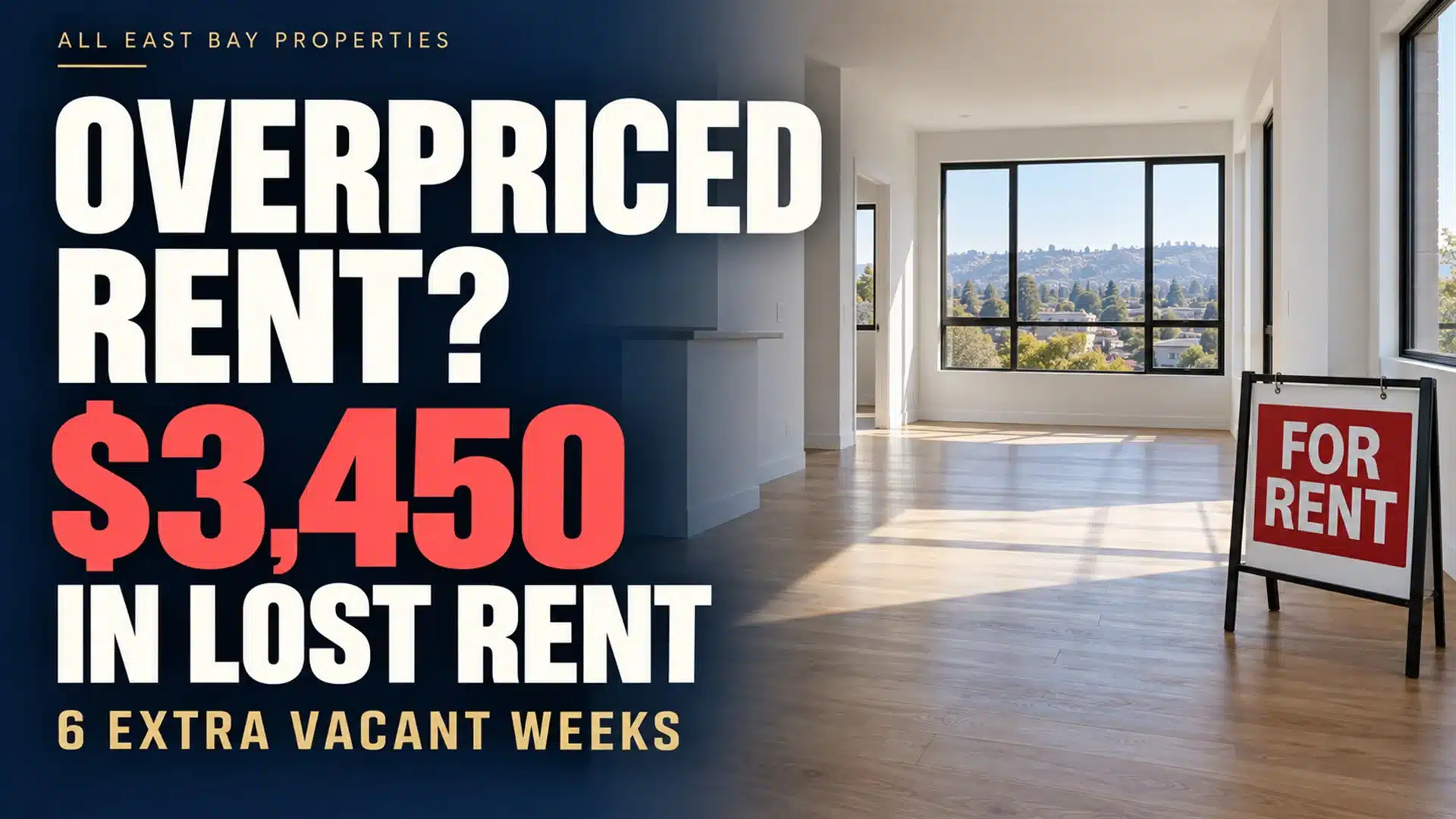
Listing a rental above market feels like the safe move. You can always come down, right? In this video, we walk through what “coming down later” actually costs, one vacant week at a time. We also explain why a unit that comes available in fall has less room for error than the same unit in summer.
What This Video Covers
- What one vacant week costs on a $2,500-a-month unit (about $575)
- Why cutting the price in steps adds weeks, not just dollars
- An illustrative example where starting $250 high costs about $3,450 more than pricing at market
- What we’ve seen when a unit starts well above its comparables
- Why fall and winter listings leave less room to adjust
The Short Version
A higher asking rent only pays off if a qualified tenant signs at that price quickly. Often the listing sits, the price comes down in steps, and each step costs a few more weeks with no rent coming in. In our illustrative example, six extra vacant weeks cost about $3,450, more than a year of a $250 premium, and the unit still leases at the market price. Fall makes this worse, because fewer renters are moving and each price test takes longer to answer.
Key Takeaways
- Each vacant week costs more than two months of a $250 premium on a $2,500 unit.
- The cost of starting high isn’t the price cut. It’s the weeks the cuts take.
- The first one to two weeks of showing data tell you whether the price is right. Act on them.
- Our professional opinion: for units available between October and January, price at market from day one.
Resources Mentioned
- What Overpricing a Rental Really Costs: full written guide
- Thursday Tip: The Vacancy Gap You’re Not Tracking
- East Bay Property Management Fees
Have a Unit Coming Available This Fall?
Video Transcript
Here’s how testing a high rental price can cost thousands in lost rent.
Say a unit is worth $2,500 a month. The owner lists it at $2,750, hoping for an extra $250. Every week it sits empty costs about $575. That’s more than two months of the premium they were hoping for.
Then the price comes down in steps. $2,750. Then $2,625. Then $2,500. Each step costs another few weeks. In this example, say those steps add six extra vacant weeks and the unit leases at $2,500 anyway. That’s about $3,450 in lost rent, more than a full year of the $250 premium the owner was chasing.
We’ve watched this happen. In one turnover we handled, the unit went through several price cuts over a period of months and leased close to where comparable units had been renting all along. The asking price was simply above what renters were paying.
Fall makes it worse. Fewer renters are moving, so a high price tends to sit longer. In our view, the goal of pricing isn’t the highest number. It’s finding the market fast. The full guide, with the math and the showing signals to watch, is linked below.