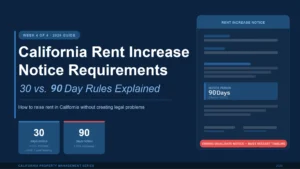

Most California landlords think they know how much notice to give before raising rent. A lot of them are wrong — and when the notice is wrong, even by one day, the whole thing is void and you start over.

What This Video Covers
- How much notice do you actually need? — 0:00
- The 30 vs. 90 day rule (Civil Code §827) — 0:22
- The 10% cumulative threshold — 0:47
- Local ordinances: Berkeley, Oakland, and beyond — 1:05
- When the legal clock actually starts — 1:17
- What doesn’t count as delivery — 1:38
- What happens if you get it wrong — 1:52
- The 180-day retaliation window (Civil Code §1942.5) — 2:01
- Full guide and free consultation — 2:25
What East Bay Landlords Need to Know
California Civil Code §827 gives landlords two notice periods for rent increases — and only two. Thirty days if the cumulative increase over the past 12 months is 10% or less. Ninety days if that total exceeds 10%. The length of the tenancy doesn’t matter. The only question is the size of the cumulative increase.
That word cumulative is where most landlords get tripped up. The 10% threshold isn’t per notice — it’s across everything you’ve raised rent in a rolling 12-month window. Raise rent 6% in March and another 6% in November, and you’ve crossed the line. Ninety days required, even if each individual increase looked modest.
The notice period begins on the date of delivery — not when you wrote the letter, not when you signed it, not when you dropped it in the mail. If you mail the notice, California Code of Civil Procedure §1013 requires you to add 5 calendar days. A 30-day notice by mail becomes 35 days. A 90-day notice by mail becomes 95. Slipping it under the door doesn’t count. Email doesn’t count. A verbal conversation definitely doesn’t count. Document delivery every time.
If the notice is wrong — wrong period, wrong delivery method, missing information — it’s void. The tenant can refuse to pay the increase and you must re-serve from scratch. That’s weeks or months of lost revenue on top of the compliance failure.
And one more exposure to understand: Civil Code §1942.5 creates a 180-day retaliation window. If a tenant has filed a complaint or exercised a legal right, and you serve a rent increase within that window, the law presumes the increase is retaliatory. The burden shifts to you to prove it wasn’t. Six months is longer than most landlords realize.
Key Takeaways
- 30-day notice applies when cumulative rent increases over the prior 12 months total 10% or less. 90-day notice applies when they exceed 10%.
- The 10% threshold is cumulative across all increases in the last 12 months — not per individual notice.
- The notice clock starts on the date of delivery, not the date you wrote or mailed it. Mail adds 5 days.
- Three valid delivery methods: personal service, substituted service (post + mail), or first-class mail. Sliding under the door, email, and verbal notice do not count.
- A notice with any error — wrong period, wrong delivery — is legally void. You restart from scratch.
- Serving a rent increase within 180 days of a tenant complaint creates a presumption of retaliation under Civil Code §1942.5.
Laws & Resources Mentioned
- California Civil Code §827 — Rent increase notice requirements
- CCP §1013 — Mail delivery: add 5 days
- Civil Code §1942.5 — Anti-retaliation protections
- CA Attorney General — Tenant Rights
- Oakland Rent Adjustment Program
- Related: Rent Increases in the East Bay — What Landlords Can and Cannot Do in 2026
- Related: AB 1482 Rent Cap Explained
- Related: Oakland Rent Control in 2026
- Full guide: California Rent Increase Notice Requirements 2026
Have Questions About Your Property?
We handle the entire rent increase process for our clients — calculations, notice preparation, and delivery confirmation. Nothing falls through the cracks.
Video Transcript
How much notice do you actually need before raising rent in California? Most landlords think they know the answer. A lot of them are wrong. And when the notice is wrong — even by one day, even with the right dollar amount — the whole thing is invalid. You start over. You lose weeks. Sometimes months. So let’s get this right.
Under California Civil Code 827, there are two notice periods for rent increases. Thirty days — if the cumulative increase over the past twelve months is ten percent or less. Ninety days — if that total exceeds ten percent. That’s it. There’s no tenancy-length modifier. It doesn’t matter if your tenant has been there one year or ten. The only question is the size of the increase.
And that threshold is cumulative. It’s not per notice. It’s everything you’ve raised rent in the last twelve months — added together. Raise rent six percent in March, another six in November? You’ve crossed the line. Ninety days required.
If your property is in Berkeley or another city with a local rent ordinance, there may be additional requirements on top of state law. Always check local rules first.
The notice period starts on the date of delivery. Not when you wrote the letter. Not when you signed it. Not when you dropped it in the mail. If you mail the notice, add five days. That’s California Code of Civil Procedure 1313. Thirty-day notice by mail? You need thirty-five days. Ninety-day notice by mail? Ninety-five days.
Slip it under the door? Doesn’t count. Send it by email? Doesn’t count. Tell them verbally? Definitely doesn’t count. Document how you delivered it. Every time.
If you get any of this wrong, the notice is void. The tenant can refuse to pay the increase. You have to re-serve.
And here’s the part most landlords don’t think about: under Civil Code 1942.5, if you serve a rent increase within 180 days of a tenant filing a complaint or exercising a legal right, the law presumes the increase is retaliatory. The burden shifts to you to prove it wasn’t. That window is six months. It’s longer than most landlords realize.
The full breakdown is in our 2026 guide — the 30 versus 90 day rules, delivery method requirements, what goes in the notice, and the most common mistakes we see landlords make. Link is in the description.
And if you’d rather not manage this yourself — we handle the entire rent increase process for our clients. Calculations, notices, delivery confirmation. Nothing falls through the cracks. Reach out if you want to talk.