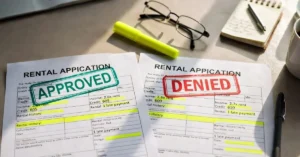

Most landlords think Fair Housing risk begins when applications arrive. It doesn’t. Your rental ad — and every text, email, and comment during a showing — is already legal communication, and it can create a violation before a single application is submitted.

What This Video Covers
Part 4 of the Fair Housing & Tenant Screening series. Start with the overview →
- Why rental ads are a Fair Housing trigger point — before anyone applies
- Specific phrases that create liability and safer alternatives
- The ESA confusion that regularly costs landlords thousands
- Why casual comments during showings are the most common source of violations
- The “ordinary reader” standard and how courts evaluate ad language
What East Bay Landlords Need to Know
Section 804(c) of the Fair Housing Act makes it illegal to publish any notice, statement, or advertisement that indicates a preference, limitation, or discrimination based on a protected class. That covers your Zillow listing, your Craigslist post, your Facebook Marketplace ad, your email responses to inquiries, and verbal comments during showings. The violation can exist in the ad itself — before you’ve reviewed a single application.
The most common offenders sound completely normal, which is what makes them dangerous. “Perfect for a single professional” implies a preference against families. “Quiet building, no kids” is direct familial status discrimination — federally protected. “Adult building” signals the same preference. “Great for empty nesters” suggests preference based on family composition. The test courts apply is simple: does the ad describe the property and its rules, or does it describe the person you want living there? If it’s the latter, you have a problem.
The ESA issue is where well-intentioned landlords create some of the most expensive liability. “No pets allowed” and “small dogs only” are acceptable pet policies. But assistance animals — including emotional support animals — are not pets under federal housing law. Stating “No ESAs — no exceptions” in a listing signals non-compliance before anyone applies and can constitute a violation on its own. The compliant alternative: describe your pet policy, and separately note that accommodation requests can be discussed.
Comments during showings are the most common actual source of violations — and the hardest to defend against. A question about a prospective tenant’s country of origin, a comment about the neighborhood being “quiet,” an observation about the number of people who’d be living there. These feel like natural conversation. In writing or in a complaint, they become evidence.
Key Takeaways
- Fair Housing liability begins with the ad — before any application is submitted or screening decision made.
- The “ordinary reader” standard applies: if a reasonable person could interpret language as expressing a preference related to a protected class, the violation exists regardless of intent.
- Phrases to avoid: “quiet building, no kids,” “adult building,” “perfect for a single professional,” “great for empty nesters,” “ideal for a couple,” “mature tenants preferred.”
- The rule: describe the property and its rules — never describe the person you’re looking for.
- ESAs are not pets under federal law. A “no ESAs” statement in a listing can constitute a violation before anyone applies. Handle accommodation requests separately from your pet policy.
- Showing comments are the most common source of violations — stick to property features and documented criteria. Don’t ask questions not on the written application.
Laws & Resources Mentioned
- Fair Housing Act §804(c) — HUD Overview
- HUD Guidance on Advertising Through Digital Platforms
- HUD Guidance on Assistance Animals
- National Fair Housing Alliance — Responsible Advertising
- Full guide: Fair Housing Starts Before the Application: Rental Ads & Language That Create Liability
- Related: Fair Housing Protected Classes in California
- Related: Why “Flexible Screening” Is a Fair Housing Risk
Full Series — Fair Housing & Tenant Screening
- Overview: Fair Housing & Tenant Screening — What East Bay Landlords Need to Know
- Week 2: Why “Flexible Screening” Is a Fair Housing Risk
- Week 3: Fair Housing Protected Classes in California: What Landlords Often Miss
- Week 4 (this video): Fair Housing Starts Before the Application: Rental Ads & Language That Create Liability
Have Questions About Your Rental Listings?
We write and manage rental listings for 600+ East Bay units — with language reviewed for Fair Housing compliance before anything goes live.
Video Transcript
Here’s something most landlords don’t realize: your fair housing liability doesn’t start when applications come in. It starts the moment you publish your rental ad. Under the Fair Housing Act, the ad itself can be the violation — before a single person applies, before you screen anyone, before you make any decision at all.
Section 804(c) of the Fair Housing Act makes it illegal to publish any notice or advertisement that indicates a preference based on a protected class. That covers your Zillow listing. Your Craigslist post. Your Facebook Marketplace ad. Your email replies. Even what you say out loud during a showing.
Intent doesn’t matter. The ordinary reader standard applies — if a reasonable person could interpret your language as expressing a preference, the violation exists.
Let me walk you through the phrases we see most often. These all sound completely harmless. That’s what makes them dangerous.
“Perfect for a single professional.” That implies a preference for one occupant, a lifestyle, and possibly an age group. Even if you just meant it’s a small unit.
“Quiet building, no kids.” That’s direct familial status discrimination — a federally protected class.
“Adult building.” “Mature tenants preferred.” “Great for empty nesters.” All variations of the same problem.
The fix is simple: describe the property, not the person. Say “quiet hours enforced per lease terms.” Say “efficient studio layout.” Describe the unit — never the resident you’re imagining.
This is the area where we see the most unintentional violations — and some of the most expensive ones. A “no pets” policy is fine. For pets. But an emotional support animal is not a pet under federal housing law. It’s a reasonable accommodation for a disability.
You cannot charge pet rent for an ESA. Breed restrictions don’t apply. And your no-pet policy does not override an accommodation request. If your listing says “no exceptions” to the pet policy, you may already be in violation before anyone has even inquired.
What you can do: request documentation from a licensed healthcare provider. What you cannot do: demand certification papers — no official ESA registry exists under law — or ask about the nature of someone’s disability.
Here’s where most violations actually happen. Not in the formal listing — in the casual moment.
“How many kids do you have?” — familial status.
“What part of the world are you from?” — national origin, immigration status.
“The neighbors here are mostly older, it’s very quiet.” — steering.
These feel like small talk. Fair housing law doesn’t care. And in the Bay Area, advocacy organizations actively test landlords — calling to ask loaded questions, monitoring listings, documenting inconsistencies. One unscripted answer to the wrong caller can trigger a formal investigation. Applicants screenshot everything.
The solution isn’t complicated. Use standardized listing language. Describe the property, not the person. Handle ESA requests through a written process. Document every interaction.
We’ve linked the full article in the description — it includes a complete danger phrases reference and a compliance checklist you can use before your next vacancy goes live.
And if you’d like to eliminate your risk, reach out. We’d love to talk with you about our services. I’m Emery with All East Bay Properties. Thanks for watching — and we’ll see you next month when we tackle rent increases and rent control.